
El Dorado Card Review: A USD Visa for Latin American Users Funding It With USDT
 Available in US
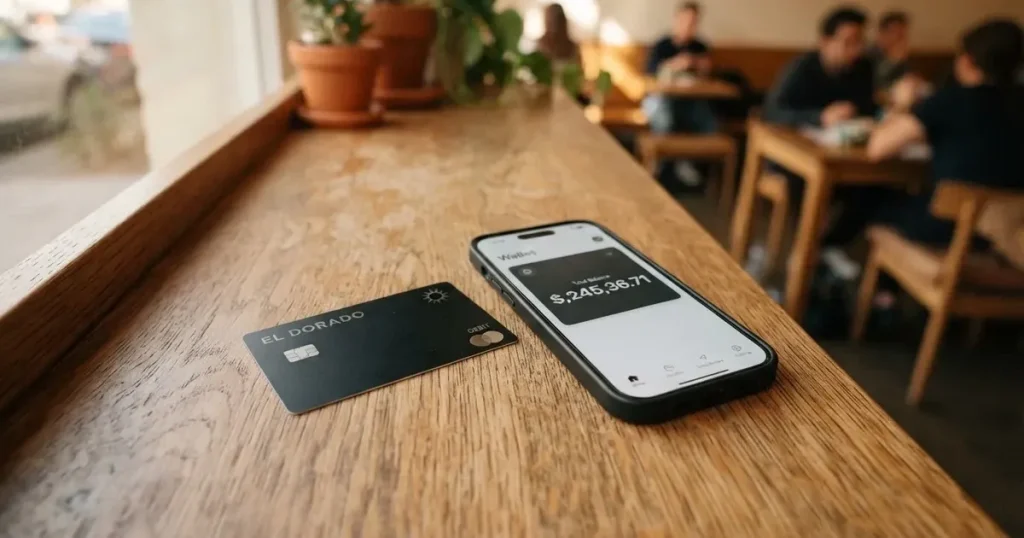
If you live in one of eleven countries in Latin America and the Caribbean, hold USDT rather than dollars in a bank account, and want a Visa that spends like an ordinary card in shops and online, the El Dorado card is built for exactly that. If you want a piece of plastic in the post, or if you live in the United States, it is not for you at all — the card is closed to US residents, and what exists is a virtual card in the app.
The deal I am reviewing: a prepaid Visa in US dollars, funded with USDT or dollars, with a two-thousand-dollar daily limit, Apple Pay and Google Pay, and no cash withdrawals. The catch is not dramatic, it is quiet — several of the numbers you would want most are simply not published. The conversion fee on card spend is not stated. ATM terms are not stated. The documents needed for identity checks are not stated. You can live with that, but only if you go in knowing which numbers you are guessing at.
My score is 6.6 out of 10. Below is where each piece of that came from, and then the same card walked through the ordinary questions: will they issue it to you, how do you get it, what does a Tuesday grocery shop actually cost, and what goes wrong when something goes wrong.
The conditions described here are current as of October 28, 2026.
Verdict: 6.6 out of 10
| Criterion | Score | Why |
|---|---|---|
| Who can get it | 4 / 10 | Card lives in 11 Latin American and Caribbean countries (Bolivia, Brazil, Argentina, Colombia and others); the US is closed |
| Cost | 8 / 10 | Issuance 3.99 USDT once, monthly servicing free, USDT top-up free; card conversion fee not disclosed |
| Top-up options | 8 / 10 | USDT on Arbitrum and Tron, dollars via ACH or wire, 80+ local methods through P2P |
| Reliability and complaints | 8 / 10 | Issued by Lead Bank under a Visa U.S.A. licence, VASP registration in Argentina, backers Multicoin, Coinbase Ventures, Paradigm; Trustpilot 2.7 from 62 reviews, not about the card |
| Everyday use | 5 / 10 | Virtual Visa, Apple Pay and Google Pay exist; no plastic, ATM use forbidden |
Six and a bit out of ten is not a dismissal. It is a card that does a narrow job cheaply and cleanly and refuses to be anything else. For a Latin American user who already lives in USDT, whose bank does not issue a card that works abroad, and who wants a dollar Visa without flying to an American account, the value is real and hard to get elsewhere. For everyone else — anyone who wants cash, a physical card, a rewards programme, or certainty about what a purchase costs — there is nothing here that a mainstream card does not do better.
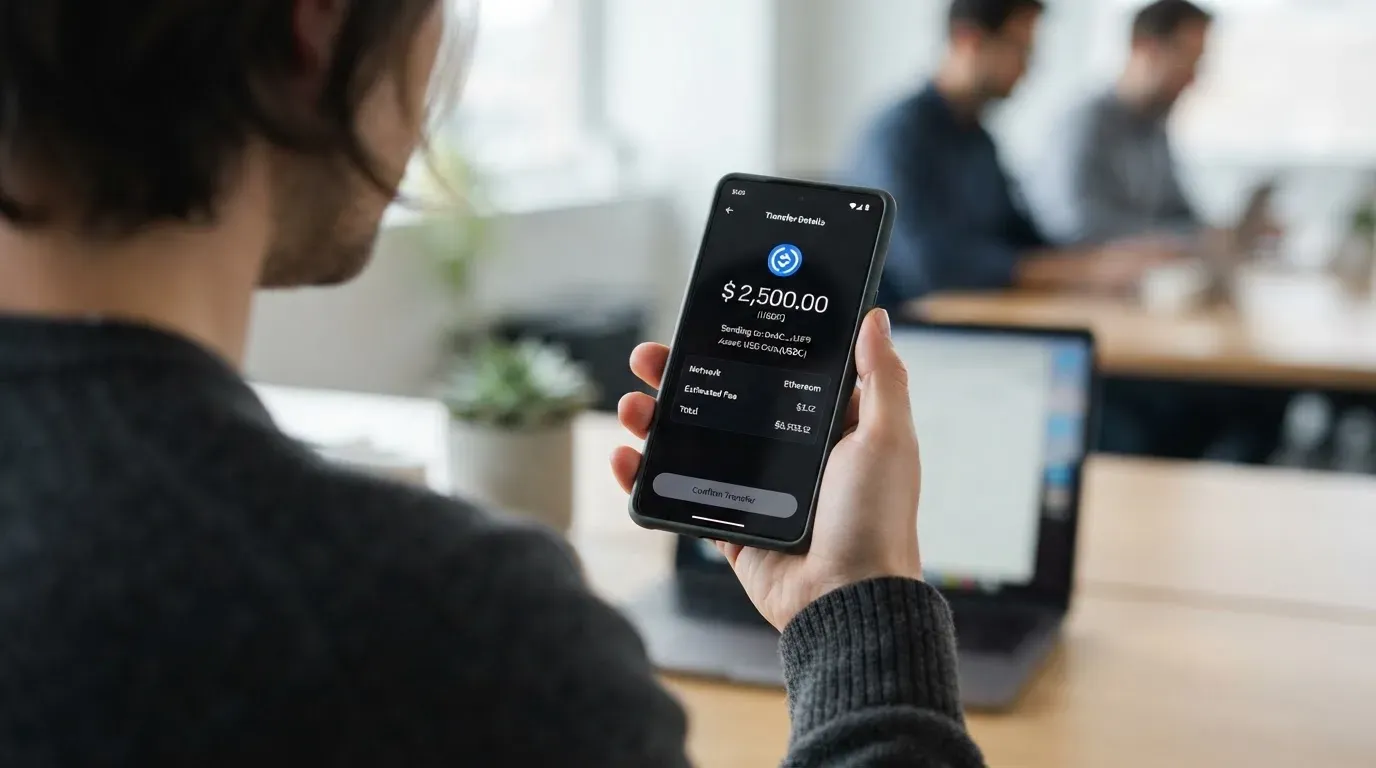
Two things shape my reading more than the rest. First, the *who can get it* score is the lowest here, and it is not close: four out of ten on access. That is a structural limit on who the card is for, not a defect in the product. Second, the Trustpilot rating for the El Dorado website is 2.7 out of 5 from 62 reviews, with only 6 of those in the last twelve months — and none of the complaints found were about the card itself. They were about the P2P marketplace. I will come back to what that means, because it is the single most misread number in this review.
The audience the card is genuinely aimed at is Latin Americans funding a US dollar card with USDT. Every part of the design points the same way: USDT deposits, local payment rails through a peer-to-peer marketplace, a dollar balance, and a virtual card that works online anywhere.
Will They Give You the Card?
They will issue it if you live in one of eleven countries and can clear Level 2 identity verification. They will not issue it if you live in the United States.
The eleven countries are Bolivia, Brazil, Argentina, Colombia, Costa Rica, Ecuador, Guatemala, Honduras, Paraguay, Peru, and Trinidad and Tobago. The basis for eligibility is residence, not citizenship. That distinction matters in a way people often get wrong: what counts is where you are, not what passport you hold. The rule the card states does not mention citizenship at all.
US residents are excluded. There is no exception listed, no waitlist, no note about a future opening — just a flat exclusion. If you are reading this from the United States and wondering about workarounds, there is nothing here for you, and I am not going to invent one.
One thing worth understanding before you apply: this is not a bank account. El Dorado Labs PY Inc is the Platform Provider and Bridge Ventures LLC is the Program Manager, and the terms are explicit that the Program Manager is not a bank. The card itself is issued by Lead Bank under a Visa U.S.A. licence. El Dorado is the app you use and the company you deal with; Lead Bank is the institution behind the plastic-that-is-not-plastic. El Dorado S.R.L. is separately registered as a virtual asset service provider (PSAV No. 63, 5 August 2024, with the Argentine regulator), and El Dorado MT LLC is registered in Florida. The named backers are Multicoin, Coinbase Ventures and Paradigm.
None of that tells you the card is good. It tells you who stands behind it when something breaks, which is a different and, in my view, more useful question.
How to Get It
You need to be 18 or older, complete Level 2 verification inside the El Dorado app, and pass one further short check. Then the card details are generated and you can use them.
The path itself is short. A “Get your card” button on the site or in the app takes you into the flow, you finish verification, and the card number, CVV and expiry appear for online use anywhere in the world. El Dorado describes these as “physical-style” details — a full set you can type into a checkout form — but there is no physical card. That point comes back in the costs section, because it is where people get surprised.
On the identity side, the terms say Level 2 verification is required, that El Dorado may ask for more information at any time, and that refusing to provide KYC data is grounds for cancelling the card. What Level 1 and Level 2 actually contain, how long processing takes, and on what grounds an application is rejected — the card’s public pages do not say. I want to be plain about that rather than smooth over it: the documents required and the rejection criteria are not stated anywhere I could find. What is stated is that you need to be 18+, that the card needs Level 2 verification plus an additional step in the app, and that proof of address is not stated either.
If you have been blocked from ordinary banking before, this part will feel familiar. Under EU-style due diligence the checks cover name, address, date of birth, nationality and identity documents, a sanctions check, and whether you are a politically exposed person; in the US the customer identification programme requires name, date of birth, address and an identification number. Nationality is screened separately from residence, because sanctions and issuer risk policy often attach to citizenship and country of birth, not just to your address. This is the normal architecture of regulated finance, not a trick — but it does mean that being a resident of an eligible country is necessary, not sufficient.
Fees and Limits: What It Really Costs
The headline numbers are good. The number you most want is missing. Issuance is 3.99 USDT once, monthly servicing is free, and top-ups in USDT are free. The fee for converting your balance when the card spends is not stated. So let me give you the table, then walk three ordinary payments through it so you can see where the silence lands.
| Fee or limit | What the card states |
|---|---|
| Issuance | 3.99 USDT one-time, taken from the El Dorado balance |
| Monthly fee | Free |
| Conversion fee on card spend | Not stated |
| Foreign currency payment fee | Not stated |
| ATM | Not allowed — no cash withdrawal, no person-to-person transfers |
| Daily limit | Up to USD 2,000 per day, total of the day’s transactions; raisable via support |
| Monthly limit | None |
| USDT deposit | Free |
| ACH / wire deposit | 1.49% |
| USDT withdrawal under 200 | 0.99 USDT plus network fee |
| USDT withdrawal of 200 or more | 0.5% plus network fee |
| Account opening (USD account) | Free |
Three everyday situations, and which fees actually touch them.
A ten-dollar subscription you already pay for, in dollars. The page says there are no extra charges on subscriptions and international purchases — while also saying fees may apply. In USD, the FAQ says USD payments involve no currency conversion. The honest reading: for a plain dollar charge from a funded balance, the known costs are zero. The unknown is the conversion rate used between your USDT-side balance and the dollar charge, which is not published.
Paying a euro-denominated invoice from a dollar card. This is where I would want an answer before committing money, and there isn’t one. The fee for paying in another currency is not stated, and the conversion fee is not stated. Visa exchange-rate spreads are a normal cost here, but “normal” is not “known”, and you should budget for it rather than assume it away.
Taking cash out or sending money to a person. Not possible. The terms are explicit: you cannot withdraw cash with the card or use it for person-to-person transfers. This is not a missed feature, it is a deliberate design choice, and it is the clearest single line in the cost table.
One free thing worth knowing: a replacement virtual card issued after the September 2026 change is free of issuance cost.
How to Top It Up
Three routes, and all of them work: dollars through ACH or wire, USDT on the Arbitrum or Tron networks, or 80+ local payment methods through El Dorado’s P2P marketplace.
USDT on Arbitrum or Tron is the route the card is built around, and it is free. Dollars arrive by ACH or wire at 1.49%. The P2P marketplace covers 80+ local methods, with taker fees from USD 0.49 flat down to 0.24% depending on the size of the deal, and a minimum of 1 USDT.
Moving money from your main wallet onto the card itself is a separate, smaller step: the Card section has a “Depositar” button, you confirm with a PIN or biometrics, and the money lands instantly — the help tip says up to a couple of minutes. There is no limit on how many times you can top up. The card top-up fee and the minimum top-up are not stated.
Here is the practical warning. Blockchain transfers are irreversible. Send USDT on a network the provider does not support, or to an address belonging to a different network, and the money can be gone or need manual recovery with no guarantee. Some background that matters at the moment you pick a network: ERC-20 fees on Ethereum are paid only in ETH, so a wallet holding USDT and no ETH cannot send at all. Tron prices fees through bandwidth and energy resources, often burning TRX. And Circle stopped supporting USDC on Tron in February 2024, so “USDC over TRC20” is not a native option here — this card’s USDT route on Tron is USDT, not USDC. On-chain network fees for your deposit are charged by the blockchain, not by El Dorado.
The P2P marketplace deserves one more word of caution, and it comes from the reviews rather than the terms. Recent one-star Trustpilot complaints name accusations of scams by P2P sellers and missing refunds, as well as slow delivery and unhelpful support. Whether or not those complaints are fair is not mine to rule on; what they tell you is that the marketplace side of El Dorado carries risk that the card side does not.
Paying With It Every Day
Online, anywhere Visa is accepted, in dollars, through your phone’s wallet or by typing the card details. That is the whole proposition, and for its intended user it works.
Apple Pay and Google Pay are both supported. Behind them sits a tokenised card number stored in the device’s Secure Element rather than on Apple’s or Google’s servers, with a fresh one-time security code on every payment — the standard mobile wallet mechanism, and a real reduction in the ways a card number can leak compared with typing it into sites.
You can add the card to Apple Wallet or Google Wallet and then use it as your main card, subject to one limit: up to USD 2,000 per day across the day’s transactions, with no monthly cap, raisable through support if you need it. In practice the daily limit is generous for ordinary spending and low for anything that looks like a large purchase — a car, a flight, a hotel deposit would need support involved.
What is not there is as informative as what is. No rewards programme is described: no cashback, no points. Blocked merchant categories and gambling policy are not stated. And there is no physical card — the card is virtual, with number, CVV and expiry in the app, which is why Apple Pay and Google Pay matter so much here rather than being a nice-to-have.
Then the payments-plain background that decides whether a payment goes through at all. A card number begins with a six- or eight-digit issuer identification number that a merchant’s system can look up, revealing the institution and the issuing country; if that country differs from your billing address, the merchant may apply extra scrutiny. Some merchants decline prepaid or foreign-issued cards for exactly that reason. Address verification, which compares the numeric parts of the billing address against issuer records, is generally unavailable for foreign-issued cards and can cause declines. A declined authorisation can leave a hold on funds for up to seven days. None of this is El Dorado being difficult; it is what a dollar card issued for one region looks like when it meets a shop system somewhere else.
The app is worth a moment. The iOS app, read in October 2026 from the Colombian storefront, shows 4.9 from 777 ratings, requires iOS 15 or later, and is available in Spanish, English and Portuguese. A Google Play listing exists under io.eldorado.app, though its rating was not retrieved. The site claims more than 1,000,000 users and over 1 million Google Play downloads.
What Can Go Wrong
Four things, roughly in order of how likely they are to bite you.
The undisclosed conversion cost. This is the one I keep coming back to. The card’s own terms set out what they charge for issuance, servicing, deposits and withdrawals, and leave the card’s conversion fee and the fee for paying in another currency unstated. You can lose money here without being able to point to the moment it happened.
Being blocked, suspended or cancelled by the platform. This is a custodial account: the balance is held by El Dorado, not by you. El Dorado and its partners monitor transactions and may block, suspend or cancel the card. Unrecognised charges get reported to Customer Service, which may recommend a temporary freeze. The terms also allow El Dorado to deduct funds from your balance automatically to cover chargebacks. El Dorado says it will never ask for your card number, CVV, password or codes — worth believing and worth testing your judgement against, because that is exactly what a convincing scam sounds like. No insurance is stated. A security PIN for the card is announced as “coming soon”.
Programs ending. Card programmes close. Visa terminated its global agreements with FTX on 13 November 2022, and the FTX US debit card was wound down by its issuer. WaveCrest, a Visa issuer that supplied crypto card brands, was suspended by Visa in Europe in 2018, closing all WaveCrest-issued Visa programmes. Closures typically run in a known order: a notice period, then loading and spending stop, then users are asked to withdraw remaining balances. El Dorado’s own terms say something similar about cancellation: you ask Customer Service, they run an identity check, and it is processed within fifteen business days provided there are no pending transactions, pre-authorisations or chargebacks; outstanding obligations can be deducted from the balance. How the remaining card balance gets returned to you is not explained in the terms.
Complaints and support. Here the picture is genuinely mixed, and it is worth reading carefully. A Trustpilot/Reddit search found no reviews or news about the El Dorado card specifically; results were unrelated pages, and no card-specific user reports were found. The Trustpilot score for the El Dorado website is 2.7 out of 5 from 62 reviews, 61% five-star and 28% one-star, with only 6 reviews in the last twelve months. Recent one-star themes: P2P seller scam accusations and missing refunds (December 2025), slow delivery and unhelpful support (July 2026), seller verification rejected without reason (March 2025). One reviewer claims a move from the .io domain to .gg, which the company denies. These are marketplace complaints, not card complaints. The site footer links an official complaints form. Support is in-app chat (Profile > Soporte), by email, and by phone on 1-855-679-8445 for card disputes, with a help centre in Spanish and English; support hours and the languages staff actually work in are not stated.
One live, in-flight thing. A help article dated 8 September 2026 says cards are being replaced by a new virtual card with a new number, CVV and expiry, at no issuance cost, with balance, verification and the USD 2,000 daily limit unchanged. The date the old card stops working is not stated, and no new issuer or fee change is mentioned. If you have this card now, that placeholder is the kind of detail you want to resolve through support before it resolves itself for you. Funding-wise, a Paradigm-led USD 9 million round was reported by The Block in June 2026.
Disputes, if something is charged wrongly. Transactions, refunds and chargebacks follow Visa rules. You report the charge to Customer Service; formal disputes go to the issuing bank or programme administrator; a USD 30 charge may apply if a formal dispute is opened; claims are answered within up to fifteen business days; the direct settlement period is thirty calendar days; and El Dorado may auto-deduct funds to cover chargebacks. No refund policy is stated. Note the asymmetry: opening a formal dispute can cost you USD 30, and a fee of that size is a real deterrent to using one over a small amount.
What to Take Instead
Three alternatives are available, and none of them is a straight swap — they differ on who can hold them and what they are for.
| El Dorado | International Visa Card | UNi Card | Whop Cards | |
|---|---|---|---|---|
| Score | 6.6 / 10 | 6.7 / 10 | 6.1 / 10 | 5.2 / 10 |
| Who can get it | 11 Latin American and Caribbean countries; not US residents | Not residents of Belarus, mainland China, North Korea, Cuba, India, Iraq, Iran, Israel, Myanmar, Nepal, Nicaragua, Russia, Syria, Turkey, Ukraine, Venezuela, Vietnam; FATF grey list case by case | Not stated | 31 US states for consumers, 41 for businesses; unsupported in 16 named countries |
| Card | Virtual prepaid Visa, USD | U.S.-issued Platinum Visa, virtual, pays in USD; physical “coming soon” | Multicurrency, Mastercard network | Visa, online and in stores |
| Issuance | 3.99 USDT once | USD 5 one-time | Not stated | Not stated |
| Monthly | Free | Classic free, Pro USD 9.00, Max USD 19.00 | No annual fee | No extra fees, no amounts listed |
| Conversion / FX | Not stated | USD use free; foreign currency “Visa exchange rate + 2% FX fee” | Live OTC rates, no foreign transaction fee | Not stated |
| Funding | USDT (Arbitrum, Tron), ACH/wire, 80+ P2P methods | USDC or USDT into the USD account free at 1:1, plus USD, EUR, SEPA, SWIFT, FedNow | Not stated | Whop balance, backed by stablecoin collateral from a linked wallet |
| Rewards | Not stated | No cashback stated | Spend-to-Earn up to 3% | 5% cashback at select merchants, currently Uber |
Reading that table honestly, some of the blanks are not the providers being coy — they are the public pages simply not saying, which I noted rather than guessed at. But two things are worth pulling out.
The International Visa Card is the nearest thing to a real alternative for a user who can be approved: it publishes its foreign-exchange fee as “Visa exchange rate + 2% FX fee”, which is far more useful than silence, and it accepts USDC or USDT into a USD account free at 1:1, plus ordinary bank rails. Its cost is access — a long exclusion list, and a note that purchases are blocked in North Korea, Cuba, Iran, Russia, Syria, Ukraine and Venezuela. Its plan structure ($9 and $19 monthly tiers) is also the most expensive structure here. Its rule is by residence or registration; citizenship is not mentioned.
The UNi Card markets what El Dorado does not: no annual fee, no foreign transaction fee, conversion at live OTC rates, “no hidden exchange fees”, and up to 3% spend-to-earn. If your problem is cost at the point of conversion, that is the pitch to test — assuming you can get one, since eligibility is not stated.
Whop Cards are aimed at a US audience, in states rather than countries, spend from a Whop balance backed by stablecoin collateral, and offer 5% cashback at selected merchants. If you are in one of the 31 consumer states, that is a different product aimed at you.
None of these is a like-for-like replacement for someone in Argentina or Brazil who holds USDT and wants a dollar Visa. That, more than any fee line, is why I scored El Dorado as I did.
Who I Would Recommend It To
Yes, if you live in one of the eleven eligible countries, you are 18 or over, you already hold USDT, you spend online and want dollars rather than local currency, you use Apple Pay or Google Pay and are content to have no physical card, and your daily spending stays inside USD 2,000.
Think twice if cash withdrawal matters to you, you need a card that physically exists, you want rewards, you pay in many currencies and need to know the FX fee in advance, or you are in the United States.
No, if you want to hold your own keys — this is a custodial setup, and custody is a real risk rather than a technicality. The balance sits with El Dorado. Custodial platforms have a history of failing badly: Mt. Gox (about US$350 million reported stolen, 2011–2014), Coincheck (about US$400 million, 2018), Ronin Network (US$625 million, 2022). And transfers are irreversible, so a stolen key has no recovery path — the network cannot freeze or return the funds.
Before you fund it, I would do three things. Ask support, in writing, what the conversion fee on a card purchase actually is — it is the largest unknown in a product whose other numbers are published. Ask them how the remaining balance is returned if you cancel, because the terms do not explain it. And confirm that Tron or Arbitrum is the network you are actually sending on, because a wrong-network transfer is the classic irreversible mistake.
I would also keep a mental line between the card and the P2P marketplace. The card is the part with a Visa licence, a named issuing bank and a stated daily limit. The marketplace is where the 2.7 out of 5 lives, and where the recent complaints about sellers and refunds are. You may well need both. They are not the same risk.
One last practical note, and it is not tax or legal advice, just awareness: if you are taxed where you live, the IRS treats digital assets as property so exchanging them for goods or dollars generally produces a taxable gain or loss, measured in local currency at fair market value on the date of the transaction — which can make each card payment funded from crypto its own disposal. Most countries treat this similarly in outline. What it means for you depends entirely on your circumstances, and this is the kind of question worth putting to a professional rather than to a review.
Frequently asked questions
What is the El Dorado card?
The El Dorado card is a virtual prepaid Visa in US dollars, offered by El Dorado Labs PY Inc and issued by Lead Bank under a Visa U.S.A. licence. You load it from your El Dorado balance and spend that balance online anywhere Visa is accepted. There is no physical card — the number, CVV and expiry live in the app. It is built for users in eleven Latin American and Caribbean countries who hold USDT.
How does the El Dorado card work?
Your balance is automatically converted from USDT to USDC for card use and displayed in dollars, then spent like a normal prepaid Visa. You can top up from your main wallet through the Card section, confirm with a PIN or biometrics, and the funds land within a couple of minutes. Spend is capped at USD 2,000 per day in total, with no monthly limit.
Is El Dorado a bank?
No. El Dorado Labs PY Inc is the Platform Provider and Bridge Ventures LLC is the Program Manager, and the terms state explicitly that the Program Manager is not a bank. The card is issued by Lead Bank under a Visa U.S.A. licence. El Dorado S.R.L. is separately registered as a virtual asset service provider in Argentina (PSAV No. 63, 5 August 2024).
Which countries can get the El Dorado card?
Bolivia, Brazil, Argentina, Colombia, Costa Rica, Ecuador, Guatemala, Honduras, Paraguay, Peru, and Trinidad and Tobago — eleven countries in Latin America and the Caribbean. Eligibility is based on residence, not citizenship, and US residents cannot get it at all.
Does the El Dorado card require KYC?
Yes, Level 2 verification is required, plus one further short check in the app, and you must be 18 or older. El Dorado may request more information at any time, and refusing to provide KYC data is stated as grounds for cancelling the card. The specific documents, processing time and rejection reasons are not stated on the card’s public pages.
How do I top up the El Dorado card?
Three ways: USDT on the Arbitrum or Tron networks, which is free; dollars by ACH or wire at 1.49%; or 80+ local payment methods through El Dorado P2P, with taker fees from USD 0.49 flat to 0.24% by deal size and a minimum of 1 USDT. Transfers are irreversible, so sending on an unsupported network can lose the money.
Can I withdraw cash or use ATMs with the El Dorado card?
No. The terms state that you cannot withdraw cash with the card or use it for person-to-person transfers. This is a deliberate restriction, not a missing feature — if you need physical cash, this card is the wrong tool. The ATM conditions themselves are not stated because ATM use is not permitted at all.
What does the El Dorado card cost?
Issuance is 3.99 USDT once, monthly servicing is free, and USDT deposits are free. ACH or wire deposits cost 1.49%. USDT withdrawal is 0.99 USDT plus network fee under 200, and 0.5% plus network fee at 200 or more. The conversion fee on card spend and the fee for paying in another currency are not stated — that is the number to ask support about.
Is the El Dorado card safe?
It is custodial, which means El Dorado holds your balance, and the balance is not the same as a bank deposit. El Dorado and its partners monitor transactions and may block, suspend or cancel the card, and may deduct funds to cover chargebacks. No insurance is stated. El Dorado says it will never ask for your card number, CVV, password or codes, and a card security PIN is still marked as “coming soon”.
Is the El Dorado card worth it?
For a resident of one of the eleven eligible countries who holds USDT, needs a dollar Visa and uses Apple Pay or Google Pay, I think the cheap issuance and free servicing make it worth having. If you want a physical card, cash withdrawals, rewards, or a published conversion fee, it is not — and the Trustpilot score of 2.7 out of 5 from 62 reviews, though none of those complaints were about the card itself, should temper expectations about the marketplace side.
App and neobank card fees – cryptocardfacts
Content created by the «cryptocardfacts» team