
A self-custody crypto card with clean fees, but invite-only access and gaps in everyday features
 Available in US

The Encrypto card is a Visa debit card that spends straight from crypto you hold yourself, and on the numbers it is one of the cleaner products in this category. It charges nothing to open a virtual card, nothing per month, nothing when you pay in USDC, and nothing on top of the Visa exchange rate when you pay abroad. The catch is not the pricing — it is the door. Access is by invitation only, the wallet sits on nine chains rather than all of them, and the physical card, Apple Pay work, ATM access and Google Pay are not all finished. I scored it 7.9 out of 10, and the reason that is not a nine is entirely in the “everyday use” column, not the “cost” one.
Who this suits: you already hold stablecoins on-chain, you are comfortable sending a transfer to a network address yourself, and you want a card that spends USDC without a monthly fee or a conversion charge. Who it does not suit: anyone who wants to open an account today without an invitation, anyone who needs a bank account fallback, cash from an ATM, or Google Pay today, and anyone who wants a physical card in their pocket this week rather than in the post.
The conditions described here are current as of October 28, 2026.
The score, line by line
| Criterion | Mark | Why |
|---|---|---|
| Who can get it | 7 / 10 | Markets: United States, Brazil, Mexico, Argentina, Colombia, Europe; card availability is decided at signup by region, the wallet itself is global, and access is by invitation |
| Cost | 9 / 10 | Virtual card free, physical card $5.00 one-time, maintenance free; 0.5% conversion on non-USDC assets, USDC spending fee-free, FX at the Visa rate with no markup |
| Top-up options | 9 / 10 | Self-custody wallet on 9 blockchains: Ethereum, Base, Arbitrum, Optimism, Polygon, Avalanche, Solana, Stellar, Tron; spends USDC directly, other coins converted at payment |
| Reliability and complaints | 8 / 10 | Visa debit issued by Lead Bank, transfers via Bridge Building Inc., keys held by Privy; one complaint about a missing refund (Sep 2026) |
| Everyday use | 6 / 10 | Virtual card immediately, physical card in the post, Apple Pay present, Google Pay “coming soon”, ATM “Coming soon” |
| Total | 7.9 / 10 | — |
Read the table as one shape rather than six separate numbers. Four of the six marks are high, and the highest of them — cost and top-up options, both at 9 — are exactly the two things you cannot get elsewhere cheaply. The two lowest, availability and everyday use, are both about the card as an object in your hand rather than as an interface to a balance. That is a coherent product: this is a spending rail for crypto you already hold, not a first card, and not a bank.
Will they give you the card
The markets named are the United States, Brazil, Mexico, Argentina, Colombia and Europe. The card’s own wording is that “card availability is determined during signup based on your region”, while the wallet is described as available globally. No excluded countries are named anywhere in the pages I read. In practice, that means the geography is not the tight gate here — the invitation is. If you are outside those regions, you may still be able to hold the wallet, but the card itself is not promised.
Two things the card does not say, and I would rather say plainly than guess: there is no list of blocked countries, and there is no stated citizenship rule. Whether a document from one country with a residence in another is treated differently is simply not published. If that combination describes you, you are guessing, and you should treat the signup form’s own answer as the only real one.
The audience this product actually fits is narrow and worth stating in your own words before you spend time on it: on-chain stablecoin holders who want to spend USDC across many networks from a balance they control. Not crypto beginners. Not people without crypto. If you do not already have USDC sitting on a chain, the cost advantage this card offers you is theoretical.
How to get it
It is invite-only, and that word does a lot of work. The sequence the card describes is: verify with an X account, then complete identity verification if you are approved — that identity step is handled by Bridge, a Stripe company. Activation is instant once your KYC is approved. A virtual card is usable immediately; the physical card ships to your address.
What is not stated, and I want to be exact about the gaps rather than generous: what documents you need, whether proof of address is required, what age you must be, how long delivery takes, which countries it ships to, what a replacement costs, and how many KYC levels exist. Only the $5.00 one-time physical issuance figure is given, and that is an issuance price, not a delivery price. If a lost or stolen card is a scenario you need priced, you do not have that number yet.
For someone used to ordinary onboarding this will feel backwards: the gate is a social account, and the identity check is the second door rather than the first. If you have no X account, or you would rather not hand a KYC provider your details without knowing which tier you land in, this is a real friction point and the honest answer is that I cannot tell you how many people hit it.
Fees and what they add up to
This is the section where Encrypto is genuinely good, and I want to give it to them straight. There is no monthly fee. A virtual card is free and instant. The physical card is $5.00 once. Spend USDC and there is no conversion fee. Spend a non-USDC asset and the Encrypto conversion fee is 0.5% at the point of sale. Pay abroad and the Visa exchange rate applies with no Encrypto markup on top. There is no separate fee line for a domestic purchase or an international one.

| Fee or limit | What it is | Value |
|---|---|---|
| Virtual card issuance | One-off, instant | Free |
| Physical card issuance | One-off | $5.00 |
| Monthly maintenance | Recurring | Free |
| Conversion fee, non-USDC assets | Charged at point of sale | 0.5% |
| DEX swap fee | Market rate, when converting | Typically 0.01–0.3% |
| Spending USDC directly | No conversion fee | 0 |
| Domestic purchase | — | Free |
| International purchase | Visa FX rate | No Encrypto markup |
| ATM withdrawal | Not yet available | “Coming soon”, fee not stated |
| Daily spend limit | Per day | $10,000 |
| Overdraft | — | None; declines if balance is insufficient |
| Monthly limit | — | Not stated |
| KYC-level limits | — | Not stated |
| Card currency | — | USD, settled from USDC balance |
Three everyday payments, so the fees stop being abstract:
- Coffee abroad, paid from USDC. You hand over the card, it is accepted wherever Visa is accepted, the amount is converted from your USDC balance into USD, and the Visa exchange rate is used. Encrypto adds no conversion fee on USDC and no markup on the FX. What you are left with is the rate the network network itself gave that day — that is the deal.
- Something bought in a non-USDC coin. Say your balance is not in USDC. The 0.5% Encrypto conversion fee is charged at the point of sale, and the swap itself runs at a market rate typically 0.01–0.3%. The total cost is that 0.5% fee plus the market-rate swap, calculated at the moment of purchase.
- A payment that declines because the balance is short. There is no overdraft. The transaction simply declines if the balance is insufficient. That is the safe behaviour, and it is also the behaviour that catches you out if you are used to a bank card that floats for a few days.
Two limits deserve emphasis. The daily spend cap is $10,000, which is generous for ordinary life and low for anyone treating this as a business card. And there is no overdraft at all, which means the card cannot go negative — an underrated property, but also a real one when your balance is on a different chain from the payment you are making.
One unofficial thread: a “Black Tier” with collateral is said to waive certain transaction fees, with no threshold published, per Polymart in September 2026. I would not build anything on that. It is a third-party report, not confirmed by the card, and it is exactly the sort of tier that appears in marketing before it appears in fee schedules.
Top up: what actually moves money
The funding model is the part I like most, because it is the least mediated. Encrypto is a self-custody wallet across nine blockchains: Ethereum, Base, Arbitrum, Optimism, Polygon, Avalanche, Solana, Stellar, Tron. You spend directly from your on-chain USDC balance. Other crypto you hold is converted at the point of sale rather than pre-sold.
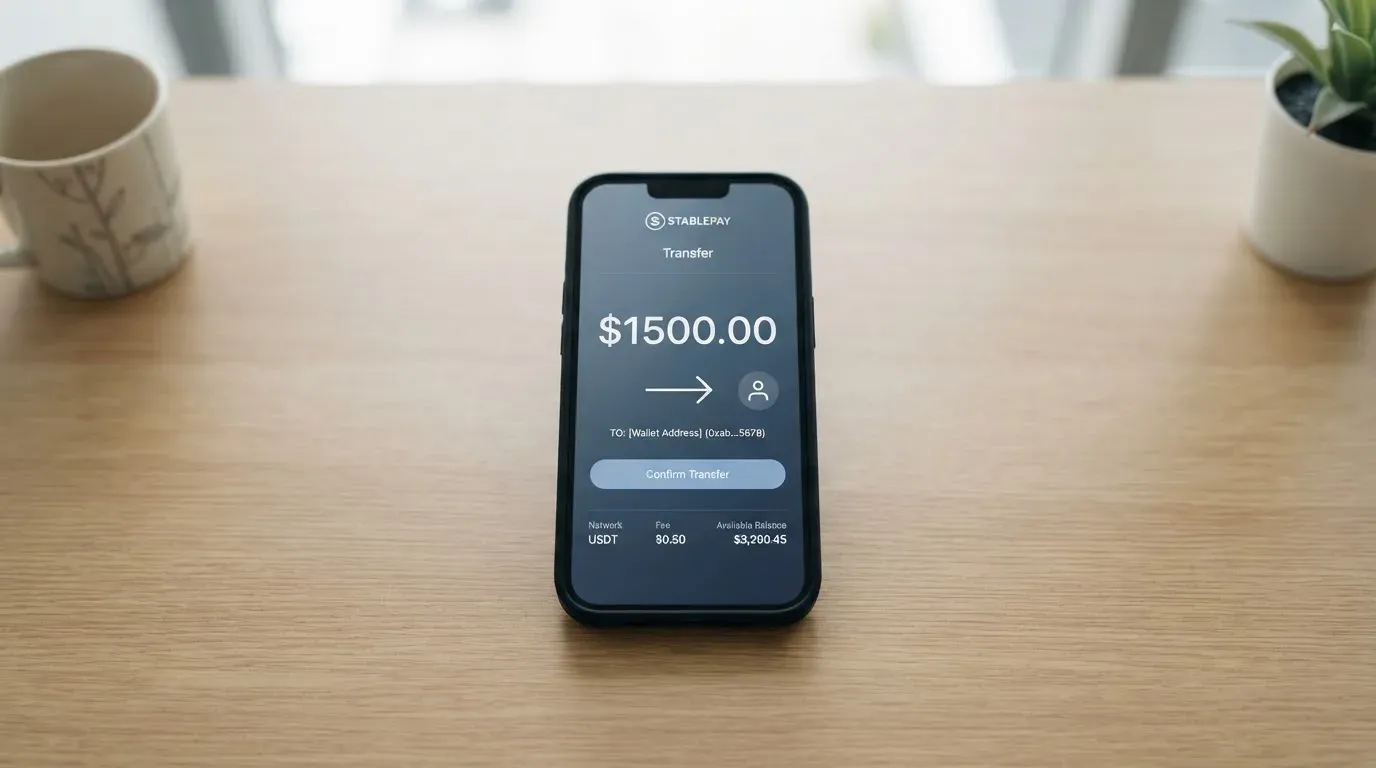
The costs of getting money in are correspondingly plain. Sending and receiving USDC on-chain is free. Cross-chain transfers cost only the network’s own gas. The ACH on-ramp is free and takes 1–3 business days; same-day ACH costs $1.00 where it is available. PIX in Brazil and SPEI in Mexico are free. No minimum top-up is stated, which I would read as “no published minimum” rather than “unlimited”.
Getting money back out is where the picture narrows, and this is the part to check before you rely on the card. ACH in the US is free and takes 1–3 business days. PIX in Brazil and SPEI in Mexico are the off-ramps. CVU in Argentina is rolling out. Colombia and Europe are not available or not listed. What happens to your balance if you close the account is not stated.
So: topping up is cheap, multi-chain and global. Withdrawing is a US/Brazil/Mexico story, with Argentina coming and Europe absent from the list. If your fallback plan for getting your money back to a bank is the whole reason you want a card, check your own country against that list first.
Paying with it every day
Apple Pay works. That is the single most useful daily fact, because it is how most people will actually reach for the card. Google Pay is marked “coming soon”. The ATM function is marked “Coming soon”. The card runs as a web app at app.encrypto.fun; I found no App Store or Google Play listings and therefore no ratings to report.
Some questions I could not answer from the card’s pages: which merchant categories are blocked, and what the dispute process is. Those two omissions matter more than they sound. If a purchase goes wrong, the usual route is a chargeback through the issuer, and whether that route exists here, and how it is initiated, is not published.
On rewards, the official pages state no cashback. Unofficial, per Polymart in September 2026: no cashback rate published, and Encrypto Points are earned on purchases in early access with no cash value stated. I would plan on paying the price shown and nothing back.
The physical card is a Visa debit card, usable wherever Visa is accepted, spending in USD. Whether it is metal is not stated — a small thing, and the kind of thing people assume rather than check.
What can go wrong
Nobody found any official incidents, and there is no Trustpilot page for Encrypto that I could locate. There is exactly one user report: a refund notification that did not appear in the card or wallet, listing dated September 2026, unresolved on that page as far as it goes. One complaint is not a pattern, and one complaint that never got a visible answer is a bad look in its own right.
The more meaningful risks are structural, and they belong to the category rather than to this one operator.
Custody is yours. Encrypto runs self-custody through managed key custody by Privy: it says it “cannot access or move user funds”, that at no time will it receive, control or hold your funds, and you recover a wallet without a seed phrase via social login. That is the strongest custody story available in this category, and it is also the one that puts the consequences of a lost or compromised device squarely on you. A seed phrase is the unencrypted form of the private key — anyone who obtains it can restore the wallet and spend it. Blockchain transfers are irreversible; a stolen key has no recovery path, because the network cannot freeze or return funds. Note also that on-chain balances have no FDIC insurance, per Polymart.
Key custody sits with a third party. Privy holds the keys. So the “we cannot touch your funds” property depends on a separate company’s architecture, not only on Encrypto’s intent.
Off-ramps are narrow. If your country is not on that withdrawal list, the money you loaded is the money you have.
Refund handling is unproven. That single unresolved refund report is small, but refunds are precisely the situation in which you want a working process and not an intention.
The programme can be wound down. Visa and Mastercard do not issue these cards to consumers themselves; they license issuers and can suspend a programme. Visa terminated its global agreements with FTX in November 2022 and the FTX US debit card was wound down by its issuer. WaveCrest, a Visa issuer that supplied crypto card brands, was suspended by Visa in Europe in 2018 and all its Visa programmes closed. Closures typically mean a notice period, then loading and spending stop, then you are asked to withdraw what remains.
Two-factor authentication and card freeze are not stated. The usual everyday safeguards for a card like this — app 2FA, instant freeze, spending limits — are listed on the card’s pages as either present (the daily limit) or unstated. I would ask about them before you need them.
Geography is unstated for your nationality. Your address is checked; whether your citizenship or country of birth is screened separately is not something the pages disclose. For many readers this is the decisive question and I simply cannot answer it from what is published.
On the company side: Encrypto Inc. issues the card; the Visa debit is issued by Lead Bank under a licence from Visa U.S.A. Inc.; money transmission is by Bridge Building Inc. and Lead Bank; wallet key custody is by Privy. Encrypto’s own registration place is not stated.
What to take instead
If Encrypto is not right for you, it is usually because one specific thing is missing, and it is easier to compare against the specific gap than to compare brand to brand.
TokenPocket (5.8 / 10) is the weakest of the four here. Its Visa debit covers a list of European countries and territories such as Germany, France and Spain, with Mastercard debit for Australia, Canada, Hong Kong, Japan, Taiwan, New Zealand, Singapore, South Korea and the UK, Americas planned for Q2 2025. Cards are virtual, with balances in EUR24 and USD24. There is an NFT creation fee partly covered by TokenPocket where you pay a small portion, and no other fees. But a 1% fee is charged when depositing crypto into the card, to be refunded later via rewards or reduced transaction fees. One percent to load, refunded later in loyalty points, is a worse version of the thing Encrypto does for free.
MetaMask (7.1 / 10) is the closest comparison. Sign-up is open in 45 listed countries and territories, with proof of residency, other regions on a waitlist, and US/UK sign-ups temporarily closed per FAQ. The card is Mastercard: a virtual card issued instantly, one per user, with metal pre-orderable in-app after virtual approval at $199/year, and no annual or maintenance fee on the virtual card. Fees are a “minimal fee for each transaction” with no MetaMask additions and no foreign transaction fee. It spends directly from your connected wallet on Linea, Base, Monad and Solana, holding mUSD, wETH, EURe, GBPe, USDC and USDT. And it pays cashback in mUSD into a Money Account: 1% on virtual, a headline 3% on metal with the footnote limiting 3% to the first $10,000 spent then 1%, plus a $FLY bonus via Blackbird dining. If you want rewards on your card spend, MetaMask is the one here that publishes real numbers. If you want to avoid any card fee at all, Encrypto is cheaper.
KAST (6.1 / 10) is the one with the most elaborate structure and the widest self-imposed limits. It offers virtual and physical, up to 10 cards, across Visa Platinum, Visa Infinite metal and Visa Infinite gold plated tiers, with other designs including Pengu, Solana and Bitcoin, balance in USD from stablecoin deposits converted 1:1 at 0% spread. Fees are aggressive in your favour on the basics — stablecoin top-up 0%, USD spend 0%, transaction fee 0%, Apple/Google Pay 0% — with a non-USD FX fee of 0.5%–1.75% depending on your residence, transaction country and card programme, 0.10 USD on non-USD transactions under 25 USD, and 0.50 USD for a declined transaction. Cashback is 1.5%, 2% or 3% by tier on capped monthly spend. It accepts USDT, USDC, PYUSD and RLUSD. The problem is entry: annual membership of 0, 1,000 or 10,000 USD by tier, billed annually upfront with no monthly option, a Standard physical card fee of 0 USD plus 40 USD delivery, a 1 USD/month inactivity fee after 12 months, and a residence-based country list shown only at KYC with no published list. And its own terms conflict with its app, saying acceptable tokens are “currently USDT and USDC”.
Where that leaves the field: Encrypto for cost and multi-chain flexibility, MetaMask for published rewards and a defined country list, KAST for tiered cashback if you are willing to pay for a tier, TokenPocket for Europe and the Asia-Pacific with a load fee you must weigh.
Who I would recommend it to
If you already keep USDC on Ethereum, Base, Arbitrum, Optimism, Polygon, Avalanche, Solana, Stellar or Tron, you would rather hold the keys yourself than trust a custodian, you can get an invitation, and you mostly want to pay for things — I would recommend this card. The case for it is narrow and concrete: no monthly fee, no fee on USDC spending, no FX markup, nine networks, and custody that stays with you.
I would not recommend it as your only card. There is no overdraft, the daily cap is $10,000, Google Pay and the ATM are not here yet, the off-ramp list is short, and the KYC tier and withdrawal details are not published. Treat it as the card you spend from, not the card you keep.
And if the invitation is the thing stopping you, nothing else in this review changes that. Join the list, wait, or look at MetaMask or KAST instead — but know which of those two gaps is actually yours before you switch, because the reason to leave Encrypto is usually one specific missing feature, and each of these has one.
Frequently asked questions
What is the Encrypto card?
The Encrypto card is a Visa debit card that spends from a self-custody crypto wallet you control. It connects to your own on-chain balance across nine blockchains — Ethereum, Base, Arbitrum, Optimism, Polygon, Avalanche, Solana, Stellar and Tron — and pays out in USD. A virtual card is instant, a physical card ships to your address, and the wallet is described as available globally while card availability is decided at signup by region.
Does Encrypto require KYC, and what documents do I need?
Yes — access is invite-only, and you verify with an X account first, then complete identity verification handled by Bridge, a Stripe company. Activation is instant after your KYC is approved. What documents are required, whether proof of address is needed, what age applies, and how many KYC levels exist are not stated on the card’s public pages, so ask at signup rather than assume.
What does it cost to hold and use the card?
The virtual card is free and instant, the physical card is $5.00 one-time, and there is no monthly maintenance fee. Spending USDC directly carries no conversion fee, domestic and international purchases are free, and international spending uses the Visa exchange rate with no Encrypto markup. Only non-USDC assets attract the 0.5% conversion fee at point of sale, plus a market-rate DEX swap typically 0.01–0.3%.
How do I top up, and what does it cost?
Sending or receiving USDC on-chain is free, and cross-chain transfers cost only the network’s gas. The ACH on-ramp is free in 1–3 business days, with same-day ACH at $1.00 where available. PIX in Brazil and SPEI in Mexico are free, and no minimum top-up is stated. The wallet spends your on-chain USDC directly; other crypto is converted at the moment of payment.
Can I withdraw back to my bank account?
That depends on your country and it is the most important thing to check. ACH in the US is free in 1–3 business days, PIX in Brazil and SPEI in Mexico are supported, and CVU in Argentina is rolling out. Colombia and Europe are not available or not listed. What happens to a remaining balance if you close the account is not stated, so plan your off-ramp before you load.
Is Encrypto a bank, and who actually holds my money?
Encrypto is Encrypto Inc. The Visa debit card is issued by Lead Bank under a licence from Visa U.S.A. Inc., money transmission is by Bridge Building Inc. and Lead Bank, and wallet key custody is by Privy. Encrypto states it “cannot access or move user funds” and that at no time will it receive, control or hold them. Note that on-chain balances have no FDIC insurance, and Encrypto’s own registration place is not stated.
Is the Encrypto card safe to use?
Structurally it is one of the safer designs: self-custody means key loss, phishing and malicious software are your responsibility, and blockchain transfers are irreversible with no way to freeze or return stolen funds. The card states no two-factor authentication or instant freeze, and I found no official incidents but one September 2026 user report of a refund notification that never appeared in the card or wallet. There is no Trustpilot page for Encrypto.
Which countries can use the Encrypto card?
The markets named are the United States, Brazil, Mexico, Argentina, Colombia and Europe. The card says “card availability is determined during signup based on your region”, and no excluded countries are named, though Colombia is listed as rolling out or coming soon on the regions page. No citizenship rule is stated, so if you hold a document from one country and live in another, the signup form’s own answer is the only real one.
Can I add the Encrypto card to Apple Wallet?
Apple Pay is available, and that is how most people will actually use the card day to day. Google Pay is marked “coming soon”, and ATM withdrawals are also “Coming soon” with no fee stated. Because Apple Pay stores a device-specific number in the Secure Element rather than on Apple’s servers, each payment uses a one-time dynamic security code, which is worth knowing if you are comparing phone-wallet support.
Is the Encrypto card worth it?
For someone already holding USDC on-chain, yes, and the arithmetic is simple: no monthly fee, no fee on USDC spending, no FX markup, and nine networks. The catch is access — it is invite-only, and the off-ramp list is short while Google Pay and ATMs are not yet live. If rewards matter more than cost, MetaMask publishes real cashback numbers and KAST offers tiered cashback; if you are outside the listed regions, check availability at signup before committing.
Wallet card fees and costs – cryptocardfacts
Content created by the «cryptocardfacts» team