
A self-custody Visa card with a crypto twist, but with caveats
 Available in US

The ether.fi card is a Visa debit card that draws from a self-custody-style “Safe” vault rather than a traditional bank account. In practice, this means you hold your own crypto until the moment you pay, then the card converts and settles. That setup is unusual in the crypto card space, and it’s the main reason people look at ether.fi when ordinary bank cards aren’t available or don’t suit them.
The card scored 6.7 out of 10 in this review, and the breakdown below explains why. It earns praise for everyday usability (it works in Apple Pay and Google Pay, supports a wide range of tokens, and offers tiered cashback in ETHFI), but it loses points on reliability. Trustpilot sits at 3.3 out of 5 across 47 reviews, and in November 2025 the card programme was suspended after reports of fraudulent transactions. The issuer is not officially named, with third-party sources disagreeing on whether it’s Rain or Third National.
The conditions are current as of October 28, 2026.
Verdict
The ether.fi card works well for residents of supported countries who want a Visa that spends directly from crypto, with cashback in ETHFI and self-custody architecture. It’s not a good fit for people who need clarity on the issuer, guaranteed cardholder protections, or a program with a clean compliance track record.
Here’s how the card scored across the criteria that matter most:
| Criterion | Score | Why it matters |
|---|---|---|
| Who can get it | 7 / 10 | Issued in listed jurisdictions plus 31 US states; broad but not global |
| Cost | 7 / 10 | Free virtual card on Core; FX 0.5% on Core, lower on higher tiers; some fees not disclosed |
| Top-up options | 7 / 10 | Any supported token deposited to your Safe; deposits accepted from multiple networks |
| Reliability and complaints | 4 / 10 | Trustpilot 3.3/5; cards suspended in November 2025 after fraud reports; issuer not officially named |
| Everyday use | 9 / 10 | Virtual and physical Visa, Apple Pay and Google Pay, ATM up to $5,000 per withdrawal |
| Total | 6.7 / 10 |
The card suits residents of listed countries who want to spend ETH and stablecoins with ETHFI cashback and who are comfortable with a self-custody flow. It does not suit anyone who needs a clearly licensed issuer, strong dispute resolution, or a program that has never been paused.
Who will they give you the card
Ether.fi issues the card only in listed jurisdictions, and the list is not a small one. According to the card’s own help articles, supported jurisdictions include Andorra, Argentina, Australia, Austria, Brazil, Canada, Cyprus, Czech Republic, France, Germany, Hong Kong, Hungary, Italy, Japan, Mexico, Poland, Portugal, Singapore, Spain, Switzerland, UAE, and the UK, plus 31 US states. Belgium and Ireland are eligible but without physical card delivery. If your jurisdiction is not listed, you cannot apply.
Citizenship rules are not stated, so the card programme distinguishes only by residence. ATM withdrawals are blocked in North Korea, Iran, and Myanmar.
The practical takeaway: if you live in one of these countries and can complete KYC, you’re likely eligible. If you live somewhere not on the list, there’s no workaround.
How to get it
The signup flow has three steps: deposit tokens to your Safe, complete KYC, then order a virtual or physical card in the app.
KYC requirements
Activation includes “Verify your identity via KYC.” The exact documents and minimum age are not stated, but the flow covers:
- Phone OTP verification
- An ID document (passport, national ID, or driver’s licence)
- A selfie liveness check
- Address details
- Sometimes a card issuer questionnaire
Proof of address is required only in some cases, and when it is, the document must be no older than 3 months. Phone bills and screenshots are explicitly excluded. Most KYC reviews complete within 48 hours, but delays happen when an ID is expired or cropped, when information is inconsistent, or when the address doesn’t match.
A $10 crypto deposit is required before KYC can complete, in all regions. If verification fails, that deposit can be withdrawn.
Card delivery
The card is a Visa, available as both virtual and physical. The card currency is not stated, though purchases in USD and EUR are both referenced. Delivery countries, delivery time, and price are not disclosed in the public Physical Cards article. PO boxes are not allowed, the address must be in Latin characters, and shipping details cannot be changed after ordering. On the Core tier, shipping is paid (amount not stated); on Luxe and above, shipping is included.
One thing to keep in mind: KYC happens once, with no tiered levels. You’re either verified or you’re not.
Fees and what it really costs
The cost picture on ether.fi depends heavily on your tier and what you’re spending in. The table below covers what the card publicly states; anything not listed is genuinely undisclosed, not something I’ve estimated.

| Fee or limit | Core | Luxe | Pinnacle | VIP |
|---|---|---|---|---|
| Monthly/annual fee | Not stated | $199/year or points | $999/year or points | Not stated |
| Virtual card | 1 free ($10 in regional-pricing countries) | 2 free | 10 free | Unlimited free |
| Physical card | Free (shipping fee applies) | Free metal, shipping included | Free, express shipping | Free Gold metal card |
| FX fee | 0.5% | 0.25% | None | None |
| EUR purchases | Separate 0% FX article, lower cashback ladder | Same | Same | Same |
| ATM withdrawal | Up to $5,000 per withdrawal, 5 per 24h | Same | Free up to 10/month | Free |
| Cash Protection | Up to $10,000 | Up to $50,000 | Up to $200,000 | Up to $500,000 |
A few practical examples to make this concrete:
If you’re on Core and spend $100 at a merchant that settles in British pounds, you’ll pay the network’s exchange rate plus 0.5% FX, then the conversion from your crypto balance (conversion fee not stated). If you spend that same $100 in a euro-zone country, the FX article says 0%, though cashback rates are lower on EUR purchases.
If you withdraw $500 from an ATM on Core, you’re within the $5,000-per-withdrawal cap. Third-party sources (unofficial, not confirmed by the card) mention a 2% ATM fee with a $250/day cap. The card’s own help articles do not state the ATM fee clearly.
If you load $2,000 of crypto into your Safe and spend it on a Core card, you get 3% cashback on the first $2,000 of monthly spend, then 1% up to $3,000, then 0.5% above that. On Luxe, the 3% band extends to the first $10,000.
The monthly and annual fees for Core and VIP are not stated, which is a transparency gap. Neither is the crypto conversion fee, which means you won’t know the full cost of a transaction until you’ve done it.
Top up and funding
Topping up the ether.fi card starts with a transfer. You deposit “any supported token” into your personal Safe, which functions as the card’s collateral. The card then spends from that balance. Deposits are accepted from multiple chains.
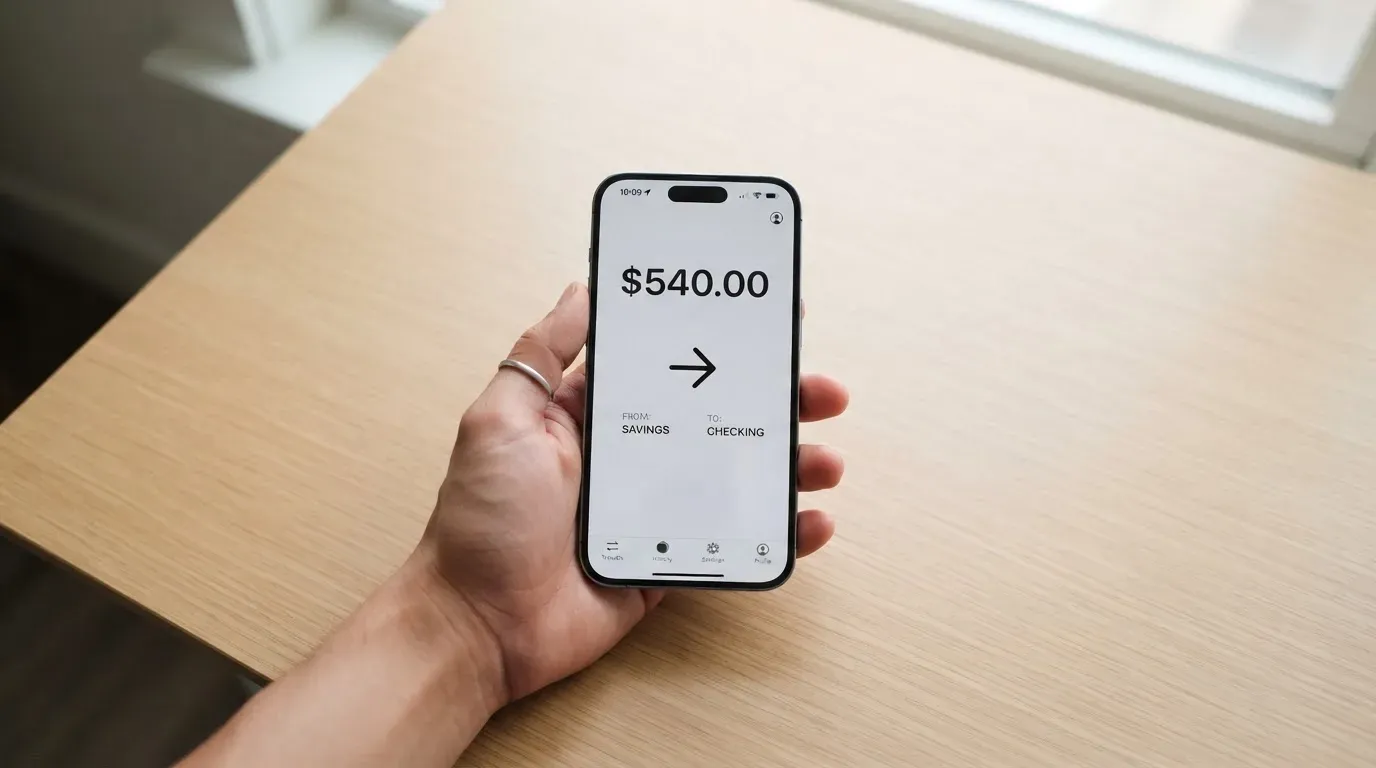
The coin and network list is not disclosed on the public pages I’ve reviewed, though help articles titled “Supported assets and networks for your Vault with Cash” and “USDC and USDT deposit networks and addresses” exist in the support centre. Fiat top-up via bank transfer has its own article, but country availability and fees were not read here.
Withdrawing your balance
To withdraw from the vault, you request a withdrawal with the token, amount, and recipient address. The transaction executes once the required Safe owners sign, which reflects the self-custody model. Cross-chain withdrawals have a separate article, and fees are not stated.
If you want to delete your account entirely, the balance must be zero, there must be no active borrows, and no pending card transactions. A 14-day waiting period applies, and any remaining balance must be withdrawn before deletion.
A practical warning: blockchain transfers are irreversible, so sending a deposit on a network the card doesn’t support, or to an address of the wrong network, can mean lost funds with no guaranteed recovery path.
Paying with it every day
The ether.fi card functions as a standard Visa in most day-to-day situations. You get a virtual card immediately after KYC, and a physical card if you order one. Both work in Apple Wallet and Google Pay; you add them via the card details in the app.
Cashback mechanics
Cashback is paid in ETHFI, locked for 7 days, and then claimable. The rates are:
- Core: 3% on first $2,000/month, 1% up to $3,000, then 0.5%
- Luxe: 3% on first $10,000
- Pinnacle: 3% on first $50,000
- VIP: 4% on first $50,000
- Business: 1%
EUR purchases use a lower cashback ladder. ATM withdrawals, cash advances, P2P transactions, and gambling MCCs are excluded from cashback. There’s no stated payout cap on cashback rewards.
Spending limits
Beyond tier-based overall limits (not stated), users can set their own daily and monthly caps in the Cash tab. There are also weekly per-card limits by merchant category:
- $500 for crypto purchases, gambling, FX, and prepaid loading
- $1,000 for money transfers, stock brokers, and dating services
- $3,000 for pharmacies, licensed online casinos (MCC 7800-7802), and funding crypto accounts
- $30,000 per advertising transaction
Some MCCs are excluded or limited for cashback: 6011 (atm), 6012 (financial institutions), 6211 (securities), 6513 (real estate), 6532 (payment transaction funding), 7995 (gambling). Gambling is capped at $500 weekly, not stated as fully blocked.
Disputes and refunds
If something goes wrong with a transaction, you file a dispute via in-app chat with support. For unauthorized transactions, the advice is to delete the card and contact support; the case then goes through Visa’s fraud process. For merchant issues (non-delivery, duplicates, subscription problems), the card advises contacting the merchant first, then going through Visa’s dispute process. Disputes may take up to 90 days to complete, and no dispute fee is mentioned. Refunds come from the merchant; the timing is covered in a separate article.
App
The iOS app is called “ether.fi: Crypto Card & Spend” and requires iOS 16.0 or later. It holds a 4.9 rating with 141 ratings in the US storefront (read 2026-10-20). The Google Play listing was not found or not read.
What can go wrong
This is where the review gets cautious. The reliability score is 4 out of 10, and the issues are concrete.
November 2025 suspension
In November 2025, the cards were suspended after reports of fraudulent transactions. PANews reported the suspension; the CEO promised refunds. The card programme resumed, but the episode is a real mark against reliability.
Trustpilot and user complaints
Trustpilot shows ether.fi at roughly 3.3 to 3.5 out of 5 across 47 reviews (readings differ slightly depending on date). Common themes:
- KYC or address verification in limbo for weeks or months
- Denial after approval with a generic “suspected fraud” notice and no specific reason
- Compliance freezes with slow, automated support responses
- Reports of lost deposited funds during card activation (2025)
A secondary aggregator (cryptocards.so) also mentions compliance freezes and slow support, but that’s third-party, not the card’s own statement.
The issuer question
The legal entity and card issuer are not stated on ether.fi’s public pages. Third-party sources disagree: one blog says the issuer is Rain, while another says it’s Third National under a Visa licence. Neither is confirmed by the card. This matters because if something goes seriously wrong, you need to know which regulated entity is responsible for your money and your dispute.
Security architecture
On the positive side, the security model is self-custody-leaning. Your funds sit in a Safe vault that requires Safe owner signatures to withdraw. Sign-in uses passkeys, email OTP, and a PIN. You can freeze the card immediately in the app, and you can set user-defined daily and monthly spend limits (though changes take effect after a security delay).
The Cash Protection Program (which is not insurance) reimburses unauthorized smart-contract asset movement. Caps are $10,000 for Core, $50,000 for Luxe, $200,000 for Pinnacle and Business, and $500,000 for VIP. The programme has $5 million total capacity, a $100 claim fee refunded if approved, and excludes compromised keys, credentials, or devices. In other words, if your seed phrase leaks, you’re not covered.
Support is available via in-app live chat and email ([email protected]). Pinnacle has a dedicated account-manager team; VIP has executive support. If you’re on Core or Luxe, you’re in the standard queue.
What to take instead
Three alternatives cover the same general ground (crypto-funded Visa spending) with different trade-offs. Scores are from the same research, not from this review.
Sponge
Score: 4.9 / 10
Sponge offers a virtual card created via createSpongeCard, described on the homepage as a credit card issued by Rain (a Visa Principal Member). The card is accepted wherever Visa is accepted, and funding works by moving USDC collateral from the Sponge wallet using a card fund command (example chain: Base).
What’s not stated: country availability, fees, cashback, and card currency. The minimum age for the service is 13, per the platform’s terms, which is unusually low for a financial product.
Sponge is a reasonable option if you already hold USDC on Base or Solana and want a simple virtual card, but the lack of disclosed costs and the low score make it a speculative choice.
Nexo
Score: 6.3 / 10
Nexo offers a virtual card (activates in app) and a physical card. The page shows a Mastercard trademark, but the network isn’t stated explicitly. The card is issued by DiPocket UAB. Card currency isn’t stated; ATM allowances are quoted in EUR and GBP.
The card is available to residents and citizens of “selected European countries, including the EEA and the United Kingdom,” though the full country list isn’t on the page and excluded jurisdictions aren’t named. (A 2025-era Cointelegraph report mentioned a Bulgarian police raid on Nexo’s Sofia office over alleged Russia-sanctions and AML violations; there’s no official Nexo statement on whether Russian users are affected.)
Costs: no monthly, annual, or inactivity fee. The virtual card needs at least $50 in the account to activate. The physical card has free shipping but requires a balance above $5,000 in digital assets and at least Gold tier.
FX fees: 0.2% on weekdays for EEA/UK/CH, 2% elsewhere; 0.7% and 2.5% on weekends. Crypto conversion fee isn’t stated; the card spends stablecoins, crypto, and FiatX assets (EURx, USDx, GBPx) in Debit Mode.
Cashback is only on Credit Mode purchases and requires more than $5,000 in digital assets. It’s paid in NEXO or Bitcoin. By loyalty tier (NEXO/BTC): Platinum 2%/0.5%, Gold 1%/0.3%, Silver 0.7%/0.2%, Base 0.5%/0.1%. The tier depends on the share of NEXO tokens in your portfolio.
Nexo is a solid option if you’re already in the EEA/UK ecosystem and hold enough NEXO tokens to reach a useful tier.
Xplace
Score: 7.7 / 10
Xplace is a Visa card (virtual, instant; physical Silver is live, Gold and Platinum are coming soon, with 7-14 business-day delivery). It’s accepted in 160+ countries. Country availability is “not all jurisdictions,” with no full list disclosed.
Costs: Basic is free, Silver $99/year, Gold $249/year, Platinum $999/year. Borrowing has no origination fee. “0% FX on Platinum”; FX for other tiers and conversion fees are not stated. Stablecoin spending has “no hidden spread.”
Funding: deposit BTC (cbBTC), ETH (wETH), SOL, JitoSOL, USDC, USDT, or xStocks on the Solana network.
Cashback in Credit Mode: Basic 0.5%, Silver 1%, Gold 1.5%, Platinum 2%, paid in USDC to the wallet at settlement. Cash-mode cashback isn’t stated.
Xplace is the strongest of the three alternatives in the score, particularly if you’re comfortable on Solana and want a clear fee structure at the top tier.
Who I would recommend it to
The ether.fi card is a reasonable choice for a specific profile: you live in one of the listed jurisdictions, you’re comfortable with a self-custody flow (you understand that you hold the keys, and you’re careful with them), you want to spend ETH or stablecoins at a Visa merchant with ETHFI cashback, and you’ve accepted that the issuer is not publicly named.
If you need a card with a clearly licensed and named issuer, strong consumer-protection guarantees, or a clean compliance history, this isn’t the card for you. The November 2025 suspension and the Trustpilot pattern suggest that support and dispute resolution can be slow when things go wrong, and the lack of disclosed conversion fees means you can’t always predict the true cost of a transaction.
For most people, the Nexo or Xplace alternatives offer a more transparent fee structure, a named issuer, and a comparable spending experience. The ether.fi card’s edge is its self-custody architecture, its multi-network deposit support, and its ETHFI rewards, and if those matter more to you than a clean compliance record, it’s worth a closer look.
Frequently asked questions
What is the ether.fi card?
The ether.fi card is a Visa debit card that spends from a self-custody-style Safe vault. You deposit supported tokens, and the card converts and settles at the point of sale. It works in Apple Pay and Google Pay and offers tiered cashback in ETHFI.
How does the ether.fi card work?
You deposit crypto into your personal Safe, complete KYC, and order a virtual or physical card. At each purchase, the card converts your crypto to fiat and spends it. Withdrawals from the vault require Safe owner signatures, reflecting the self-custody model.
Is ether.fi a bank?
Ether.fi is not a bank. It’s a crypto platform that issues a Visa card through an unnamed issuer. The card’s own pages don’t name the issuing entity; third-party sources disagree on whether it’s Rain or Third National.
Who owns ether.fi?
Ether.fi is a DeFi protocol founded in 2022. The company behind the card and the card’s legal entity are not stated on the public pages reviewed here.
Is the ether.fi card available in my country?
The card is available in Andorra, Argentina, Australia, Austria, Brazil, Canada, Cyprus, Czech Republic, France, Germany, Hong Kong, Hungary, Italy, Japan, Mexico, Poland, Portugal, Singapore, Spain, Switzerland, UAE, the UK, and 31 US states. Belgium and Ireland are eligible without physical delivery. If your country isn’t listed, you can’t apply.
How do I get the ether.fi card?
Deposit tokens to your Safe, complete KYC (phone OTP, ID document, selfie liveness, address), then order a virtual or physical card in the app. A $10 crypto deposit is required before KYC can complete.
Does the ether.fi card require KYC?
Yes. KYC is required for activation, with one standard flow (no tiered levels). You’ll verify your phone number, submit an ID document, complete a selfie liveness check, and provide your address.
How do I top up the ether.fi card?
Deposit any supported token to your Safe. Deposits are accepted from multiple chains. The full list of supported assets and networks is in the help articles “Supported assets and networks for your Vault with Cash” and “USDC and USDT deposit networks and addresses.”
How do I add the ether.fi card to Apple Wallet?
In the app, find the card details and follow the prompts to add it to Apple Wallet. The same process works for Google Pay.
Is the ether.fi card safe?
The card uses self-custody architecture (your funds stay in your Safe until spent), passkey sign-in, and a Cash Protection Program that reimburses unauthorized smart-contract movement up to tier-based caps. However, the program is not insurance, the issuer is not publicly named, and the card was suspended in November 2025 after fraud reports. If key safety and issuer transparency are your top priorities, evaluate carefully.
Credit and cashback card costs – cryptocardfacts
Content created by the «cryptocardfacts» team