
A no-KYC virtual Visa that answers one question well and leaves the fee sheet blank
 Available in US
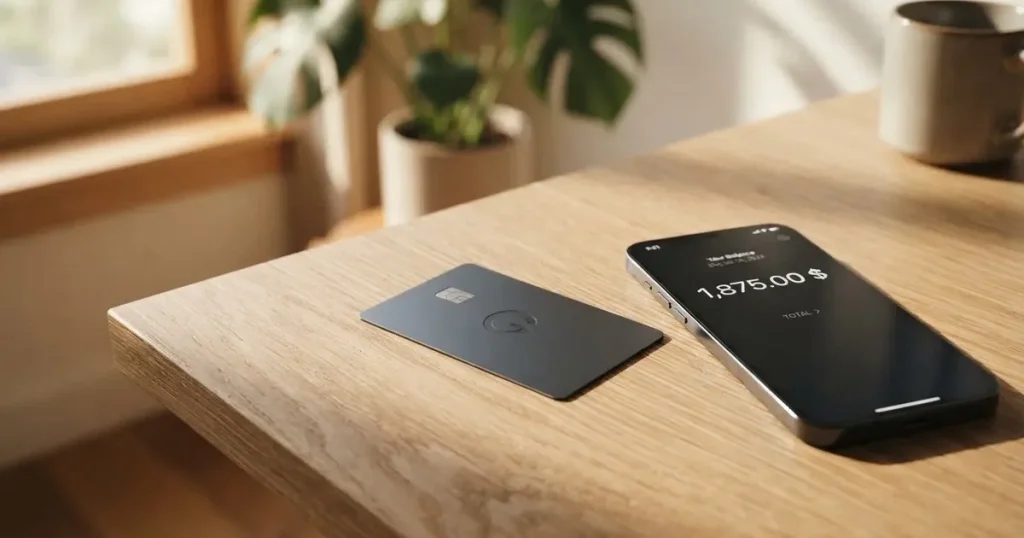
Anon is a virtual Visa card you sign up for with an email address and fund with cryptocurrency. There is no plastic card in the post, no identity check, and no account number at a bank you can name from its own website. In exchange you get something quite specific and, for a certain kind of payment, genuinely useful: a card number that appears at a checkout and is spent from a small balance you loaded once.
The conditions described here are current as of October 28, 2026.
I have gone through what the card states publicly and what users say about it, and I want to be plain about where the balance falls. The idea is coherent and the privacy promise is unusually clear. The fee disclosure is not there. The company behind it says outright that it is not a bank, and the partner institution that actually issues the card is never named. Users report a specific failure pattern — the card works, then loading one fails, and then support goes quiet — and that pattern is exactly the one that matters, because loading is the only thing this card does.
If you need a card for ordinary life — a salary, a rent payment, a subscription you will not cancel — this is the wrong tool. If you need one anonymous one-off online payment where you do not want your name attached, the design fits the job, provided you treat the money you load as money you might lose.
The verdict: 5.6 out of 10
| Criterion | Score | Why |
|---|---|---|
| Who can get it | 9 / 10 | Not redeemable in 22 countries (Albania, Belarus, Cuba, Iran, North Korea, South Korea, Syria, Venezuela and others); the rest of the world is open. No KYC, only an email is needed |
| Cost | 5 / 10 | Not disclosed: standard card creation and load fees apply, no amount given, non-refundable; conversion on top-up not named, no “additional fees” for online purchases |
| Top-up options | 7 / 10 | More than 10 cryptocurrencies: Bitcoin, Litecoin, Ethereum, Bitcoin Cash, USDT on the site, XMR, USDC, SOL, XRP in the starting data; networks not named; up to 1,000 USD per card, one top-up per card |
| Reliability and complaints | 3 / 10 | Anon Services, Inc., not a bank, issuing partners not named; complaints on AlternativeTo: “works until you try to load a card”, support goes silent, there are scam claims |
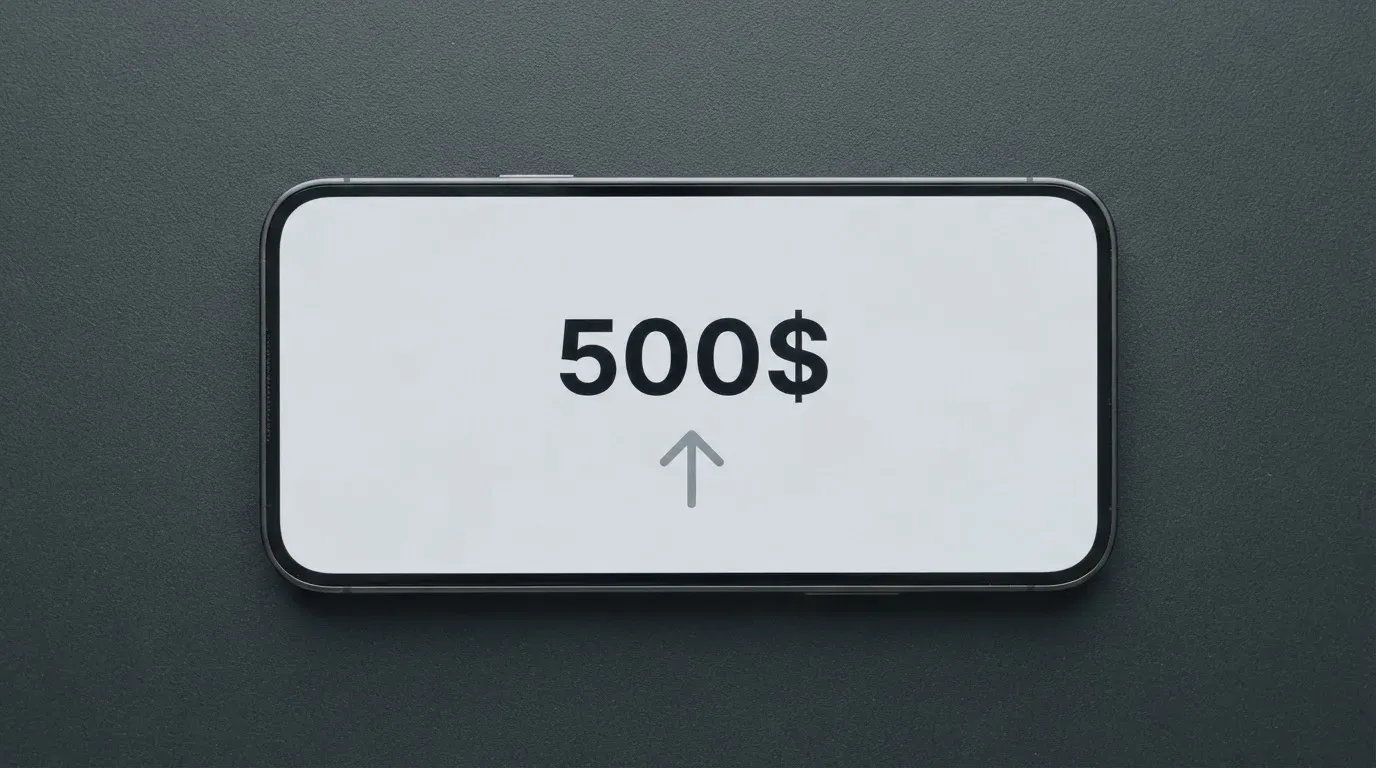
| Everyday use | 3 / 10 | Virtual Visa only; Apple Pay and Google Pay only above 500 USD loaded, no 3-D Secure, no ATM, the card lives 60 days after creation |
| Total | 5.6 / 10 |
The high score on eligibility is the honest part of this table, and it deserves to be first because it is what distinguishes the card. Almost every product in this category publishes a country list and quietly leaves your country off it. Anon publishes an exclusion list instead, and it is short — 22 named countries — with Russia not among them. Whether the exclusion is based on your citizenship or on where you live is not stated, and that gap matters if you are a citizen of one of the listed states living elsewhere, or the reverse. I cannot tell you which rule applies, because the card does not say.
The cost score is a 5, not because the fees are known to be high but because they are not disclosed at all. The card says standard card creation and load fees apply, that they are non-refundable, and then declines to name an amount. Everything else about the economics — conversion spread, foreign exchange, monthly maintenance — is either “not stated” or covered by a sentence promising no additional fees on online purchases. A fee you cannot look up is not a low fee. It is an unknown fee, and unknowns deserve more caution than known ones, not less.
The two 3s at the bottom are where the risk lives. Reliability is 3 because the issuer is unnamed and the user reports are specific and repeated. Everyday use is 3 because there is no physical card, no ATM, no 3-D Secure, wallet support above a $500 threshold, and a sixty-day life per card. This is a card for one payment, by design, and the design is honest about it.
The audience is narrow and worth naming plainly: anonymous one-off online payments with email-only sign-up. If that is your use, the fit is unusually good. If it is anything else, the fit is poor, and no fee will change that.
Will they give you the card?
Yes, for almost everyone, which is unusual and is the card’s main genuine strength.
The card is not redeemable in 22 countries: Albania, Belarus, Congo, Democratic Republic of the Congo, Côte d’Ivoire, Cuba, Iran, Iraq, North Korea, South Korea, Lebanon, Libya, Myanmar, Nicaragua, Pakistan, Somalia, South Sudan, Sudan, Syria, Venezuela, Yemen, Zimbabwe. Russia is not on that list. Everything outside it is treated as open.
Two things the card does not tell you, and you should notice rather than assume. First, whether the test applies to your citizenship or your place of residence — citizenship versus residence is not stated. Those are different questions with different answers for a lot of people, and the card’s silence is not evidence either way. Second, your age. Age is not stated. If you are under 18, you are in unknown territory, and unknown territory is not where you want to be holding money.
One structural point about the company is worth putting here because it colours everything else. Anon Services, Inc. describes itself as “a financial technology company, NOT A BANK”. The state of incorporation is not given. The card is issued by “our partner Financial Institutions”, pursuant to a licence from Visa U.S.A. Inc. — plural institutions, none of them named. That phrasing is standard, and the fact that it is standard does not make the missing name feel less missing when something goes wrong and you need to know who to write to.
There are no verification levels here. No tiers, no upgrade path, no documents. That is the design, and I would rather describe it than argue with it.
How to get it
Three steps, one of which is optional in practice but not in the flow: sign up with an email address, fund the balance with crypto, then create the virtual card.
On the identity question the card is unusually direct. It is labelled “NO-KYC” and says: “We will never ask for any identification or personal information”. That is a stronger sentence than most products in this category manage, and it is the sentence I would hold the company to if anything ever changes. Sign-up requires an email address and nothing else — no name, no address, no scan, no selfie.
What you get is the Anon Virtual Visa Card. Virtual only. It is Visa-branded and structured as a debit card, and the balance behind it is held in US dollars. There is no physical delivery to wait for and nothing to activate, because there is no object. The card is created in your account and the number is there to be used.
Where you do it: web sign-in at open.paywithanon.com. There is no store app that I could find — which matters less than it sounds, because a card with no physical form and no wallet integration has little to offer an app, but it does mean your card lives in a browser tab.
I want to be careful about how I describe this, because the limits on this page are the same ones that apply to the card. I am not going to tell you how to make a false statement, work around a sanctions list, or use an exclusion country as a route in. If you are in one of the 22 listed countries, the answer is that the card does not work there, and the fact that it is technically reachable is not the same as it being permitted. The exclusion list is the card’s own statement of where it will not function, and I would treat it as a boundary rather than a puzzle.
Fees: what it really costs
The costs table is short because the card’s disclosure is short. Values below are what the card states; where a cell reads “not stated”, that is not an estimate of zero, it is the absence of an answer.
| Fee or limit | What the card says |
|---|---|
| Issuance | “Standard card creation and load fees apply”, non-refundable; amount not listed |
| Monthly fee | Not stated |
| Crypto conversion | Crypto is automatically converted to USD on deposit; the conversion fee or spread is not stated |
| Online purchases | “No additional fees” |
| FX fee | Not stated |
| ATM | Not applicable — virtual card only |
| Per-card maximum | Up to $1,000 USD; “You can load an Anon Card up to $1.000 USD each” |
| Number of cards | Unlimited number of cards |
| Top-ups per card | Each card can be funded only once |
| Card lifetime | Must be used within 60 days of creation |
| Daily / monthly spend limits | Not stated |
| Tiers | Single tier |
Two or three everyday payments, so the shape of it is concrete.
A subscription payment, paid with a card funded with crypto. You create the card, load the crypto, and the amount converts to dollars on deposit. What you pay at checkout is the subscription price. The card promises no additional fees for online purchases, so the purchase itself adds nothing. But the dollar amount you received when your crypto was converted is not stated to you in advance at any rate, and the spread is not disclosed. You are not losing a percentage on a fee line item; you are losing whatever the conversion gave away, invisibly, at the moment of funding. That is the same money, less legibly.
A game or software purchase from a merchant that runs a fraud check. No 3-D Secure support, so merchants requiring 3DS will not process. That transaction fails, and you find another way to pay. Not a fee, but it is a cost that shows up as an afternoon lost.
Anything you would have paid in cash. There is no ATM, no physical card, no cash-out. The balance is “not redeemable for cash” outside limited legal exceptions, so money that goes in and does not get spent does not come back as cash. It sits as Anon credit.
The single-tier structure and the $1,000 ceiling deserve a moment, because they set a real boundary. One top-up, $1,000, sixty days. This is a card shaped like a single-use instrument, and pretending otherwise would be doing you a disservice. If you need to spend more than a thousand dollars through one number, or need the money back when you are done, this is not the mechanism.
How to top it up
Over ten cryptocurrencies. The homepage names Bitcoin, Litecoin, Ethereum, Bitcoin Cash and USDT; the starting data adds XMR, USDC, SOL and XRP. Networks are not specified, anywhere, for any of them.
That last sentence is the one to sit with, because it moves the difficulty onto you. On Ethereum, USDT sent with no ETH in the wallet for gas cannot move at all — fees on that network are paid only in ETH. On Tron, fees work differently again, through bandwidth and energy, often by burning TRX. So “I sent USDT” is not yet a completed action; “I sent USDT on the network the provider expects, with enough of that network’s own token to pay for it” is. If you send on an unsupported network, or to an address belonging to a different network, the transfer is irreversible and the money can be gone. The one exception the card names is Monero: balances are credited once confirmed on the Monero network — which tells you confirmation is a step, not an instant.
The mechanics of top-up: crypto is converted to US dollars on deposit, the balance is held in dollars, and the card spends only that balance — so it cannot overdraw. Deposit fee and minimum are not stated. Each card is funded once, up to $1,000, and the number of cards is unlimited, so in practice topping up repeatedly means creating a new card each time.
What happens to money you do not spend is worth reading twice, because it is the part that feels least obvious. The balance is not redeemable for cash outside limited legal exceptions. Unspent balance on a card can be returned to Anon credit by deleting the card — note the direction: not to your wallet, not to your bank, to credit held with Anon. Inactivity beyond twelve months “may result in reductions” of that credit balance, and the company may close an account. So the worst realistic outcome of loading and forgetting is that you retain a claim against a company that says it is not a bank, subject to reductions, on a balance you were told is not cash.
If your plan depends on getting money back, stop reading here and choose something else. That is not a judgement about the card’s honesty — the card is unusually clear that this is how it works. It is a judgement about where the money sits when you are not spending it.
Paying with it every day
There is no “every day” to speak of, and the card does not pretend otherwise. It is a virtual card with a sixty-day window, funded once, up to a thousand dollars.
Apple Pay and Google Pay are available only for cards loaded with more than $500 USD. That is a bright line, not a gradual one: below it you type the card number manually; above it you get a tokenised number in your phone’s secure element, which is a genuinely better way to pay. Note also that what the card means by “no ATM” is total — virtual only, so there is no cash, ever, and no way to withdraw.
Three-D Secure is not supported, and merchants requiring it will not process. This is the single most practical limitation for online use, because a growing share of large merchants run 3DS on some or all transactions. If a shop declines you, 3DS is the first thing to suspect. Address verification behaves oddly for foreign-issued cards in general — the check compares numeric parts of your billing address against issuer records, is mostly a US, Canada and UK thing, and is often simply unavailable for cards issued abroad, which causes declines. No blocked-merchant list is published, so you cannot know in advance what is filtered.
On rewards: not stated. There is no cashback on the page. I would not plan around a benefit that does not appear anywhere.
If something goes wrong with a payment, the position is weaker than it looks. Merchant refunds return to the original Anon card, which means a refund arriving after you have deleted that card has nowhere obvious to land. The card says plainly: “we cannot refund you if you are unable to use your card with all or specific merchants”. In an account-ownership dispute, “Anon will be the sole arbiter” — the company judges its own case. The chargeback process and time frames are not stated, and prepaid-card coverage varies by jurisdiction and should not be assumed to be the same as the credit-card protections you may be used to.
What can go wrong
Start with the user reports, because they are specific and they cluster.
On AlternativeTo, three negative comments — dated 27 December 2025, 18 November 2024 and 22 October 2023 — describe the same failure: card loading fails and support goes silent. One is summarised as the service “works until you try to load a card”. There are also “scam” claims from low-activity accounts, and comments suggesting that no-KYC cards are inherently suspect. The page states these are not counted in the app rating, and I am repeating them as user reports, not as verified findings. I found no Trustpilot page for paywithanon.com in one search; the Trustpilot results that came back were for a different service, paywithus.net, which is not this card. Treat the absence as absence, not as a clean bill.
Separately, a report on stacker.news from 22–23 October 2023 raises doubts about legitimacy and missing company details such as a VAT number, and notes that the privacy policy collects email, name and IP. So “no KYC” means no documents from you — it does not mean the service learns nothing about you. That distinction is easy to miss and it is the honest one.
I found no official incidents — no regulator action, no public enforcement, no documented outage of the kind that makes the news. That is genuinely worth something, and it is also thin evidence, because a young service with no public track record can be clean precisely because little has gone publicly wrong yet.
The structural risks are the ones you can see from the company’s own description:
- Custodial, not self-custody. The balance is held by Anon in dollars. Control of crypto belongs to whoever holds the private key; here that is not you. Custodial platforms have a record of failures — Mt. Gox at about US$350 million reported stolen across 2011–2014, Coincheck at about US$400 million in 2018, Ronin Network at US$625 million in 2022.
- The issuer is unnamed. “Our partner Financial Institutions” is a category, not a company. You do not know which institution holds your card programme, and if a programme is suspended you learn it the way everyone else does.
- Programmes do get shut down. Visa terminated its global agreements with FTX on 13 November 2022 and the FTX US debit card was wound down by its issuer. WaveCrest, a Visa issuer that supplied crypto card brands, was suspended by Visa in Europe in 2018, closing all WaveCrest-issued Visa programmes. A closure typically means a notice period, then loading stops, then spending stops, then you are asked to withdraw what is left. One 2026 closure reported by a secondary source had new loads end 8 July 2026 and spending stop 8 August 2026 — single source, unconfirmed, and I include it only as a shape, not as a prediction.
- Money is not money. Anon credit after twelve months of inactivity “may result in reductions”. Not cash, not redeemable outside limited legal exceptions.
- Declines can leave holds. A declined authorisation may leave a hold on funds that can remain for several days, typically up to seven.
- No 3-D Secure shifts the argument. Under 3DS, liability for fraudulent online payments can shift from merchant to your bank. Without it, that protection is not available in the same form.
- Tax is yours. The IRS treats digital assets as property, so converting or spending them generally produces a taxable gain or loss measured in local currency at the fair market value on the transaction date — meaning each card payment funded from crypto can be a separate disposal. I am not giving you tax advice and I am not going to pretend this is simple; but you should not read this card as tax-neutral. Check with a professional about your own position.
On security features specifically: 2FA, an instant in-app freeze and spending controls are all not stated. Support is live chat and email, with hours and languages not stated — which matters a great deal given the complaints about support going silent. Site statistics were last updated 05/03/2026, showing 154,918 total issued cards and USD volume $59,231,973.12 — useful as a rough sense of scale, and note that scale is not safety.
The category context, so you are not reading this in a vacuum: a card’s number begins with a 6- or 8-digit issuer identification number, and merchants can look it up to see which institution and country issued it, applying extra scrutiny when the issuer country differs from the billing address. That is why a card issued in one country can look foreign to a shop in another, and why some merchants decline prepaid or foreign BINs by policy rather than by law. Gambling (merchant category code 7995) is commonly blocked on specific cards by issuer policy, and the blocked list varies by issuer — and this card publishes none. Meanwhile MiCA has been the EU’s framework since it took legal effect in June 2023, with the e-money-token and stablecoin rules applying from 30 June 2024 and the crypto-asset service provider rules from 30 December 2024; ESMA keeps an interim register of authorised providers and white papers that you can actually check a name against. Whether a card is a regulated payment service, a crypto-asset service, or both is exactly the sort of thing a register lookup answers and a marketing page does not.
What to take instead
Three alternatives came up in the same category. All three score lower or level on my criteria, which tells you something real about the field: this is not a market with a clear winner.
| Anon | Cardex | CardFlow | HyperCard | |
|---|---|---|---|---|
| Score | 5.6 / 10 | 5.6 / 10 | 4.9 / 10 | 4.7 / 10 |
| Who it is for | Not redeemable in 22 named countries; the rest open; no KYC | “One crypto card, 200+ countries”; no exclusions listed | Aimed at Nigeria: “Nigeria’s smartest fintech card platform”, “Nigerians and global users” | App Store says it works in “more than 176 countries” — acceptance, not eligibility |
| Card | Virtual Visa only, balance in USD | Debit card on VERVE, VISA, Mastercard and UnionPay; virtual and physical; listing is Naira-focused | Virtual USD Mastercard, created in about 3 minutes | Prepaid; network not stated; balance in USD or EUR |
| Cost | Creation and load fees apply, amount not listed, non-refundable | Not stated | Creating a virtual card is completely free (site FAQ) | Not stated; App Store page lists no fees |
| Conversion / fees | Auto-converted to USD on deposit, spread not stated; “no additional fees” online | Real-time crypto-to-fiat conversion at the moment of payment, an “AI-Powered Conversion Rate” scanning exchange rates; no percentage stated | Not stated | Not stated on the pages I could read |
| Funding | 10+ coins incl. Bitcoin, Litecoin, Ethereum, Bitcoin Cash, USDT, XMR, USDC, SOL, XRP; networks not named | USDT, USDC and BTC wallets; networks not stated | Bitcoin, USDT, ETH or Naira bank transfer; networks not stated | Crypto such as USDT, BTC, ETH in the app, converted to USD or EUR; networks not stated |
| Rewards | Not stated | Not stated | Not stated | Not stated |
Site text for the alternatives was read on 2026-10-22.
What the comparison shows is blunt: every one of these cards fails to publish its fee schedule, and Cardex’s “AI-Powered Conversion Rate” claim tells you a marketing story where a number would tell you the truth. CardFlow’s free card creation is the only clearly stated price anywhere in the group, and it is the creation, not the use. Two of the three name Nigeria or Naira, which narrows them sharply if you are not there.
So choose on the things that are actually stated, and treat every “not stated” as unknown rather than zero:
- Choose Anon if you want no identity check, more than ten funding coins including privacy-oriented ones, and no country exclusion that touches you. Accept the fee opacity and the one-shot design.
- Choose Cardex if you want a physical card as well as a virtual one, or operate across African card rails — VERVE and UnionPay are not what the others run on. Expect the fee picture to stay unpublished.
- Choose CardFlow if you are in or around Nigeria and want a Mastercard created in 3 minutes with free creation.
- Choose HyperCard if you want to hold a balance in EUR as well as USD and the widest acceptance claim on the list.
And consider the option none of these cards advertise: a normal bank or e-money account. If the reason you are reading about a no-KYC card is that ordinary cards are refused to you, then the comparison is not card against card — it is access against access, and a prepaid account from an institution that names its regulator is a different kind of answer. What you give up by leaving: anonymity of the payment from your own name. What you gain: a fee schedule, a support team with hours, a named issuer, and money you can get back.
Who I would recommend it to
I would recommend it to exactly one person: someone who needs a single anonymous online payment, in dollars, under a thousand dollars, within sixty days, who understands that the load fee exists, does not know what it is, and can afford not to get the money back.
For that person it is a well-matched tool. No documents, no bank relationship, no plastic to lose, a number that works at a checkout, and a company that states its constraints plainly enough to plan around.
I would steer everyone else away, and not narrowly:
- If you need cash, or a card in your hand, or an ATM — it is virtual only. Stop here.
- If you spend in a currency other than dollars regularly — the FX fee is not stated, and unstated is not zero.
- If you need more than $1,000 through one card, or more than one top-up on the same card — the ceiling is hard and the alternative is creating another card.
- If you need to get the money back — the card’s own terms say the balance cannot be returned as cash except in limited legal cases, and unspent funds return only as Anon credit, which may be reduced after twelve months of inactivity.
- If you are in one of the 22 excluded countries — the card says it will not work there. Treat that as the end of the conversation.
- If you are under 18 — age is not stated, and this is not the place to find out.
- If you are relying on chargebacks — no 3-D Secure, no stated chargeback process or time frames, no stated 2FA or freeze, and “Anon will be the sole arbiter” in a dispute.
- If your decision depends on knowing what it costs — you cannot know. The card will not say, and that is a legitimate reason to decline, not an obstacle to work around.
The honest summary of a 5.6: strong on who can hold it, quiet on what it takes from you, and thin on what happens when something breaks. That is a card built for a narrow job and honest about the job. Read the fee sentence again before you fund it — “standard card creation and load fees apply”, non-refundable, unquantified — and decide whether you are comfortable owning a number nobody will put on paper.
Frequently asked questions
What is Anon card?
Anon is a virtual Visa payment card you register for with an email address and fund with cryptocurrency, without submitting identity documents. It is debit-branded, issued under a Visa U.S.A. Inc. licence by unnamed partner financial institutions, and the balance behind it is held in US dollars. It exists only as card details in your account, with no plastic version and no cash withdrawal.
How does Anon card work?
You sign up with email, fund the balance with crypto, and create a virtual card. Crypto is automatically converted to USD on deposit, and the card spends only that stored balance, so it cannot overdraw. Each card holds up to $1,000, can be funded only once, and must be used within 60 days of creation. The number of cards is unlimited.
Is Anon a bank?
No, and the company says so plainly: Anon Services, Inc. is “a financial technology company, NOT A BANK”. The state of incorporation is not given, and the partner institutions that actually issue the card under Visa’s licence are never named. Money you load is held by that company as dollars, which is a different thing from a bank deposit.
Is Anon card available in my country?
It is not redeemable in 22 named countries: Albania, Belarus, Congo, Democratic Republic of the Congo, Côte d’Ivoire, Cuba, Iran, Iraq, North Korea, South Korea, Lebanon, Libya, Myanmar, Nicaragua, Pakistan, Somalia, South Sudan, Sudan, Syria, Venezuela, Yemen, Zimbabwe. Russia is not on that list. Whether the test applies to citizenship or residence is not stated, so check with the company before you rely on it.
Does Anon card require KYC?
No. It is labelled “NO-KYC” and states “We will never ask for any identification or personal information” — sign-up needs only an email address, with no name, address, documents or selfie. Note that this is about what you are asked to submit; the privacy policy reportedly collects email, name and IP, so it is not the same as the company knowing nothing about you.
How do I top up the card?
Send cryptocurrency to the address the service gives you — over ten coins are supported, including Bitcoin, Litecoin, Ethereum, Bitcoin Cash, USDT, XMR, USDC, SOL and XRP. Networks are not specified for any of them, so check which network is expected before sending, and remember that an irreversible transfer on the wrong network can be lost. Deposits are credited in dollars once confirmed.
What are the fees?
The card states that “standard card creation and load fees apply” at issuance and that they are non-refundable, but does not name an amount. Online purchases carry “no additional fees”. The crypto conversion rate or spread is not stated, the FX fee is not stated, the monthly fee is not stated, and there is no ATM, so no withdrawal fees apply because there is no withdrawal.
Can I get my money back?
Not as cash. The balance is not redeemable for cash outside limited legal exceptions. Unspent balance on a card can be returned to Anon credit by deleting the card — credit held with Anon, not dollars in your bank account — and inactivity beyond 12 months “may result in reductions” of that balance, with the company also retaining the right to close an account.
How do I add the card to Apple Wallet?
Only if you loaded the card with more than $500 USD. Below that threshold Apple Pay and Google Pay are unavailable and you would enter the card number directly. Adding it to a wallet replaces the number with a device-specific token stored in the phone’s secure element, so it is a real security improvement — but only on cards above the threshold.
Is Anon card safe?
There is no published fee schedule, the issuing partner is unnamed, 2FA and card freeze are not stated, and the balance is custodial. Users report on AlternativeTo that loading fails and support then stops responding, plus “scam” claims from low-activity accounts, and no Trustpilot page for paywithanon.com was found. These are user reports rather than verified findings, but the pattern they describe hits the one function this card cannot do without.
Virtual card fees – cryptocardfacts
Content created by the «cryptocardfacts» team