
Gekkard promises a euro IBAN with a prepaid card — and leaves most of the details unpublished
 Available in US
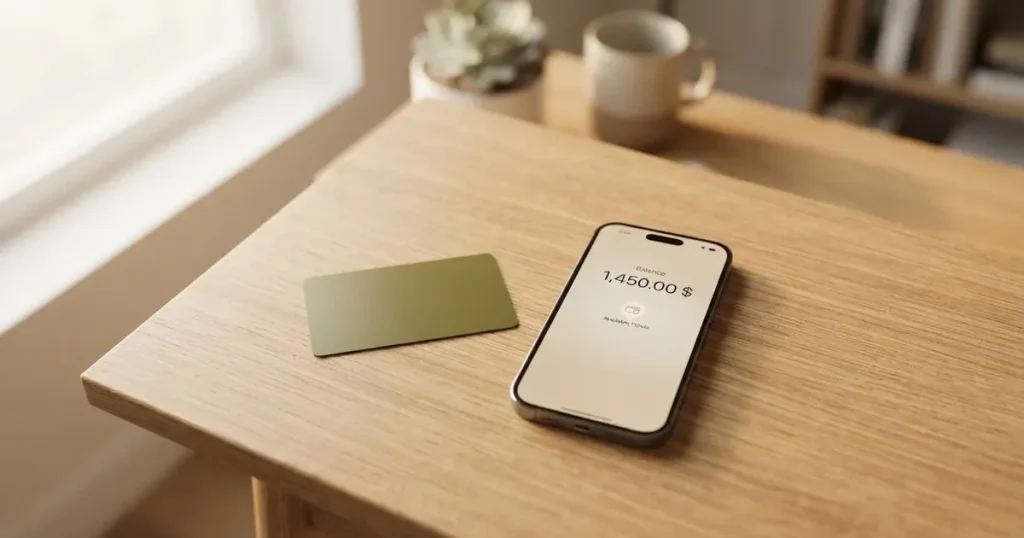
Gekkard is best understood as an attempt to give Europeans a euro-denominated account with a prepaid Mastercard attached to it, plus an app that can move between euros and a handful of cryptocurrencies. That is the pitch. The problem for anyone actually considering it is not that the product is obviously broken — it is that most of the things you would look up before signing up are simply not published on the card’s own public pages. I could not read a fee schedule, a limit table, a withdrawal charge, or the identity-check terms. The site itself was unreadable during my check because of a certificate error, so the app store listings and the version history became the main evidence.
That combination — a product whose headline feature is euro banking convenience, and an information vacuum around the costs of using it — is why my score lands where it does.
The conditions described in this review are current as of October 28, 2026.
What I think of it: 4.7 out of 10
The Gekkard score is 4.7 / 10. It is not a scam warning; it is a completeness warning. The card exists, it has a listed presence on both major app stores, it has a European IBAN account in EUR and a prepaid Mastercard that can be plastic or virtual. What it lacks is a published fee schedule, published limits, and a readable issuer and licence chain. For a product you would use as a spending card, those are not nice-to-haves.
| Criterion | Mark | Why |
|---|---|---|
| Who can get it | 5 / 10 | Offered to residents of EEA countries and Switzerland; version 1.0.6 added registration for clients outside the EEA, and the physical card can be mailed “to any address worldwide”. |
| Cost | 5 / 10 | Fees are not disclosed — the site could not be read because of a certificate error. The app claims 3 % on EURG holdings and a 1 % bonus on card purchases, but the conditions behind those numbers were not readable. |
| Top-up options | 4 / 10 | SEPA, Gekkoin Europe with EURG, and access to Bitcoin, Ethereum and Monero through partner AtlantEX OÜ. No stablecoins and no networks are listed, and the partner has paused onboarding of new clients. |
| Reliability and complaints | 4 / 10 | Papaya Ltd is named as the developer; the issuer and licences could not be read. WalletScrutiny describes the app as custodial and not verifiable. The US App Store shows 3.0 out of 4 ratings; another storefront listing shows 2.6 out of 15. |
| Everyday use | 5 / 10 | Prepaid Mastercard, plastic or virtual, with spending limits and a freeze function in the app. Wallets and ATM access are not disclosed. |
Who this suits, in my reading: a European who wants a euro IBAN they can receive SEPA payments into, needs a prepaid card for everyday spending, and is comfortable running a custodial app where the crypto side is secondary. Who it does not suit: anyone who needs published fees and limits before committing, anyone whose main interest is stablecoins on mainstream networks, and anyone who needs to know who the licensed issuer is before loading money.
The audience the card seems built for, in the words of its own positioning, is Europeans wanting a euro IBAN with a prepaid card. If that is precisely your problem and you are relaxed about the rest, this may still be worth a look. If your question is “what will this cost me per month and per payment,” the card has not answered it.
Will they give you the card?
They will, to a wider group than you might expect from a European euro account. The card is offered to residents of EEA countries and Switzerland. Version 1.0.6 extended registration to clients outside the EEA, and the physical card is described as deliverable by international mail “to any address worldwide”. So the register is broader than the original footprint suggests, while the account currency is still the euro.
That combination has a logic to it: a euro-denominated IBAN, a card that can be posted almost anywhere, and crypto rails behind it. It also means your banking expectations and your residency may sit in different countries, which is exactly the situation in which published fee and limit information matters most.
What is not stated anywhere on the public pages: what identity verification is required, and at what level. There is no published description of the documents needed or the tiers of checks. Prepaid and debit cards in this category are generally issued to adults aged 18 and over, and some issuers set higher limits — but that is the general pattern for the category, not a Gekkard rule.
So the honest answer to “will they give me the card?” is: eligibility looks broad, verification is undocumented. Ask for the KYC terms before you send anything.
How to get it
The product itself is straightforward in structure. Gekkard is a prepaid Mastercard, available as plastic or virtual according to the FAQ, with the physical card delivered by international mail and tied to a European IBAN account in EUR. That is what you get; the FAQ is the source for the plastic-versus-virtual choice.
Beyond that, the practical details are thin, and these are the details people actually need:
- The physical Mastercard ships by international mail to any address worldwide; the delivery time and the cost of postage are not stated.
- Additional cards can be ordered, but the conditions for that — when, at what price, how many — are not stated.
- The identity-check requirements and any tiering of them are not stated.
- The activation flow is not described on the pages I could read.
I want to be plain about the pattern here rather than dress it up: the setup journey is the part of a card like this that tends to be well documented, and this is the part that is least documented. Nothing in what I could read suggests the sign-up is broken or hostile. It simply is not written down.
Fees: what it really costs
This is the weakest part of the card, and the reason the cost criterion sits at 5 out of 10. Here is what is published and what is not, in one table:

| Fee or limit | What is stated |
|---|---|
| Issuance fee | not stated |
| Monthly fee | not stated |
| Conversion fee | not stated; the app claims 3 % on EURG, conditions not readable |
| FX fee | not stated |
| ATM fees | not stated; the version history mentions cash top-up locations |
| Daily and monthly limits | not stated; the card has spending limits you can set yourself in the app |
| Purchase bonus | a 1 % card purchase bonus appears in the version history |
| Tiers | not stated |
Read that table again and notice what is missing: a card with no published conversion or FX fee is not a card that has no conversion or FX fee. It is a card that has not told you what they are. The version history also mentions cash top-up locations, which implies an ATM or cash-top-up function exists in some form, without saying what using it costs.
Now let me take three everyday payments and run them against what is known, so you can see exactly where the information fails you.
Buying coffee. The amount leaves the stored balance on the Mastercard. If the balance is already in euro, there is no conversion at all. The fee question that remains is whether any per-transaction or monthly charge applies, and none is published.
Paying for something priced in dollars while your balance is in euro. This is where a conversion or FX fee would normally appear, on top of whatever rate the network or issuer applies. Gekkard publishes neither the rate nor the fee. This is the single most useful number a euro card can hide from you, and it is exactly the number that is missing.
Withdrawing cash. ATM fees are not stated. In this category a card typically distinguishes between the bank’s own ATM fee and a third-party or operator surcharge on top, but without published figures I cannot tell you what either would be here.
One thing I can say in the card’s favour, from the category rather than from Gekkard’s own pages: the app’s stated 3 % on EURG holdings is a headline number a reviewer should not accept at face value either, because the official site reportedly says the service is not an investment product. Whether 3 % is interest, a reward, or something conditional is exactly what the unread conditions would have told me. Treat any yield figure on a prepaid card as something to have explained to you in writing.
How to Top up
There are two documented routes, and both of them lean on the euro rather than on crypto.
SEPA. The account holds a European IBAN in EUR, and SEPA payments are the natural way to fill it. Cash top-up locations are also mentioned in the version history.
Buy or sell through Gekkoin Europe. This is the crypto side: EURG, described as pegged 1:1 to the euro, and access to Bitcoin, Ethereum and Monero through partner Gekkoin, with the crypto services themselves provided by AtlantEX OÜ, described as a licensed exchange.
What is not stated: the fees and minimums for a SEPA top-up, the fees and minimums for a cash top-up, and any withdrawal charges. If you are going to use this card, the number to chase before your first transfer is the cost of getting money in, because that is the one movement of funds that is certain to happen.
A warning that belongs here rather than later: the version history and my later check note that AtlantEX paused onboarding of new clients from 1 July 2026, during MiCA licensing. The crypto services are provided by a partner, and that partner is not currently onboarding. That does not necessarily stop you using the card itself, but it is a live question to ask rather than a footnote.
Paying with it every day
The card behaves like a prepaid card, which is a genuinely useful property in this category. A prepaid card draws on a stored balance, so it cannot overdraw, and you can set spending limits on it yourself in the app — limits, transaction tracking, and a temporary freeze are all documented card controls. There is also biometric confirmation for online purchases in the version history.
What is missing from the daily-use picture is notable. Wallets are not disclosed — so the Apple Wallet and Google Pay question has no answer here. ATM access is not disclosed. The card currency is not stated, even though the account is in EUR; multi-currency transfers appear in the version history, but that is a different thing from a multi-currency card.
The apps are the other everyday surface. There is an iPhone app, “Gekkard: Prepaid Card & Wallet”, rated 3.0 out of 5 from 4 ratings on the US App Store as I read it on 21 October 2025 (version 1.0.9). A Google Play app, com.papaya.gekkard, “Gekkard: Banking Alternative”, exists, but its rating was not readable. Both figures come from unofficial storefront listings and neither is confirmed by the card. Four ratings and fifteen ratings are not samples; they are anecdotes. I would not treat either number as a verdict on quality, only as a reminder that this is a small, lightly-reviewed product.
One incentive is worth naming so you can plan around it: a 1 % card purchase bonus appears in the version history. I would not build a spending strategy around an unconfirmed version-history line.
What can go wrong
Start with the thing I could not establish: who actually issues the card, and under what licence. Papaya Ltd is named as the developer on the App Store, under the brand Gekkard, and the crypto partner is AtlantEX OÜ. But the card issuer and the licences were not readable. In this category that is the first question, not the tenth, because a prepaid card is a regulated payment instrument and the licence is what tells you who is responsible for your money and under whose supervision. I am not able to answer that for you from what is public.
Second, the custodial structure. WalletScrutiny describes the app as custodial and not verifiable. That means the provider holds the credentials to the funds, so you must trust them completely — there is no key in your possession. This is a structural fact about the category, not a criticism unique to Gekkard, but it means every other risk here compounds with it.
Third, the counterparty history of the category. Custodial platforms have failed before: Mt. Gox, with about US$350 million reported stolen between 2011 and 2014; Coincheck, about US$400 million in 2018; and Ronin Network, US$625 million in 2022. I am not suggesting Gekkard is any of these things. I am suggesting that holding funds with a custodian carries counterparty and hack risk, and that is the risk you are taking on when you use a custodial card app.
Fourth, the operational risks that apply to any card in this category, and which you should expect here too:
- Transfers are typically irreversible. A deposit sent on a network or to an address the provider does not support can be lost or need manual recovery with no guarantee.
- Card programmes can be closed. When that happens there is a notice period, then loading and spending stop, then you are asked to withdraw what remains. One 2026 closure was reported by a single unconfirmed secondary source.
- Merchants can look at the card’s issuing country and BIN and decline the payment, particularly for prepaid or foreign cards, because the lookup reveals the card type and issuer.
- Address verification is generally unavailable for foreign-issued cards, which causes declines.
- A declined authorisation can leave a hold on your funds for several days.
- Online payments use 3-D Secure, where liability for a fraudulent transaction can shift to you.
Fifth, customer service. Support terms are not stated, and there was no readable complaint history and no Trustpilot page found. I want to be careful here: the absence of complaints I could find is not evidence of a good or bad support record. It is just absence.
What to take instead
Let me lay out the comparison honestly, because the alternatives are not obviously better on every axis.
| Alternative | Score | Card | Key fees stated | Who it is for |
|---|---|---|---|---|
| International Visa Card | 6.7 / 10 | U.S.-issued Platinum Visa, virtual, pays in USD; physical “Coming soon” | $5 virtual issuance, no maintenance fee; plans Classic free, Pro $9.00/month, Max $19.00/month; USD use free; foreign currency “Visa exchange rate + 2% FX fee”; deposits of any kind free | Excludes residents of Belarus, mainland China, North Korea, Cuba, India, Iraq, Iran, Israel, Myanmar, Nepal, Nicaragua, Russia, Syria, Turkey, Ukraine, Venezuela, Vietnam; FATF grey-list countries reviewed case by case |
| UNi Card | 6.1 / 10 | Multicurrency card on the Mastercard network, spends from account balance | “No annual fee”, no foreign transaction fee; assets converted at live OTC rates; “No hidden exchange fees” | Eligibility not stated; rewards up to 3% |
| Whop Cards | 5.2 / 10 | Visa, works online and in stores | “No extra fees”, no amounts listed | 31 US states for consumers, 41 for businesses; several countries unsupported |
| Gekkard | 4.7 / 10 | Prepaid Mastercard, plastic or virtual, EUR IBAN | Not stated | EEA and Switzerland residents, wider registration since 1.0.6, card mailed worldwide |
The International Visa Card is the one with the most complete published fee schedule of the group — a flat 2 % FX fee, a $5 virtual issuance, and a no-maintenance-fee option are all things you can actually plan around. Its catch is its country list, which is long and specific, and its payments are in USD rather than euro. UNi Card publishes the cleanest fee language of the three and promises live OTC conversion, but it tells you nothing about who qualifies. Whop Cards is US-state-limited for consumers and lists a cashback offer at select merchants, but it publishes no amounts.
I will not tell you to switch to any of these. Whop and the Visa card are not euro products; UNi’s eligibility is unknown. The comparison is here so you can see that a fully published fee schedule is achievable in this category, and so that Gekkard’s silence on it is a choice about disclosure rather than an inevitability.
Who I would recommend it to
In the end I would recommend Gekkard to a fairly narrow person: a European resident who needs a euro IBAN for receiving payments, wants a prepaid card attached to it, treats the crypto side as a secondary convenience rather than the reason they signed up, and is comfortable with a custodial app and with an information set that has gaps. For that person the product is coherent.
I would not recommend it to someone choosing between cards by comparing costs, to anyone whose plan depends on stablecoins on mainstream networks, or to anyone who needs to know the licensed issuer before loading money. In each of those cases the absence of published fees and licence information is not a small gap; it is the thing you were trying to evaluate.
Before you decide anything, ask three questions in writing: what does a top-up cost, what does a currency conversion cost, and who is the licensed card issuer. If those three come back clearly, this may be a serviceable euro account with a card. If they do not, you are making a deposit on trust, and that is a legitimate thing to do with your own money, but it should be a choice you make knowingly.
Frequently asked questions
What is Gekkard?
Gekkard is a financial app that pairs a euro-denominated European IBAN account with a prepaid Mastercard, available in plastic or virtual form. It also offers access to cryptocurrency through a partner, AtlantEX OÜ, including Gekkoin Europe and the EURG token pegged 1:1 to the euro. It is not a bank, and it is not presented as an investment product.
Is Gekkard a bank or a regulated institution?
That is precisely what I could not establish. Papaya Ltd is named as the developer on the app store, and AtlantEX OÜ provides the crypto services, but the card issuer and the relevant licences were not readable on the card’s public pages. Treat it as an unregulated-in-practice-until-proven payment service rather than a bank, and ask for the issuer and licence in writing.
Who can get the Gekkard card?
The card is offered to residents of EEA countries and Switzerland. Version 1.0.6 added registration for clients outside the EEA, and the physical card can be mailed to any address worldwide. Identity verification requirements are not stated on the public pages, though prepaid cards in this category generally go to adults aged 18 and over.
How much does a Gekkard card cost?
The public pages do not state issuance fees, monthly fees, conversion fees, FX fees, ATM fees, or daily and monthly limits. The app claims 3 % on EURG holdings and the version history mentions a 1 % purchase bonus, but neither set of conditions was readable. The only safe statement is that the costs are not published.
How do I top up the Gekkard card?
Two routes are documented: SEPA payments into the euro IBAN, and buying or selling through Gekkoin Europe with EURG, plus access to Bitcoin, Ethereum and Monero via partner AtlantEX OÜ. Cash top-up locations are mentioned in the version history. Fees and minimums for top-ups are not stated, which is the first number you should ask for.
Is Gekkard safe to use?
I cannot give you that reassurance, and it would not be honest to. The app is described by WalletScrutiny as custodial and not verifiable, meaning the provider holds the credentials and you rely on them entirely. Card programmes in this category have been suspended and closed before, and crypto transfers are typically irreversible. Nothing here says the card is unsafe; it says the safety case is not documented.
Can I use the Gekkard card with Apple Pay or Google Pay?
That is not stated. There are iPhone and Android apps, with the iPhone app rated 3.0 out of 5 from 4 ratings on the US App Store and the Google Play listing’s rating not readable, but wallet support is not documented anywhere I could find. If mobile wallet payment matters to you, ask before you deposit anything.
Does the Gekkard card have fees for foreign currency or ATM use?
Not stated, which is the problem. Foreign currency conversion fees and ATM fees are among the most consequential costs on a euro card, and neither is published. The card has a EUR account and a Mastercard, so both features clearly exist; only the price of using them is missing from the public information.
Is the Gekkard card worth it?
For a European who needs a euro IBAN with a prepaid card and will mostly spend from a euro balance, the features line up well and the IBAN-plus-card structure is genuinely useful. Against that, you are accepting unpublished costs, a custodial app, and an unreadable issuer chain. My score of 4.7 out of 10 reflects that trade, not a verdict that it will fail you.
How do I close a Gekkard account and withdraw my money?
Withdrawal terms are not stated, and there is no Trustpilot page or readable complaint history to draw on for how the process actually behaves. This is one of the clearest reasons to keep only what you can afford to leave parked for a while, and to ask directly, in writing, about withdrawal fees and timescales before you top up.
App and neobank card fees – cryptocardfacts
Content created by the «cryptocardfacts» team