
Greencart is cheap and generous on paper, but thin on the details that decide whether a card works day to day
 Available in US

Greencart is a Visa payment card that spends from a crypto balance rather than from a bank account. It is run by Linfa Inc. in the US, issued by Monavate Limited under a Visa Europe licence, and built on Gnosis Pay’s infrastructure — which is why the money you load sits in your own self-custodial Safe. The pitch is simple: no monthly or annual fees, a cashback floor in the B3TR token on every purchase, and a tier system that grows if you hold and use the token. My score is 6.9 out of 10. That is a good card on price and an unusually thin one on disclosure: the public pages leave several things I would need answered unsaid — the card currency, the spending limits, the delivery time, the coins and networks accepted, and whether Apple Pay or Google Pay work.
This review is written for you as someone choosing a card, probably because an ordinary bank card is awkward or unavailable for you. I have gone through the card’s own terms and pages, and I tell you plainly what is stated, what is not, and where a fact comes from a third-party site rather than from Greencart itself.
The conditions described here are current as of October 28, 2026.
Verdict: 6.9 out of 10, and a specific person it suits
Greencart scores 6.9 because it is unusually cheap on paper and genuinely interesting if you are already inside the B3TR ecosystem — and because the company that markets it says very little about the mechanics that decide whether a card is usable. The single best thing about it is the fee structure: no monthly fee, no annual fee, and the site states no fees for withdrawals, transfers, deposits or foreign exchange. That is better than most cards in this category, and it is the reason the cost mark is the highest in the table below. The single worst thing is silence: a large share of the practical questions below are answered “not stated” on the public pages.
Who it suits: Europeans inside the EEA who want to spend crypto without converting it to a bank balance first, who are comfortable holding a token as a reward rather than as money, and who mainly pay online. Also worth a look for you if you live in one of the non-EEA countries on the eligibility list and the contracting entity for your country turns out to suit you.
Who it does not suit: anyone who needs a card whose spending limits, card currency, mobile wallet support and delivery time are settled before they commit money. Also poor fit if you need cash regularly — the ATM position is one of the least clear parts of the whole product, and the one hard number available is unofficial.
| Criterion | Mark | Why |
|---|---|---|
| Who can get it | 7 / 10 | EEA plus Argentina, Bolivia, Brazil, Colombia, Mexico per Gnosis Pay’s eligible-countries list; the list on the page itself did not open when checked |
| Cost | 9 / 10 | “No hidden, monthly, or annual fees”; no fees for withdrawals, transfers, deposits or FX; the virtual card is free while a physical one may carry a one-off fee; optional Greencart+ at 7.99 USD a month; unofficially, cash withdrawals at 2% after five free ones |
| Top-up options | 5 / 10 | Top up from a bank account or a crypto wallet, fiat or crypto — but no coins and no networks are named |
| Reliability and complaints | 7 / 10 | Issuer is Monavate Limited (FCA-registered EMI, FRN 901097) under a Visa Europe licence, operated by Linfa Inc.; the account is “not a regulated product” and liability is capped at £100; App Store 4.86 out of 44 ratings |
| Everyday use | 5 / 10 | Free virtual card plus a physical one, apps for iOS and Android; Apple Pay and Google Pay are not mentioned; unofficial Gnosis Pay figure of 250 per ATM withdrawal |
| Total | 6.9 / 10 | Strong on price and rewards, weak on published detail |
Two things I want you to weigh before reading on. First, the reward is a token, not cash: the floor is 0.5% in B3TR, and the token’s price is not something Greencart controls. Second, the account documentation is unusually candid in one direction and quiet in another — it says plainly that the account is not a regulated product, and it caps liability at £100, but it does not tell you what your spending limits are. Decide with both facts in hand.
Who can get the card
Greencart is open to residents of the EEA plus six named countries: Argentina, Bolivia, Brazil, Colombia and Mexico, on Gnosis Pay’s eligible-countries list. One caveat I will not dress up: when I checked, the list on the page itself did not open, so I am relying on Gnosis Pay’s list rather than on Greencart’s rendering of it. If your country is near the line of that list, confirm it with support before you invest time in an application.
The Gnosis Pay terms add three things that matter. The contracting entity depends on where you live — EEA residents are contracted with one Gnosis entity, residents of the listed non-EEA countries with another — which is why country determines whose terms you are actually under. You must be 18 or older. And you cannot be on sanctions lists: the terms say you “cannot be located in, controlled from, or a national or resident of sanctioned countries”. That is a nationality test as well as an address test, so holding a passport from a sanctioned country is a different problem from living in one.
I would add one thing the terms do not spell out for you. There is no list of which countries have a working onboarding flow right now. Country eligibility and country availability are not the same thing, and only the first is published.
How to get it
Onboarding runs through third-party compliance providers. They collect identity, address and source-of-wealth information, you must be 18 or older, and the account is personal only — no shared or business accounts. That last point is worth pausing on if you were thinking of this for a company: the terms close that door.
The card itself is a Visa, powered by Gnosis Pay. Virtual cards are free; physical cards may carry a one-off admin fee. The card currency is not stated anywhere on the public pages, which is a real gap for anyone who plans to travel.
Two things I looked for and could not find, and I would ask you to ask support before applying: how long delivery of a physical card takes, and what KYC tiers exist — whether there is a lighter tier, and what limits attach to it. Neither is disclosed.
Fees: what it really costs
Greencart states “No hidden, monthly, or annual fees”. It also states no fees for withdrawals, transfers, deposits or FX. Virtual cards are free; a physical card may carry a one-off admin fee. The optional Greencart+ subscription is 7.99 USD monthly, or 4.99 USD for the first two months, or 79.99 USD yearly — and the App Store additionally lists a Greencart Max at 350.00 USD, which the site does not mention. That gap between the website and the store listing is worth a look before you pay for anything.
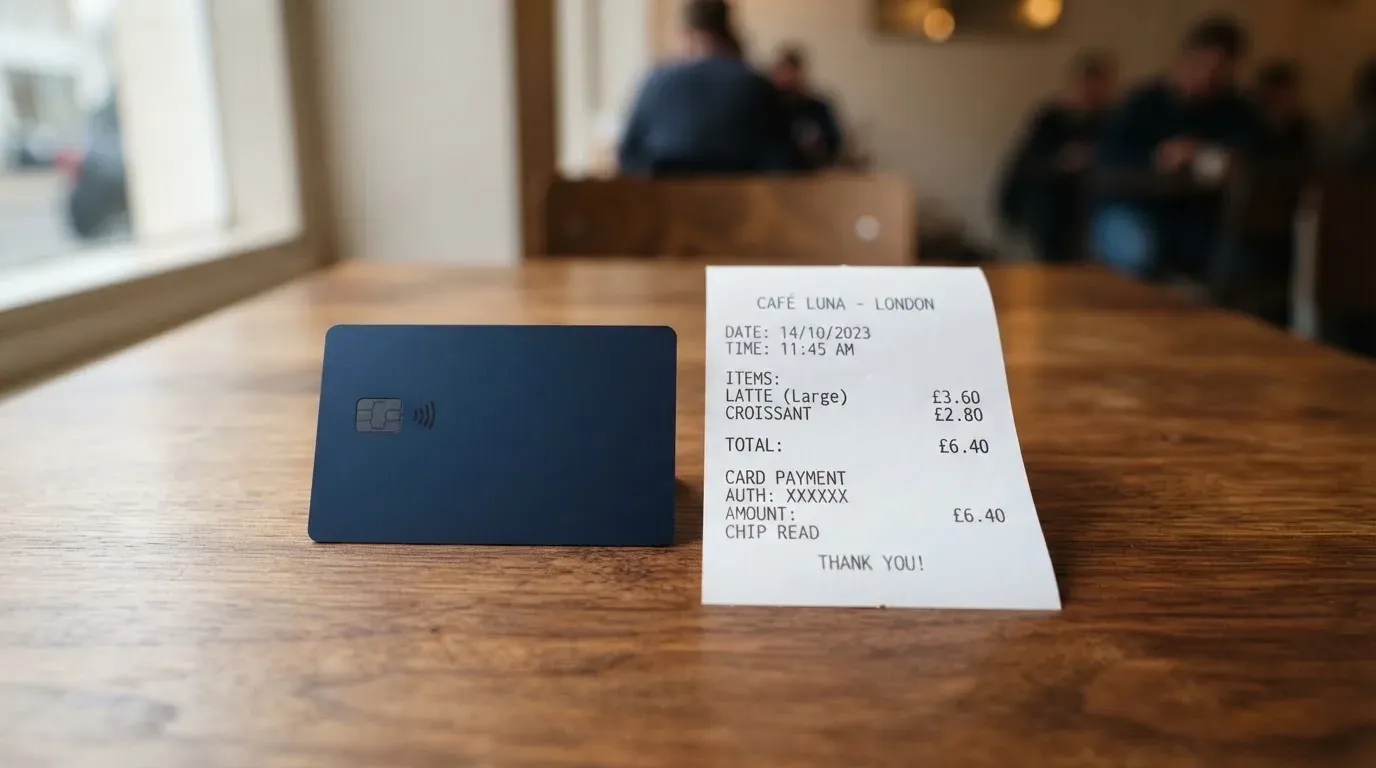
One number about cash withdrawals is unofficial and I want it clearly labelled as such: a third-party source describing the Gnosis Pay card says there are 5 free withdrawals per month, or 200 in EURe/GBPe/USDCe, whichever comes first, then 2%. Greencart’s own pages do not confirm this. Treat it as a hint about the shape of the pricing, not as a fact you can rely on.
| Fee or limit | What is stated |
|---|---|
| Issuance | Virtual card free; physical card may carry a one-off admin fee |
| Monthly fee | None — “No hidden, monthly, or annual fees” |
| Annual fee | None |
| Conversion | No transaction fee and no FX markup beyond Visa’s rate, reported unofficially by a third-party source; not confirmed on the card’s pages |
| FX | Site states no fees for FX |
| ATM | Not stated; cash withdrawals are listed among the categories that earn no cashback. Unofficial: 5 free per month or 200 EURe/GBPe/USDCe, then 2% |
| Deposits | No fees for deposits, per the site; minimum not stated, and who pays the network fee is not stated |
| Withdrawals and transfers | No fees, per the site |
| Daily limits | Not stated. Unofficial, for the Gnosis Pay card: 5,000 per transaction and 8,000 per rolling 24 hours |
| Monthly limits | Not stated. Unofficial: ATM 500 per day, 250 per withdrawal |
| Card currency | Not stated |
Three everyday payments, and which fees apply:
- A subscription you already pay for — a streaming service or a phone bill. No fee under the stated terms, and the reward counts, provided the merchant is not in an excluded category.
- A purchase in a currency other than the one you loaded — no FX fee is stated. But the conversion itself is done at Visa’s rate per the unofficial source, and the network fee for the underlying stablecoin movement is charged by the blockchain, not by the card. Whether you pay gas depends on what network your asset sits on, and the networks are not named.
- Taking money out at a cash machine — the least clear case. The site says nothing about ATM fees. The unofficial figures suggest a free allowance then a percentage charge, and an unofficial cap of 250 per withdrawal and 500 per day. This is the payment type I would test on a small amount first.
Top up: bank account or crypto wallet
You recharge from a bank account or a crypto wallet, in fiat or in crypto. The card then spends from a self-custodial Gnosis Pay Safe, which means the balance is yours at the network level rather than an entry in someone’s ledger. The site states no fees for deposits.
What is not stated is the part that decides whether your money arrives: which coins and which networks are accepted, the minimum deposit, and who pays the network fee. In this category that gap is not cosmetic. Blockchain transfers are irreversible — send an asset on a network the provider does not support, or to an address belonging to a different network, and the funds can be lost or need manual support recovery with no guarantee. So the practical order is: find out the supported list first, send a small test amount, confirm it has arrived, then send more.
If you decide to leave, the terms are clear: terminate in writing to [email protected], and you keep 60 days of platform access to move assets out of the Safe. That is a normal, orderly exit and it is worth knowing before you deposit rather than after.
Paying with it every day
The app exists for iOS and Android. The App Store listing in the US shows 4.86 from 44 ratings, read on 2026-10-21 — and the same page showed 4.9 from 44, so treat that as a very small, slightly noisy sample rather than a verdict. The Google Play listing was not read.
Rewards work like this: a 0.5% floor in B3TR on every purchase, rising with the amount of B3TR you have staked and with a Greencart+ subscription, up to a ceiling of 4%. The caps are 40 USD per transaction and 40 USD per month. Forty-eight merchant categories earn nothing, and they include cash withdrawals, transfers, gambling, taxes and insurance. A warning about a number conflict: the App Store text advertises “up to 8% cashback” and up to 15% on partner purchases, which does not match the site’s 4% ceiling. I would plan on the site’s figures.
Tiers appear in the app as “My Level”, recalculated weekly from how much B3TR you hold and what you do in the app; the paid Greencart+ plan factors in, and lounge access is described as coming soon. Apple Pay and Google Pay are not mentioned on the public pages. That is a big practical gap for many people, and it is worth asking directly.
One more everyday-use detail that bites: a merchant can look up the first six or eight digits of a card number to see which institution and country issued it, and some merchants apply extra scrutiny when the issuer country differs from your billing address. A card funded from crypto can also read as a prepaid card. That is why a decline in a shop you have never visited is not unusual for this kind of product, and why a failed online payment can leave a hold on your funds for several days. The category advice is dull and correct: set aside a second payment method for the first few weeks.
What can go wrong
The reward is a token. B3TR is what you are paid in, and its price is not controlled by the card. A guaranteed 0.5% floor in a token that falls is not a guaranteed 0.5%.
The account is not a regulated product, and that is the card’s own wording. The terms say “Your Account is not a regulated product or service”, they contain no safeguarding commitment, and liability is capped at £100. In practice this means your balance sits in your own Safe — which is genuinely better than trusting a company’s ledger — but the legal relationship around the account is thin, and a £100 cap is the number to remember in a dispute.
Lost credentials may mean permanent loss of funds. This is the self-custody trade-off stated plainly: Gnosis Pay says it does not offer a crypto-asset wallet and that lost credentials can be unrecoverable. Nobody can reverse a blockchain transfer. Whether the app offers two-factor authentication or an instant freeze is not stated, and those are the two features I would want before putting a working balance in.
Disputes are handled but slowly, and the terms set no time frame for a chargeback. If the Safe funded the transaction, it can be disputed and fraud can be reported through the platform. Complaints are acknowledged within 24 hours and resolved within 15 working days, with a final response no later than 35 working days, and escalation runs to Monavate. Thirty-five working days is a long time to wait.
The quiet part: no complaints found. Searching for reviews turned up no Trustpilot page for greencart.ai and no Reddit discussion. That is not a clean bill of health — it is more likely a young product than a loved one. The March 2026 company news says the app passed 1 million users with more than 1.2 million USD in crypto rewards distributed, and the cashback card had recently launched. A young product with a real user base and no public complaint history is a fair thing to feel neutral about, not reassured by.
What to take instead
| Greencart | Gemini | Lava | GoMining Card | |
|---|---|---|---|---|
| Score in this review series | 6.9 / 10 | 4.9 / 10 | 7.1 / 10 | 6.6 / 10 |
| Card | Visa, powered by Gnosis Pay; virtual free, physical may have a one-off fee | Mastercard World Elite credit card; form and currency not stated | “Lava Card”; network and physical/virtual not stated | Virtual now, physical “coming soon”; network not stated |
| Fees | No monthly or annual fees; no fees for withdrawals, transfers, deposits, FX | No annual fee; no foreign transaction fees; issuance not stated | “no annual fees”; “no FX fees, and no FX spread” | Not stated |
| How you spend | Balance loaded from bank account or crypto wallet | Credit card paid off in fiat | Local currency or stablecoin deposits | Top up with BTC, USDT, GOMINING and other coins |
| Rewards | 0.5% floor in B3TR, up to 4%, capped at 40 USD per transaction and per month | 4% on gas, EV and transit (first 300 USD/month), 3% dining, 2% groceries, 1% other, paid in 50+ cryptos; referral payouts | “up to 5% back in bitcoin”, conditions not stated | Cashback paid in mining power, “up to 5% cashback” |
| Availability | EEA plus Argentina, Bolivia, Brazil, Colombia, Mexico | Not stated on the card page | Not stated | Not a list; “may not be available in your jurisdiction” |
How to read that table for your own situation. If your problem is that you have crypto and no usable bank card, Gemini’s credit card is the wrong shape entirely — you pay it off in fiat, which means you need the bank account you are missing. Lava scores slightly higher than Greencart here and states its FX position more cleanly, but it says nothing about who can get one, which is exactly the practical gap. GoMining ties its cashback to mining power and its fees are not stated at all, so it is closer to a mining product with a card attached than to a payment card. Greencart’s own distinctive features are the Self Safe, the B3TR tier system and the explicit “no fees for withdrawals, transfers, deposits or FX” line — and its distinct weakness is disclosure.
Who I would recommend it to
I would recommend Greencart if you are in the EEA, you already hold crypto, you are comfortable with a self-custodial wallet, and you want to spend it without a bank account in between. I would also suggest it if you are curious about the B3TR ecosystem and can afford to treat the rewards as a bonus rather than as yield.
I would not recommend it yet if any of these are true: you need cash from ATMs regularly, you need Apple Pay or Google Pay confirmed before you switch, you want to know your daily and monthly limits before you deposit, you are moving significant sums, or you rely on chargebacks. In those cases, ask support the questions the pages do not answer — card currency, limits, mobile wallets, delivery time, accepted coins and networks, and whether 2FA and a card freeze exist — and decide on the answers.
One last piece of context worth holding on to, because it explains the category more than any single card does. A crypto card sits on two sets of rules at once. The card is a payment instrument, governed by e-money and payment-services law, and it depends on an issuer authorised by the network: Visa and Mastercard do not issue crypto cards to consumers themselves, they license issuers, and they can suspend a programme. Visa terminated its global agreements with FTX on 13 November 2022, and the FTX US debit card was wound down by its issuer. Another issuer in this space, WaveCrest, was suspended by Visa in Europe in 2018, closing all its Visa programmes. The crypto side adds its own layer: under the EU’s markets-in-crypto-assets regulation, e-money tokens may be issued only by a credit institution or an electronic money institution, and the transitional period lets existing providers continue only until 1 July 2026 or until they receive or are refused authorisation, whichever comes first. What that means for you, practically, is that a card can be fine for years and still stop. Always keep a withdrawal path open, and read the exit terms before you deposit — Greencart’s are unusually clear on this, giving 60 days of access to move assets out of the Safe.
Frequently asked questions
What is the Greencart card?
Greencart is a Visa payment card that spends from a crypto balance instead of a bank account. It is marketed by Linfa Inc. in the US, issued by Monavate Limited under a licence from Visa Europe, and runs on Gnosis Pay’s infrastructure, with your balance held in a self-custodial Safe. You load it from a bank account or a crypto wallet, in fiat or crypto, and pay as you would with any Visa card.
How does the Greencart card work?
You top up the balance, and the card draws on it like a prepaid card — it cannot overdraw, because there is nothing to overdraw. The balance sits in your own Safe rather than in a company’s ledger. Purchases earn B3TR rewards, with a 0.5% floor rising to a 4% ceiling depending on staked B3TR and a Greencart+ subscription. Forty-eight merchant categories earn nothing.
Is Greencart a bank?
No. Greencart’s own terms state that your account is not a regulated product or service, and they contain no safeguarding commitment, with liability capped at £100. The actual card issuer is Monavate Limited, an FCA-authorised electronic money institution with FRN 901097, issuing under a Visa Europe licence. Gnosis Pay is the infrastructure partner, and the entity you contract with depends on whether you live in the EEA or in a listed non-EEA country.
Who owns Greencart?
Greencart is a brand operated by Linfa Inc., a Delaware corporation registered at 850 New Burton Road, Suite 201, Dover, Delaware 19904, US. The card programme itself belongs to Monavate Limited as issuer, with Gnosis Pay supplying the payment and Safe infrastructure. In March 2026 the company said the app had passed 1 million users and more than 1.2 million USD in crypto rewards had been distributed.
Is Greencart card available in my country?
Residents of the EEA can get it, and Gnosis Pay’s eligible-countries list adds Argentina, Bolivia, Brazil, Colombia and Mexico. Note that the list on Greencart’s own page did not open when I checked, so I am relying on Gnosis Pay’s version. Which contracting entity applies to you depends on your country, and you must be 18 or older and not subject to the sanctions wording in the terms.
Does Greencart card require KYC?
Yes. Onboarding runs through third-party compliance providers that collect identity, address and source-of-wealth information, with an 18+ requirement and a personal account only, so no shared or business accounts. How many KYC tiers exist and what limits attach to each is not stated publicly — worth asking before you rely on the card for large amounts.
How much does the Greencart card cost?
Greencart states “No hidden, monthly, or annual fees”, and no fees for withdrawals, transfers, deposits or FX. Virtual cards are free; a physical card may carry a one-off admin fee. The optional Greencart+ plan is 7.99 USD monthly or 79.99 USD yearly, and the App Store also lists a Greencart Max at 350.00 USD. ATM fees are not stated on the card’s own pages.
Is Greencart card safe?
In the sense that your balance sits in a self-custodial Safe you control, yes — but with real trade-offs. The terms say the account is not a regulated product, liability is capped at £100, and lost credentials may mean permanent loss of funds, because blockchain transfers cannot be reversed. Whether 2FA and an instant card freeze exist is not stated. Complaints are acknowledged within 24 hours and finally resolved within 35 working days.
Is Greencart card free?
Effectively, for most use. There is no monthly or annual fee and no stated fees for deposits, transfers, withdrawals or FX, and the virtual card costs nothing. The costs that can appear are a one-off fee on a physical card, the optional Greencart+ subscription, and any blockchain network fee charged by the network rather than by the card — plus whatever the exchange rate costs you when your crypto is converted.
Is Greencart card worth it?
Worth it if you hold crypto, cannot easily use a normal bank card, and are relaxed about being paid in B3TR rather than cash — the fee structure is among the best in this category. Not yet worth committing to if you need cash machines, need Apple Pay or Google Pay, or need your limits stated in advance. If you leave, the terms give you 60 days of platform access to move assets out of the Safe.
Credit and cashback card costs – cryptocardfacts
Content created by the «cryptocardfacts» team