
The Visa card for people whose bank says no
 Available in US
If a normal bank card has been hard for you to get — because of where you live, because of your documents, because your income arrives in crypto — then the HoneyCoin card was built for roughly your situation. It is a Visa you fund yourself with stablecoins, and it works wherever Visa works. That is the pitch, and on the surface the card delivers it.
The pitch is also most of the documentation. HoneyCoin’s public pages leave a lot unsaid: which countries are restricted, what the crypto conversion fee is, who the issuing bank is, what the ATM costs. The company was founded in 2021 and says it is licensed in what it calls key markets including the US, Canada, the EU, and several African jurisdictions — but the issuing bank is not named. If you need a card you can rely on without reading the small print first, this is not that card. If you need a card at all, and you can check two things before your first payment, it may be exactly what you are after.
The conditions described here are current as of October 28, 2026.
Verdict: 6.7 out of 10
The score is not a ranking; it is a summary of what I found. Here is how it breaks down.
| Criterion | Mark | Why |
|---|---|---|
| Who can get it | 8 / 10 | Accepted anywhere Visa is accepted, “live in 45+ countries”; some countries, merchants, and MCCs may be restricted, with no list published |
| Cost | 7 / 10 | Issuance, monthly, and yearly fees free; USD transactions 0%, FX spread up to 3% on other currencies; crypto conversion fee not disclosed |
| Top-up options | 6 / 10 | Mobile money, bank transfer, card, on-chain stablecoins; the token table lists only USDC on Base, the FAQ also mentions USDT |
| Reliability and complaints | 5 / 10 | HoneyCoin, Inc., Nairobi; issuing bank not named; card payments on the consumer app paused for months due to attacks (August 2025); App Store listing shows 1.0 from 1 rating |
| Everyday use | 7 / 10 | Virtual card instant, physical 2–3 weeks; Apple Pay and Google Pay; ATM fees not disclosed |
Total: 6.7 / 10.
The audience the card genuinely fits is users in Africa and emerging markets who want to fund a Visa with stablecoins — people who already hold crypto or have a way to get it, and who need a card number that works in shops and online. If that is you, the card is a real option, and the 8/10 for eligibility reflects that it is open where comparable products are not.
Where the marks fall is where the facts are thin. A 5/10 for reliability is not a verdict on anyone’s honesty; it is the arithmetic of an unnamed issuing bank, a documented multi-month outage of card payments in 2025, and almost no public user feedback. When a card has no complaints page and no reviews, the silence is not evidence of quality.
Will They Give You the Card?
Probably, if you pass identity verification and you are not sitting in a restricted country or merchant category. HoneyCoin is accepted wherever Visa is accepted. The company says it is “live in 45+ countries” and that “some countries, merchants, and MCCs may be restricted” — but no country list is published, and the blocked merchant category codes are not listed either.
That one sentence matters more than any other on this page for anyone deciding. It is not a refusal to answer; it is an admission that the answer depends on internal policy you cannot see. There is no way to check from the public pages whether your country is on that list. The practical approach: apply, and if verification completes, assume most merchants will accept the card and treat an odd decline as something to take to support rather than a rule you can plan around.
Beyond country, the gate is identity verification. Every applicant must clear KYC — know-your-customer checks — before using the card. These are legal anti-money-laundering requirements, not a favour the company does you. The public pages do not say which documents you need, whether proof of address is required, or what the minimum age is, so expect to be asked for identity documents and be ready to supply them.
One thing worth understanding before you start. Nationality is recorded and screened separately from residence, because sanctions screening and issuer risk policy are often applied to citizenship and country of birth as well as to your address. This is standard industry practice, and it means that living in a live country does not by itself guarantee a straightforward application. I am not going to explain how to work around a screening check — anyone selling you that is selling you something else. What I can tell you is that the check exists, that many providers apply it, and that if your application stalls at verification this is the most likely reason.
How to Get It
The route is ordinary: identity verification first, then a virtual Visa. The card currency is USD, which matters more than it sounds — USD transactions carry 0% fees, so the card is cheapest when you spend it in dollars.
There are two forms. A virtual card activates instantly, and that is what most people use first. Physical cards also exist and take about 2–3 weeks to arrive. The cost of the plastic is not stated on the public pages, so if you want it in your hand, ask support before you order.
The order of operations matters for your first purchase: complete verification, set up the virtual card, add it to your phone’s wallet, and only then fund it. The card starts empty and can spend only what has been loaded. You cannot overdraw, because the balance is pre-loaded rather than drawn from a bank account. That prepaid model is the single fact that shapes most of the rest of this review.
The card’s KYC tier levels — whether checks happen at signup or later, and what higher levels unlock — are not stated. So do not plan around an assumed upgrade path. Treat the limits you see in your own account as the limits you have.
Fees: What It Really Costs
The headline numbers are good. Issuance is free. The monthly and yearly fees are free. Spending in USD is 0%. That covers a lot of ordinary use.
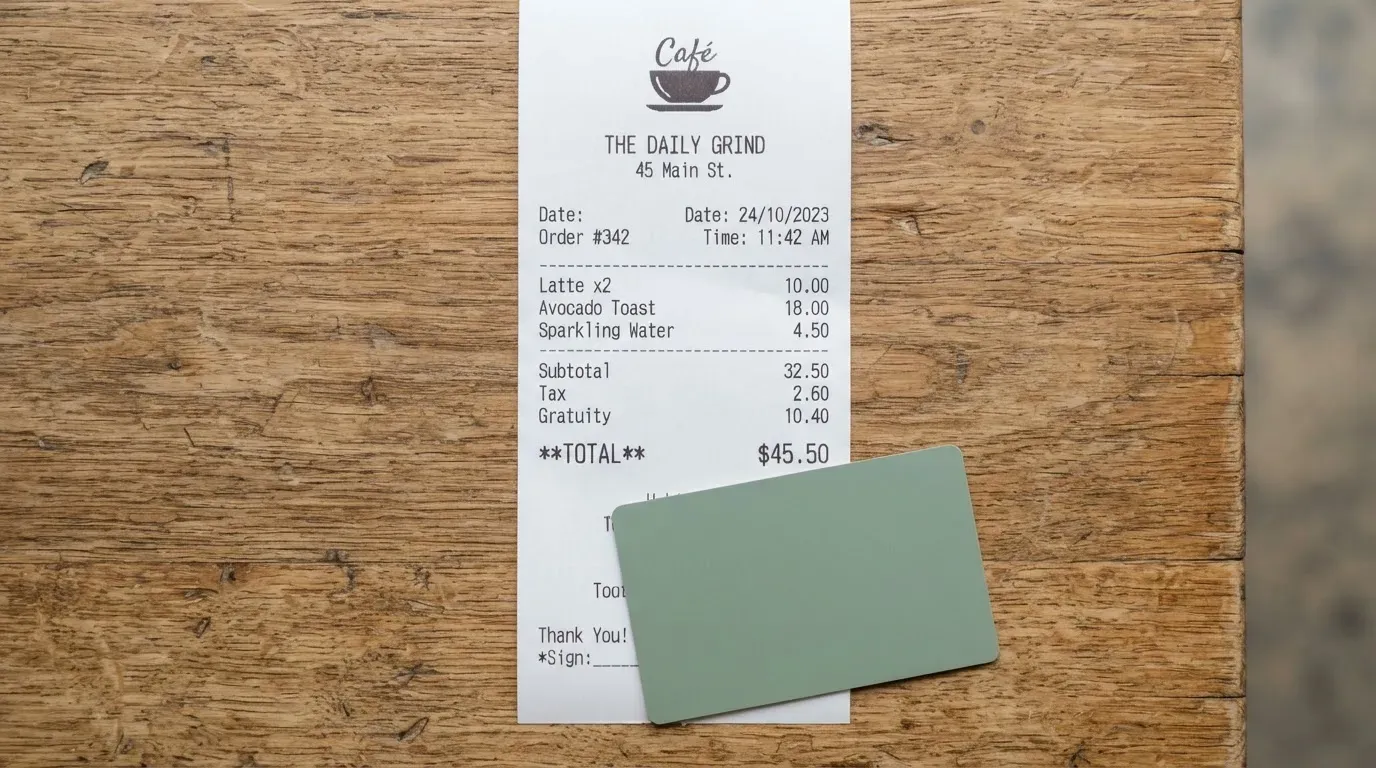
The catch is everything that is not USD. On transactions in other currencies there is an FX spread fee of up to 3%. The crypto conversion fee — what it costs to turn your stablecoin into the balance the card spends — is not stated. Neither are ATM fees. These gaps are not cosmetic: the conversion fee is the one you hit every single time you load from crypto, and it is the single number I would want to see before trusting the card with money you cannot afford to lose.
| Fee or limit | What the card says |
|---|---|
| Issuance | Free |
| Monthly fee | Free |
| Yearly fee | Free |
| USD transactions | 0% |
| Other currencies | FX spread up to 3% |
| Crypto conversion | Not stated |
| ATM fees | Not stated |
| Daily limit | 10,000 USD/day, “Increases with Usage” |
| Monthly limit | Default $10,000 daily for both spending and loading; lower custom limits in-app; higher after review |
Three everyday payments show how this plays out.
A coffee in a dollar country: 0%. You pay exactly the price on the receipt.
A coffee in a euro country: the price plus up to 3% in FX spread, plus whatever conversion cost was already baked into the rate you loaded at. A €5 coffee will be converted at the current rate plus that FX spread.
A dollar-priced subscription: 0% in fees. This is where the card’s cost advantage shows most clearly — a single USD subscription is the cheapest thing you will ever do with it.
The pattern: this card is cheap when you spend dollars and quietly expensive when you spend anything else. If your life runs on one non-dollar currency, that 3% spread is a recurring cost, not a rounding error. And because the conversion fee is unpublished, the true cost of loading crypto is unknown to anyone reading the public pages. That is a genuine gap, not a figure I have estimated for you.
How to Top Up
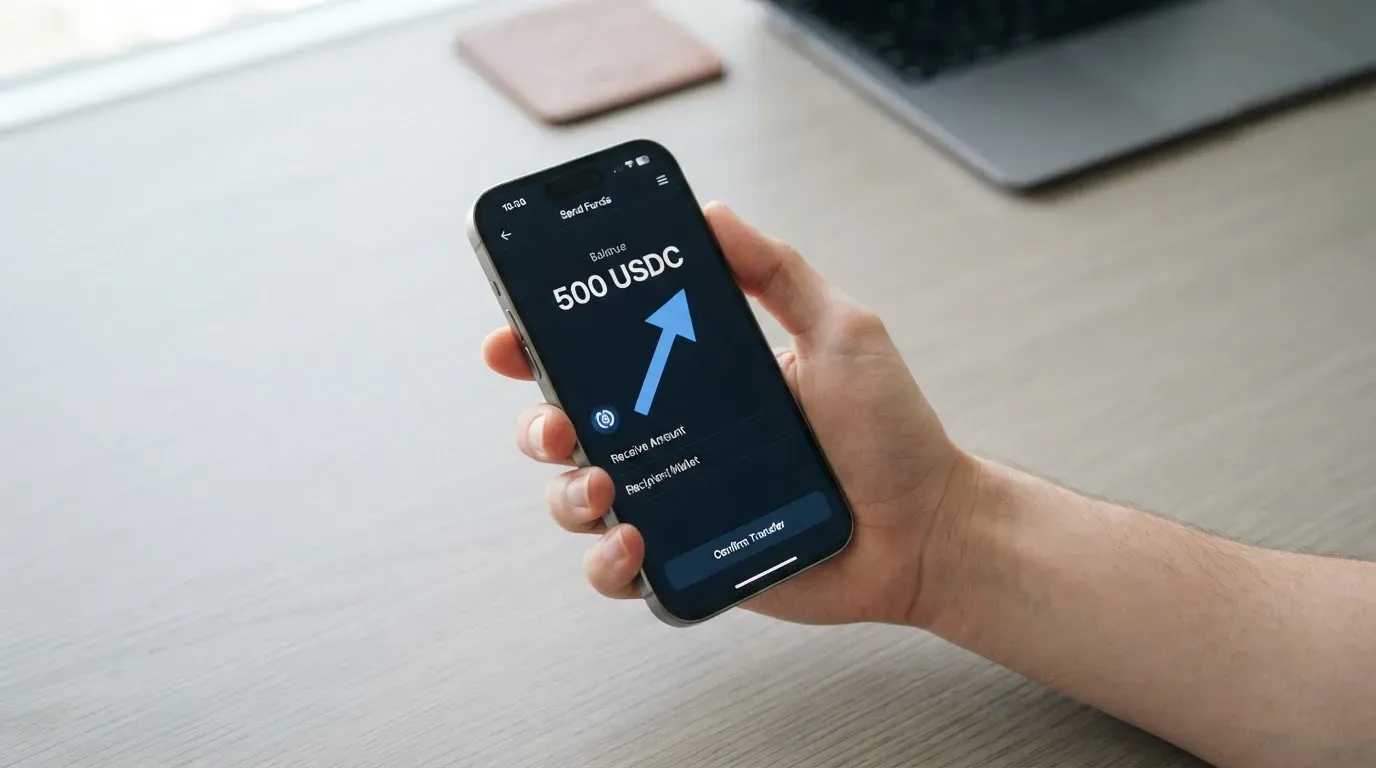
There are four routes in, and this is one of the card’s real strengths.
- Mobile money
- Bank transfer
- Card
- On-chain stablecoins
The on-chain route is the interesting one for a crypto-native user, and also the one where care matters. The token table lists only “USDC on Base.” The FAQ mentions USDC and “select other assets where enabled,” and the funding section also refers to USDT. That inconsistency deserves to be taken seriously: send the wrong token on the wrong network and the money is gone.
Blockchain transfers are irreversible. A deposit sent on a network the card provider does not support, or to an address belonging to a different network, can be lost outright or need manual support recovery with no guarantee. Before your first transfer, confirm on the card’s own current page which networks are live. Do not assume Base is the only one because it heads the table, and do not assume USDT works because it is mentioned in passing — USDT lives on many chains, and sending the token on the wrong one is the classic way to lose a deposit.
For context on the two main tokens: USDC is the better-understood. Circle says it is redeemable 1:1 for USD and 100% backed by cash and cash equivalents, mostly in an SEC-registered government money market fund, with monthly reserve attestations by a Big Four firm, and it is natively supported on 38 networks. USDT is issued across multiple blockchains including Ethereum, Tron, Solana, Polygon, and Avalanche. And Circle stopped supporting USDC on Tron in February 2024, so “USDC over TRC20” is not a native option.
One more cost to know: network fees. Gas is charged by the blockchain for your deposit, not by the card company, so a top-up costs slightly more than the amount you send.
On the way out, the site says “Payout to local accounts or wallets on demand” — but that is platform-level, and the fees for withdrawing a card balance are not stated. Do not assume you can pull your balance out for free until you have asked.
Paying With It Every Day
Day to day it behaves like a normal Visa, and it works in Apple Pay and Google Pay. Apple Pay, for the record, replaces the card number with a device-specific number stored in the Secure Element, never on Apple’s servers, and each payment uses a one-time dynamic security code — so paying by phone is not a downgrade in security.
There is no cashback or rewards stated. The card earns you nothing; it is a spending tool, not a rewards product. If someone tells you otherwise, they are describing a different card.
What is not stated is the list of blocked merchant categories, and this matters more than it sounds. An MCC is a four-digit number classifying a business — MCC 7995 covers gambling, for instance — and many issuers block categories on specific cards by policy rather than by law, with a different list per issuer. You will not discover what HoneyCoin blocks until a payment is declined.
This is also where any crypto card meets the world’s habit of declining unfamiliar ones. Merchants can look up the card’s issuing BIN to see which institution and country issued it, and may apply extra scrutiny when the issuer country differs from the customer’s billing address; some decline prepaid or foreign BINs outright. The Address Verification Service, which compares the numeric parts of a billing address against issuer records, is mainly offered in the US, Canada, and the UK and is generally unavailable for foreign-issued cards, which causes declines. None of this is unusual for this category, but it means your first few payments are a small experiment rather than a guarantee.
One more thing that catches people out: a declined payment is not always a clean no. A declined authorisation can leave a hold on your funds that stays for several days, typically up to 7. If a shop attempt fails, check your balance before trying again.
What Can Go Wrong
The most concrete thing I can tell you is not hypothetical. In August 2025 the company’s own blog reported that card payments on the consumer app had been paused for months because of card-testing attacks — criminals using stolen card numbers to check whether they are live. So there was a stretch when you had an app, a balance, and a card that would not work. That is the honest shape of the reliability risk, and it happened to this company.
The company background, for context. HoneyCoin, Inc., with Quicknode Technologies Ltd as starting data, is based at The Cube, Riverside Drive, Nairobi, Kenya, and was founded in 2021. It says it is “licensed in key markets including the US, Canada, the EU, and several African jurisdictions.” Notice what that sentence does not say: the issuing bank is not named, and the card’s security page refers only to “licensed partners.” When the issuer behind your card is unnamed, you are relying on a chain of entities you cannot inspect. That is not a reason to avoid the card — it is a reason to keep the balance on it modest.
On customer money, the security page says “Client money is safeguarded and held completely separate from ours,” with 2FA on login and privileged actions, and PCI DSS Level 1. Those are real and worth something. It is worth being precise about what they are not, though: safeguarded e-money is not the same as a bank deposit, and may not be covered by a deposit guarantee scheme. Under EU rules, electronic money institutions must safeguard customer funds by segregating them in dedicated accounts or insuring them — which is exactly what the card describes — but the money is not sitting in an insured account on your behalf.
Two gaps more. A card freeze feature is not mentioned on the security page, so do not assume you can instantly kill the card from the app; that is a standard safeguard you would expect and do not see listed. And the dispute process is not stated: how to challenge a charge, and what the chargeback route is, simply is not on the public pages. In the US, debit card reversal rights come from Regulation E, credit card rights from Regulation Z, and prepaid-card coverage varies and should not be assumed. Before you need any of this, you would want to know what HoneyCoin actually offers.
Support is 24/7 for institutional and corporate clients. For consumer users the listed addresses are [email protected] and [email protected]. The honest read is that round-the-clock support here is a corporate feature, not a consumer promise.
The user-review picture is close to empty. No Trustpilot page was found for HoneyCoin — Trustpilot results under the name turned out to belong to an unrelated product, Honeycard. The App Store (US) listing for the consumer app reads “Peer – the everything app” by HoneyCoin, Inc., with a rating of 1.0 from 1 rating. One rating is not a signal in either direction, but it does mean there is essentially no crowd-sourced track record to lean on.
The wider category carries a history worth knowing. Visa terminated its global agreements with FTX on 13 November 2022, and the FTX US debit card was wound down by its issuer. WaveCrest, a Visa issuer that supplied crypto card brands, was suspended by Visa in Europe in 2018, closing all WaveCrest-issued Visa programmes. Closures tend to follow a pattern: a notice period, then spending and loading stop, then users are asked to withdraw remaining balances. The structural risk is real for everyone in this category — a programme can be switched off — and an unnamed issuer is one more link in that chain.
There is a regulatory angle in the EU too. MiCA, the EU’s markets-in-crypto-assets regulation, took legal effect in June 2023; its rules on asset-referenced tokens and e-money tokens applied from 30 June 2024, and the remaining crypto-asset service provider provisions from 30 December 2024. The transitional period lets providers already operating under national law continue only until 1 July 2026 or until they receive or are refused a MiCA authorisation, whichever comes first. So an EU-facing provider’s status is something to check rather than assume. If you want to do that check yourself, ESMA keeps an interim register of authorised providers that you can search.
What to Take Instead
I compared this against three alternatives in the same category. The same treatment, so you can weigh them yourself.
| HoneyCoin | International Visa Card | UNi Card | Whop Cards | |
|---|---|---|---|---|
| Score | 6.7 / 10 | 6.7 / 10 | 6.1 / 10 | 5.2 / 10 |
| Who can get it | Visa accepted anywhere; live in 45+ countries; some countries, merchants and MCCs may be restricted, no list | Not available to residents or registrants of Belarus, mainland China, North Korea, Cuba, India, Iraq, Iran, Israel, Myanmar, Nepal, Nicaragua, Russia, Syria, Turkey, Ukraine, Venezuela, Vietnam; FATF grey-list countries case by case | Not stated | Consumers: 31 US states; businesses: 41 states; unsupported consumer countries include Belarus, mainland China, Cuba, Hong Kong, India, Iran, Iraq, Israel, Myanmar, Nepal, Nicaragua, North Korea, Russia, Syria, Turkey, Ukraine, Venezuela, Vietnam |
| Card | Virtual Visa, physical also; currency USD | U.S.-issued Platinum Visa, virtual; physical “Coming soon” | Multicurrency UNi Card on Mastercard | Visa, works online and in stores |
| Cost | Issuance free; monthly and yearly free | Virtual card $5 one-time, no maintenance fee; Classic free, Pro $9.00/month, Max $19.00/month | No annual fee; issuance fee not stated | “No extra fees”; no amounts listed |
| Fees | USD 0%; other currencies up to 3% FX spread; crypto conversion not stated | USD free on all plans; foreign currency “Visa exchange rate + 2% FX fee”; deposits free | No annual or foreign transaction fee; converted at live OTC rates; “No hidden exchange fees” | Not stated |
| Funding | Mobile money, bank transfer, card, on-chain stablecoins (USDC on Base; FAQ also USDT) | USDC or USDT into the USD account free at 1:1; also USD, EUR, SEPA, SWIFT, FedNow | Not stated | From a Whop balance; backed by stablecoin collateral from a linked wallet; coins and networks not stated |
| Rewards | None stated | None stated | Spend-to-Earn up to 3% | 5% cashback at select merchants, currently Uber |
Reading across the rows. The International Visa Card has the clearest published fees and the clearest published country exclusions, which is a genuine advantage if you plan ahead — though its physical card is still “coming soon,” and its 2% FX fee sits close to HoneyCoin’s “up to 3%.” UNi Card has the cleanest fee story of all four: no annual fee, no foreign transaction fee, assets converted at live OTC rates, “no hidden exchange fees,” plus Spend-to-Earn rewards up to 3%. But its eligibility is not stated at all, so I cannot tell you whether you would be approved, and it runs on Mastercard rather than Visa. Whop Cards offers the best rewards — 5% cashback at select merchants, currently Uber, with more planned — but has the vaguest fee and funding detail of the four and reaches consumers in only 31 US states.
No runaway winner here. The honest conclusion is to pick the card whose restrictions match your situation best, because eligibility is the axis on which these products differ most, and it is the axis the marketing tends to hide.
Who I Would Recommend It To
I would recommend the HoneyCoin card to someone in Africa or an emerging market who already holds stablecoins or has a reliable way to get them, who needs a Visa number that works in ordinary shops and online, and who can live with spending in dollars to sidestep the FX spread. For that person it is a genuinely useful tool, and free issuance with no monthly fee makes it a low-cost way to have a working card in hand.
I would not recommend it as someone’s only card, and I would not recommend it to anyone who needs complete published fee information before committing — because the conversion fee, the ATM fee, the restricted-country list, the dispute process, and the card-freeze feature are all absent from the public pages. I would also be cautious recommending it to anyone whose citizenship or residence might put them in a restricted category, since the card will not tell you which those are.
My own checklist before a first payment would be: confirm the card is live in your country, confirm which networks and tokens are accepted for top-up, ask support what the crypto conversion fee is, ask how to withdraw the balance and what that costs, and keep the balance small until you have watched it work end to end at least once.
Frequently asked questions
What is HoneyCoin card?
HoneyCoin is a crypto company, founded in 2021 and based in Nairobi, Kenya, that issues a Visa card funded from a stablecoin balance. It is a prepaid card rather than a bank account: you load dollars or stablecoins and the card spends only what you have loaded, so it cannot overdraw. The company says it is licensed in key markets including the US, Canada, the EU, and several African jurisdictions, and it is live in 45+ countries.
How does HoneyCoin card work?
You complete identity verification, get a virtual Visa instantly, top up, and spend. Because it is prepaid rather than debit, the card draws on a stored balance instead of asking a bank to withdraw from your account at each purchase. The balance is USD, so USD transactions cost 0% while other currencies carry an FX spread of up to 3%. A physical card is also available and takes about 2–3 weeks.
Is HoneyCoin a bank?
No. HoneyCoin is a crypto company running a card programme, and the card’s issuing bank is not named on its public pages — the security page refers only to “licensed partners.” Client money is said to be safeguarded and held completely separate from the company’s own funds, which is the standard requirement for e-money providers, but safeguarded e-money is not the same as a bank deposit and may not be covered by a deposit guarantee scheme.
Who owns HoneyCoin?
HoneyCoin, Inc., with Quicknode Technologies Ltd listed as starting data. It is headquartered at The Cube, Riverside Drive, Nairobi, Kenya, and was founded in 2021. In August 2025 it announced a $4.9M funding round and said it was live in 45+ countries. Around the same time it reported that card payments on its consumer app had been paused for months because of card-testing attacks.
Does HoneyCoin card require KYC?
Yes. Identity verification is required before you can use the card, as it is for any regulated financial service. The public pages do not say which documents you need, whether proof of address is required, or what the minimum age is. Note that nationality is screened separately from residence, because sanctions and risk policy are often applied to citizenship and country of birth too, so residence in a live country does not by itself guarantee a smooth application.
Is HoneyCoin card free?
Issuance is free, and so are the monthly and yearly fees. Spending in USD is 0%. Other currencies carry an FX spread of up to 3%. What is not stated is the crypto conversion fee — the one that matters most when you fund the card from stablecoins — or the ATM fee. Ask support about both before you rely on the card.
Is HoneyCoin card available in my country?
Probably, but you cannot tell from the public pages. The company says it is live in 45+ countries and that “some countries, merchants, and MCCs may be restricted,” without publishing which. There is no country list, and the blocked merchant category codes are not listed either. The reliable way to find out is to apply and complete verification.
How do I top up the HoneyCoin card?
There are four routes: mobile money, bank transfer, card, and on-chain stablecoins. For the on-chain route, the token table lists only USDC on Base, the FAQ mentions USDC and select other assets, and the funding section also refers to USDT. Check the card’s current page before transferring, because blockchain transfers are irreversible and the wrong network can lose the deposit. Network fees are charged by the blockchain, not by the card company.
Is HoneyCoin card safe?
It has real safeguards: 2FA on login and privileged actions, PCI DSS Level 1 compliance, and client money said to be held separate from company funds. But you are trusting an unnamed issuing bank and a chain of licensed partners, and the security page does not mention an instant card freeze. In August 2025 card payments on the consumer app were paused for months due to card-testing attacks, so the practical answer is: reasonably built, but keep the balance small.
Where can I use the HoneyCoin card, and can I use it in my country?
Anywhere Visa is accepted, online and in stores, subject to the card’s own restrictions on some countries, merchants, and merchant categories. In practice some shops decline prepaid or foreign-issued cards, because the merchant can see the issuing country from the card’s BIN and address verification is generally unavailable for foreign cards. Apple Pay and Google Pay are both supported, so phone-wallet use works as normal.
App and neobank card fees – cryptocardfacts
Content created by the «cryptocardfacts» team