
What I could and could not confirm about the Jam card before writing this
 Available in US
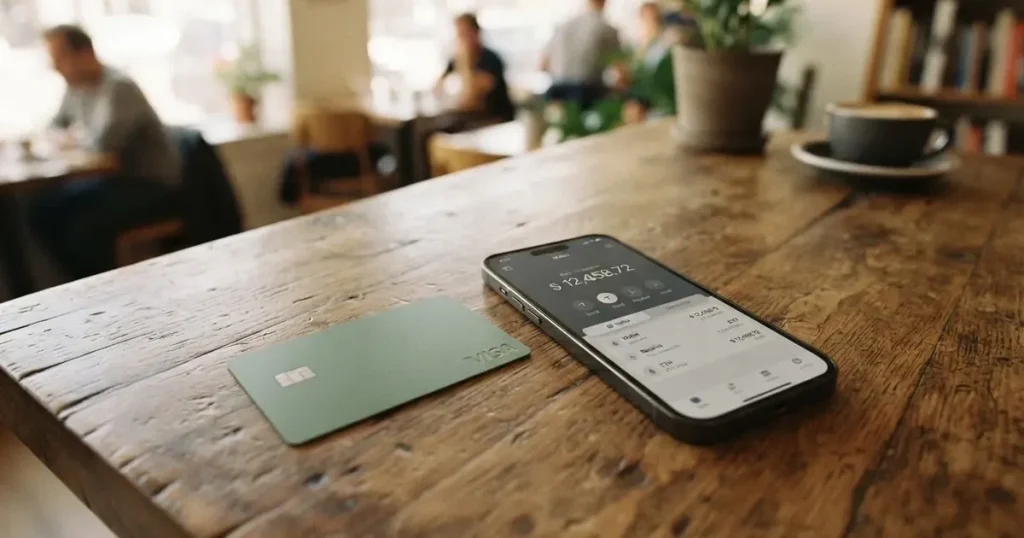
The Jam card is pitched at people who already hold their own crypto and want to spend it from a non-custodial wallet app. That is a real, narrow need, and Jam addresses it directly: the terms say the services are “strictly non-custodial”, that Jamcard never holds funds, keys or seed phrases, and the app exists on both iOS and Android with Apple Pay and Google Pay support and a stated daily spend ceiling of $250,000 worldwide. If that is your situation, several parts of the pitch are attractive.
The problem is everything around it. The card’s own public pages do not publish a country list, do not state a card network, do not state the card type or currency, and do not disclose a single fee. The issuing entity is unnamed. On top of that, the one substantive critical report I could find says funds cannot be withdrawn once loaded. I score it 4.4 out of 10, and I want to be clear up front that the score is driven as much by missing information as by bad information — which is a different problem, but for you a nearly identical one, because you still have to pay rent with whatever the card does.
The conditions described here are current as of October 28, 2026.
The score, and who this card suits
| Criterion | Mark | Why |
|---|---|---|
| Who can get it | 5 / 10 | No country list published; terms exclude Russia, Belarus, Iran, North Korea, Syria, Cuba, Ukraine and US persons; the on/off ramp works in 200+ countries |
| Cost | 3 / 10 | No fees disclosed anywhere official; unofficially about 4.2% to top up in stablecoins plus gas, 0.2% on Apple Pay |
| Top-up options | 4 / 10 | USDT, “No TRX required”; unofficially only USDT and BSC-USD |
| Reliability and complaints | 6 / 10 | Non-custodial, JAM Platform LLC (Delaware), but issuer and licences unnamed; Trustpilot 4.1 of 5 with one report about cost and withdrawal |
| Everyday use | 4 / 10 | Card type and network not named, no physical card reportedly in existence, Apple Pay and Google Pay present, ATM situation undisclosed |
Total: 4.4 / 10.
Who this suits: someone who already thinks in self-custody, who wants the card to be a thin layer on top of their own wallet rather than an account at a broker, who can read an app screen carefully enough to check a network before sending a transfer, and who will not be caught out by having their money stuck in a card balance at the wrong moment.
Who it does not suit: anyone who needs a bank account substitute, anyone who spends on credit, anyone who cannot absorb an unknown cost per transaction, anyone who wants a physical card in the post, and — importantly — anyone who needs to be certain about whether their country is allowed. That last one is the hardest to say no to politely, because the ramp functions in over 200 countries while the card’s eligibility is unpublished, and those two facts are not the same thing.
Two structural things are worth understanding before you read any fee number on any page. First, most crypto cards behave like prepaid cards rather than debit cards: the balance is loaded, and the card spends only that balance, so it cannot overdraw but it also cannot pay you back later. Second, the card number carries an issuer identification number in its first six or eight digits, and any shop can look up which institution and country issued it. That is why a card issued in one country can look “foreign” to a merchant in another, and why you may hit more declines than you expect even when everything is working correctly.
Will they give you the card
Honestly: I cannot tell you, because Jam does not say. There is no published country list on the site. The terms say the card and financial services are “categorically forbidden in specific jurisdictions”, naming “including but not limited to Russia, Belarus”, and also Iran, North Korea, Syria, Cuba and Ukraine. Sanctioned persons are barred. The terms add that the service is “strictly not intended for use by United States Persons”, and that US IP access is prohibited; Jamcard may also restrict access by IP address or jurisdiction.
Read that list carefully as what it is: a partial disclosure of exclusions, not a permission slip. The card also says “Ramp functionality over 200 countries” for the on/off ramp — that is the crypto buy and sell service, and it is a much broader statement than eligibility for the card itself. Nothing on the public pages says whether the test is citizenship or residence. That distinction matters enormously if you are, for instance, a citizen of one country living in another, and right now you would be guessing.
If you fall into any named category, stop reading and do not try to work around it. Access controls that are enforced by IP address are enforced for regulatory reasons, and an account closed after you have funded it is the outcome you are trying to avoid.
How to get it
The stated flow is short: “Sign up with email and phone”, and what the site calls “30-second onboarding”. Identity checks are handled by independent third-party compliance partners — the partners are not named. The minimum age is not stated, and whether proof of address is required is not stated.
One reviewer on Trustpilot described Jam as a “No KYC” first card, in May 2026. That is an unofficial user report, not a card statement, and it conflicts with the fact that third-party compliance partners are involved at all. Treat it as something to verify in the app yourself rather than as a feature to plan around. Anything promising you a card without checks is either describing a stage before verification or describing something that is not this product.
On the card itself, the public pages say almost nothing: no card type, no payment network, no currency. The site does say “We start only with one, but will add 20+ card types in the future” — a promise about variety, not a description of what you would receive. A reviewer reports there is no physical card yet. Delivery time is not stated. Nor is the identity verification level or how many tiers of it exist.
Here is the part that decides it for me. The card’s whole argument is self-custody: your money, your keys, no custodian. But the entity that issues the card is a third party you do not know, in a jurisdiction the site does not name, under a network the site does not name. The app being non-custodial tells you where the crypto sits at rest. It tells you nothing about who stands behind the plastic, who pays a chargeback, or who you complain to when a payment is reversed by someone else’s system.
Fees and what a payment really costs
This is the weakest section of the whole card, and the table below is mostly empty because the card’s public pages are. There is no fees page linked from the site. Issuing cost, monthly fee, conversion fee, foreign-exchange fee and ATM terms are not stated. What the site does mention is a referral: $5 for each friend.
| Fee or limit | What the card states |
|---|---|
| Issuance | not stated |
| Monthly fee | not stated |
| Conversion | not stated |
| FX | not stated |
| ATM | not stated |
| Daily limit | page titled “Spend Up to $250,000 Daily Worldwide”; no per-tier limits given |
| Monthly limit | not stated |
| Card currency | not stated; starting balance data is a USD balance |
| Fee tiers | none; “JAM VIP Club” is a private Telegram community with special rewards and a personal manager, not a published pricing tier |
Third-party figures exist and I will pass them on as exactly that: unofficially, and not confirmed by the card. A Trustpilot reviewer reported in May 2026 that stablecoin top-ups cost about 4.2% plus network gas fees, and that Apple Pay carries a 0.2% fee. If both are right, a $500 top-up costs you roughly $21 before gas, and every Apple Pay purchase costs a further slice on top of whatever conversion spread applies. I am not going to build you a monthly budget on those numbers, because I do not know what the conversion spread is, and that unknown may well be larger than both.
So let me take three ordinary payments and show you what you cannot answer. A coffee costing $6 in a local currency: the FX rate used is not stated, the spread on converting your stablecoin to dollars is not stated, and whether the 0.2% mobile-wallet fee applies on top is unconfirmed. A $120 online subscription: same unknowns, plus whether 3-D Secure will challenge you, which depends on a scheme nobody has named. A $900 flight: same unknowns again, and now the $250,000 daily headline is irrelevant because the real question is whether your merchant’s risk system will accept a prepaid or foreign-issued card, which a meaningful share of merchants decline on principle.
The pattern to notice: nothing in what is published is a *high* fee. The problem is that the number which determines your cost is the one number the card has not published. If you are comparing cards by fee, you cannot complete the comparison here.
A general point about the category that does apply to you: on-chain network fees for your deposit are charged by the blockchain, not by the card provider. On Ethereum, gas is paid in ETH, so a wallet holding USDT and no ETH cannot send at all. On Tron, fees are paid through bandwidth and energy and often burn TRX. This is why “No TRX required” on the Jam site is a genuine selling point rather than a small detail — it removes a step where people get stuck.
Top up: getting money onto the card
Stated simply: the starting point is USDT stablecoins, and the site advertises “No TRX required” for what it calls TRC20 top-ups, using a GasFree approach. Beyond that, the public pages do not list which coins or networks are accepted. The full top-up procedure, minimums and any per-network fees are not stated either, and withdrawal is not addressed at all.
One unconfirmed reviewer report, from May 2026, says only USDT and BSC-USD are supported — that is, the Binance Smart Chain version, not the Tron or Ethereum version. I cannot verify that and you should not plan a funding route on my say-so. But notice what it means either way: the network you choose has to match what the card’s system expects, and this is precisely the mistake that costs people money.
Why that risk is not theoretical. Blockchain transfers are irreversible. A transfer sent on a network the provider does not support, or sent to an address belonging to a different network, can simply be lost, or need manual support recovery with no guarantee of success. It is also worth knowing that Circle stopped supporting USDC on Tron in February 2024, so “USDC over TRC20” is not a native option on that chain — a detail that catches out people who assume symmetric support across networks.
Also not censorship-proof: Tether says it disables tokens in wallets on the OFAC sanctions list and has frozen funds tied to illicit activity. And stablecoins can depeg — TerraUSD collapsed in May 2022, USDC briefly lost its peg in March 2023 during the US banking crisis. Neither fact is a reason to avoid stablecoins, but both are reasons to keep your balance on a card small enough that a bad week is survivable.
The practical advice I can give is not a workaround for anything; it is just what a careful person does: send a small test amount first, on the network the app itself names, and only then the rest. The card’s support channels are listed further down if you need to confirm a network before sending.
Paying with it every day
Apple Pay and Google Pay are supported — the site says “Pay instantly with Apple Pay or Google Pay”. For most people in most markets, that is the only interface you will actually use, and mobile wallets are genuinely the better way to pay: Apple Pay replaces your card number with a device-specific number stored in the Secure Element, never on Apple’s servers, and generates a one-time security code for each payment. The downside of the 0.2% unconfirmed fee applies exactly to the payment method most people would choose.
What is not stated: blocked merchant categories. This matters more than it sounds. Merchant category codes are four-digit numbers assigned when a business starts accepting cards, and gambling (MCC 7995) is the classic one that issuers block by policy rather than by law — with a different list per issuer. You cannot tell from public pages whether Jam blocks it, so you may find out at the till.
Rewards: cashback is not mentioned anywhere. The only incentive described is the referral — $5 for each friend. The “JAM VIP Club” is a private Telegram community with special rewards and a personal manager, which reads as a loyalty community rather than a pricing tier.
The app itself is real and current: on iOS it is listed under the name “Crypto Wallet & Web3 Jam App” and requires iOS 17.6 or later, with no rating shown because there are not enough ratings; I read that listing on 2026-10-21. The Android package is io.jamcard.app and its rating could not be retrieved. That thin iOS rating history is itself a data point about how young this is.
Where you will hit friction, in rough order of likelihood: a merchant declining a prepaid or foreign-issued card; a decline leaving a hold on your funds that can sit for several days, typically up to seven; and the card’s terms stating plainly that blockchain transactions cannot be reversed. On disputes, the terms say the matter falls under the third-party provider’s terms — meaning the people who actually process your payment, not Jam. If the merchant category code on your statement means nothing to you, that is not evidence of wrongdoing; it is simply how a card network classifies businesses.
What can go wrong
The honest headline: no official incident of misconduct that I could find. What I found instead is one critical review and a lot of silence.
That critical review, on Trustpilot in May 2026, raises three things: no physical card, funds cannot be withdrawn once loaded, and top-up costs. The withdrawal point deserves real weight. Withdrawal is not addressed anywhere on the public pages, so I cannot tell you whether it is genuinely unsupported or simply undocumented. But if the first is true, the prepaid model bites hard — you have converted a volatile asset into a fiat balance that you can only spend, and you are dependent on the card programme staying live and on an issuer you cannot name. Withdrawal terms are the one thing I would want in writing before funding this with anything I could not afford to lose.
Trustpilot reads 4.1 from 5, which I checked on 2026-10-21; the reviews are largely five-star, with one reviewer noting costs and limits. A web search surfaced no Reddit threads. Small sample, skewed positive, and one loud negative.
The structural risks are worth more attention than the review score:
- Programme closure. Providers do close. Visa terminated its global agreements with FTX on 13 November 2022 and the card was wound down. WaveCrest, a Visa issuer that supplied crypto card brands, was suspended by Visa in Europe in 2018, closing every WaveCrest-issued Visa programme. Closures typically mean a notice period, then spending and loading stop, then you are asked to withdraw remaining balances. One 2026 closure reported by a secondary source ended new loads on 8 July 2026 and spending on 8 August 2026 — single source, unconfirmed, but it shows the shape.
- Unnamed issuer. JAM Platform LLC is registered in Delaware (8 The Green, Suite A, Dover, DE 19901) and the card is issued by unnamed third-party providers shown in the interface. No licences are named. GetApp, unofficially, says the operation is by UAB Jam in Lithuania — a second entity appearing in third-party data that the card itself does not mention. Whichever is right, your money passes through a party the card’s own pages do not identify, and the terms say the Services are “strictly non-custodial” while the entity taking the card payments is somebody else.
- Self-custody cuts both ways. Non-custodial means nobody can lose your keys — and nobody can recover them either. A seed phrase is typically 12 to 24 words in plain form; anyone who obtains it can restore the wallet and spend the funds. Transfers are typically irreversible and a stolen key has no recovery path.
- Card payments are reversible. A chargeback is a refund ordered by your issuer, with reason codes for fraud, duplicate billing or goods not received. In the US, debit reversal rights come from Regulation E and credit card rights from Regulation Z; prepaid-card coverage varies and should not be assumed. That asymmetry matters: crypto outflows cannot be clawed back, card charges sometimes can.
- Sanctions exposure. Screening is applied to nationality and country of birth as well as address, which is why the terms single out citizenship and IP.
Support exists: a help centre at help.jamcard.io in Arabic, English, Portuguese, Russian, Spanish, Turkish and Ukrainian, a Telegram channel, and Instagram, X, TikTok and LinkedIn accounts. Hours are not stated. The app supports Russian. News and release notes sit in a help-centre section called “What’s New in the Jam” which I did not read.
What to take instead
I compared three alternatives on the same basis. Scores here are their own out of 10, not mine.
| Score | Card | What stands out | |
|---|---|---|---|
| Jam | 4.4 | not stated | Non-custodial, no fees or network disclosed |
| KAST | 6.1 | Visa, virtual and physical | Only one of the four with every fee published |
| MetaMask | 7.1 | Mastercard, virtual then metal | Strongest on published fees and rewards |
| TokenPocket | 5.8 | Visa/Mastercard debit | Cheapest stated costs, thinnest disclosure |
KAST is the clearest contrast because it publishes numbers. Card spend in USD at 0%, stablecoin top-up 0%, transaction fee 0%, Apple and Google Pay 0%, and a non-USD foreign-exchange fee of 0.5%–1.75% depending on your country of residence, the transaction country and the card programme; non-USD transactions under $25 cost $0.10 and a declined transaction costs $0.50. Its membership is priced in tiers — Standard at $0, Premium at $1,000 a year, Private at $10,000 a year, billed annually upfront with no monthly option — which is plainly not for everyone, but at least you know what it is. It funds from USDT, USDC, PYUSD and RLUSD across Ethereum, Solana, Polygon, Arbitrum and TRON, no bank account needed, and pays USD cashback of 1.5% on the first $2,000 a month (Standard), 2% on the first $10,000 (Premium) or 3% on the first $40,000 (Private). Note its own contradiction: the terms say acceptable tokens are “currently USDT and USDC” while the app lists four.
MetaMask Card is free as a virtual Mastercard — no annual or maintenance fee — with the metal version at $199 a year, “a minimal fee for each transaction” with the amount not stated on the pages I read, no foreign transaction fee, and the Mastercard rate applied. Cashback in mUSD is 1% on Virtual; the Metal headline is 3% with a footnote capping 3% at the first $10,000 spent and 1% after. Sign-up is open in 45 listed countries with proof of residency required; US and UK sign-ups are temporarily closed per its FAQ, and other regions sit on a waitlist. Cards are issued by Monovate with Crypto Life as card provider, one per user.
TokenPocket’s card is a Visa or Mastercard debit depending on your country — Mastercard across a long list including Australia, Canada, Hong Kong, Japan, Singapore, South Korea and the UK; the Americas were “planned for Q2 2025”. It runs on Arbitrum, its cards are virtual, and balances sit in EUR24 and USD24. Costs: a 1% fee on crypto deposits into the card, refunded later through rewards and reduced transaction fees, and otherwise “TP Card does not charge any additional fees”. It sits on an Arbitrum wallet, and the FAQ does not list which coins and networks you can deposit.
Two structural notes on this whole group. First, the networks are not interchangeable: MetaMask’s listed set is Linea, Base, Monad and Solana, KAST’s spans Ethereum, Solana, Polygon, Arbitrum and TRON, TokenPocket sits on Arbitrum. Second, in the EU the relevant regime is MiCA, which took legal effect in June 2023; its stablecoin rules applied from 30 June 2024 and the crypto-asset service provider rules from 30 December 2024, with a transitional period running until 1 July 2026. A card is a payment service regulated separately from the crypto side, so a crypto card often rests on two licences — and a card’s page, as Jam’s shows, is where you would go to find them. If none is named there, you are relying on someone else’s page.
My actual recommendation, for most readers: KAST if you want a card you can cost out in advance, MetaMask Card if you are already in a supported country and want the strongest published reward rate, TokenPocket if you want the thinnest published fees. Jam if — and only if — self-custody is the non-negotiable part and you are willing to accept that you cannot price your own spending.
Who I would recommend it to
I would recommend Jam to exactly one kind of person, and I recognise how narrow that is. You hold your own keys and you have decided the custodial risk is worse for you than the missing-fee risk. You want to add a card to a self-custody app, not open an account at a broker. You can live with a 0.2% mobile-wallet fee if it is unconfirmed but likely. You will send a test transfer before the real one. And you will keep the balance on the card small, because you cannot withdraw and you do not know who the issuer is.
I would not recommend it if your answer to any of these is yes: I need to be able to get money off this card; I need a physical card; I need to know whether my country is allowed before I start; I need to know what a transaction costs before I make it; or I need a bank, in the sense of a bank. On that last one — is Jam a bank? No, and the site does not claim to be one. It is a Delaware company with a crypto app, and the card comes from unnamed third-party providers. In the EU the equivalent would be an electronic money institution, which may issue e-money and payment cards but cannot lend; in the US, FinCEN guidance treats administrators and exchangers of convertible virtual currency as money transmitters. Neither label appears on Jam’s pages.
The honest summary is that Jam may well be a good product that is simply not finished in the ways that matter to someone deciding where to hold money. The self-custody commitment is real and it is the right commitment in principle. But a card is a legal relationship with an issuer, and right now that relationship’s terms are described in three sentences on a help page, while the fee list is empty and the country list does not exist. I would rather fund a small test balance and come back to it than plan a month of spending around it.
Frequently asked questions
What is the Jam card?
Jam is a crypto payment card built into a self-custodial wallet app rather than a bank account. The terms say the services are “strictly non-custodial” and that Jamcard never holds your funds, keys or seed phrases — the crypto stays yours and the card spends a balance converted from it. It is made by JAM Platform LLC, registered in Delaware. Its own pages do not state the card type or the payment network.
Is Jam a bank?
No, and it does not claim to be one. JAM Platform LLC is a company in Delaware; the card itself is issued by third-party providers that the site does not name and shows only inside the interface. The site mentions “Ramp functionality over 200 countries” for buying and selling crypto, but that is the on/off ramp, not a banking licence and not the same thing as card eligibility.
Who owns Jam?
Officially, Jam is operated by JAM Platform LLC, registered in Delaware, with the address 8 The Green, Suite A, Dover, DE 19901. GetApp, a third-party site, says the operation is by UAB Jam registered in Lithuania — that is an unofficial listing, not confirmed by the card. No financial licences are named on Jam’s own pages, which is the part worth noting.
Does the Jam card require KYC?
Officially it does not say. The site says “Sign up with email and phone” with “30-second onboarding”, and states that identity checks are carried out by independent third-party compliance partners who are not named. Age and proof of address are not stated. One Trustpilot reviewer called it a “No KYC” first card in May 2026, but that is a user report and conflicts with the involvement of compliance partners.
Can I use Jam card in my country?
You cannot tell from the public pages, because no country list is published. The terms exclude Russia, Belarus, Iran, North Korea, Syria, Cuba, Ukraine, sanctioned persons and United States Persons, and US IP access is prohibited. Whether the test is citizenship or residence is not stated. Check with support before funding anything, and treat exclusions as firm.
How much does it cost to use the Jam card?
Officially, nothing is disclosed — there is no fees page linked, and issuance, monthly, conversion and FX fees are all not stated. Unofficially, a Trustpilot reviewer reported in May 2026 about 4.2% to top up in stablecoins plus gas fees, and 0.2% on Apple Pay. Unconfirmed figures, but they are the only ones in circulation, and the conversion spread is unknown.
How do I top up the Jam card?
The starting data is USDT stablecoins, and the site advertises “No TRX required” for TRC20 top-ups through a GasFree approach. The coins and networks accepted are not listed officially; one reviewer says only USDT and BSC-USD. Because transfers are irreversible, send a small test amount on the network the app itself names before sending anything substantial.
Can I withdraw money from Jam?
Nothing on the public pages addresses withdrawal, which is itself the answer you should plan around. One May 2026 Trustpilot review reported that funds cannot be withdrawn once loaded — unconfirmed, but it is the only substantive critical report I found. I would want that clarified in writing before putting a balance you need on the card.
Is Jam card safe?
The self-custody design is genuinely the safer side of the trade: your keys never leave your wallet, so there is no custodian to fail or be hacked. But the issuing provider and the network are unnamed, withdrawal terms are undocumented, and providers do close — Visa ended FTX’s agreements in November 2022 and WaveCrest’s Visa programmes shut in 2018. Keep the on-card balance small.
Is the Jam card worth it?
For a self-custody user who accepts an unquantifiable cost and no withdrawal, possibly. For everyone else, no — because the fee you pay cannot be calculated from public information, and the $250,000 daily headline says nothing about what a single coffee costs. KAST publishes 0% card spend, MetaMask publishes free virtual and $199 metal, and TokenPocket publishes its 1% deposit fee. Jam publishes a referral.
Wallet card fees and costs – cryptocardfacts
Content created by the «cryptocardfacts» team