
A closer look at Javex, a Nigeria-built virtual dollar card whose public information is thinner than the four-country footprint suggests
 Available in US

Javex is the kind of product that turns up in search results when someone in Lagos, Nairobi, Accra or Johannesburg is trying to get a card that pays in US dollars without opening a foreign bank account. The headline pitch is straightforward: a virtual dollar card, sitting behind a crypto wallet, that converts a deposit and pays for things online or in shops. The trouble with Javex is not what the card does in principle, it is how little the company publishes about what it costs, who issues it and which coins and networks you can use to fund it. This review walks through the public record line by line and ends with a frank answer to whether the card is worth the trouble in 2026.
The conditions described here are current as of October 28, 2026.
Verdict
Javex scores 3.8 out of 10 in our rating. The number is low because, in a category where trust lives in disclosed numbers, Javex discloses very few of them. The site says it offers “the best exchange rates and lowest fees” with “transparent pricing”, yet none of those fees, limits, supported coins or supported networks appear in any public document I could find. The Terms of Service are explicit on identity checks and own-name bank accounts, but silent on the practical questions a real user has: what does an ATM withdrawal cost, what is the daily spend ceiling, can the card be added to Apple Pay or Google Pay, and which network is on the front of the card.
For a Nigerian, Kenyan, Ghanaian or South African user who genuinely needs a US-dollar card to pay for subscriptions, online services or foreign shopping, the product can serve a purpose, and that purpose is narrow. For anyone outside those four countries, the product is not aimed at them: the Terms bar residents of any “Sanctioned Country or Restricted Jurisdiction”; the App Store listing is on the Nigerian storefront. For anyone who likes to know what they are paying before they pay, Javex is a poor fit, because most of the figures a cardholder cares about are not stated.
| Criterion | Mark | Why it scores there |
|---|---|---|
| Who can get it | 2 / 10 | Site names users in Nigeria, Kenya, Ghana and South Africa; KYC requires a BVN-style check and own-name bank account funding; sanctions clause is broad and unspecific |
| Cost | 5 / 10 | “Lowest fees” and “transparent pricing” are claimed, but no numbers are published; withdrawals carry a fee whose amount is not given |
| Top-up options | 4 / 10 | Crypto deposits are auto-converted to wallet balance that funds the card, but no coin or network is named on the public pages |
| Reliability and complaints | 5 / 10 | Javex Technologies Ltd is registered with Nigeria’s CAC as RC8795706 and calls itself a licensed digital exchange, but the licence is not named and the card issuer is not named; the iOS app is 5.0 from only 2 ratings |
| Everyday use | 3 / 10 | Only a virtual dollar card; Apple Pay and Google Pay are mentioned but ATM support is not disclosed; 2FA, PIN and biometrics are present |
| Total | 3.8 / 10 | — |
Who will they give you the card
The audience Javex is built for is small and African. The site calls out four countries by name: Nigeria, Kenya, Ghana and South Africa. The Terms then add a catch-all rule that the card is not for nationals or residents of any “Sanctioned Country or Restricted Jurisdiction”; Javex does not publish that list. If your country is not in the four named ones, you should not assume the door is open; the App Store listing sits on the Nigerian storefront, which is another hint that the centre of gravity is Lagos, not London.
The sign-up is gated by identity checks that look like the kind of checks a bank would run, not the kind a quick app would. The Terms require an identity verification that includes BVN validation (BVN is Nigeria’s Bank Verification Number, a unique identifier tied to every bank account in the country) and anti-money-laundering screening. Deposits must come from a bank account in your own name. The minimum age is 18, and one account per person is the rule. The card-specific KYC steps, the order in which you are asked for documents, and whether the level of verification changes as your spend grows, are not stated on the public pages.
In practice that means a Ghanaian user opening the app in Accra will be asked for the same kind of proof the Terms describe, and a South African user in Johannesburg will be asked for the equivalent South African documents, but Javex has not written down which documents those are. The general category is: government photo ID, proof of address, and the bank account that will fund the card.
How to get it
The card itself is the Javex Virtual Dollar Card. It is virtual, not physical, and it is positioned for international transactions. The network on the front of the card is not stated on the public pages, which is unusual: a Visa or Mastercard logo is normally one of the first things a card page shows, and its absence is the kind of detail that tells you the company has not finished its marketing. The card is denominated in US dollars, and the wallet that backs it can also hold local currency, so a Kenyan user can keep Kenyan shillings in the wallet and a Nigerian user can keep naira, with the card always spending in dollars.
Because the card is virtual, the question of delivery does not arise. You apply, you are approved, and the card details appear in the app. The exact steps from “open the app” to “card is in your wallet” are not stated in the Terms or on the site, so the only way to learn them is to download the app and try. The app is called “Javex: Crypto & Gift Cards” on iOS, where the current version is 1.0.9 and it holds a 5.0 rating from 2 reviews as of 2026-10-21. The Android package, com.javex.javex_app, was not returning a rating when I checked, so there is essentially no signal yet on the Android side.
What it really costs (fees)
This is the section most likely to disappoint a careful reader. Javex’s site talks in slogans: “the best exchange rates and lowest fees”, “transparent pricing”, nothing specific. The Terms add one technical point worth knowing: when you use the in-app instant buy or instant sell, the fee is built into the rate you are quoted. So the price you see is the price you pay, but the size of the fee is hidden inside that number and there is no schedule to compare it against.

The costs table below mixes the figures Javex does publish with the ones that are not stated. I have marked those as “not stated” rather than guessing, because guessing fees is a bad habit and the company’s “transparent pricing” line is exactly the kind of promise that should be tested against an actual table.
| Fee or limit | Amount |
|---|---|
| Card issuance | not stated |
| Monthly or annual fee | not stated |
| Crypto-to-fiat conversion | not stated (fee is “built into the quoted rate”) |
| Foreign exchange (FX) markup | not stated |
| ATM withdrawal | not stated |
| Daily spending limit | not stated |
| Monthly spending limit | not stated |
| Withdrawal fee (to a Nigerian bank account) | charged, amount not stated |
| Local-currency wallet holding | supported (USD card; wallet also holds local currency) |
To make the fees section less abstract, here are three everyday situations a Javex user is likely to face, and what the public record does and does not say about each.
A Netflix subscription paid in US dollars with the Javex card. The card sits in US dollars, the subscription is in US dollars, so there is no FX conversion from the card’s point of view. The question is whether the rate at which Javex sold you those dollars included a meaningful markup. The Terms say it did, but they do not say how much. If the dollars came from a crypto deposit, the conversion from crypto to USD happened at the quoted rate, fee included, and the dollar balance on the card is now paying Netflix directly.
A coffee in a shop in Lagos paid by tapping the phone. The card is virtual, so the tap would have to be through Apple Pay or Google Pay. Javex’s app mentions both, so a tokenised card number on the phone is plausible. The cost is the cost of the coffee, plus the FX markup if the merchant charges in a currency other than the card’s USD, plus the spread that was baked into the rate when the dollars were first loaded. None of those three numbers is published.
A cash withdrawal from a Nigerian bank account back to naira. The Terms are explicit: all withdrawals incur a fee, the destination must be a bank account Javex has approved, and the destination country is Nigeria. The size of that fee is not stated, which is a significant gap for a product whose main use case in Nigeria will be moving dollars in and naira out.
Top up
The way Javex is designed, the card is not what you top up directly. The wallet is what you top up, and the card spends from the wallet. When you send crypto to Javex, the deposit is automatically converted into the wallet’s balance, and that balance is what the card draws on. The Terms are clear about this, and it is a sensible design: a single balance that can be held in naira, shillings, cedis or rand, with the card always drawing in dollars, is a clean model for someone whose income is local but whose spending is partly online and foreign.
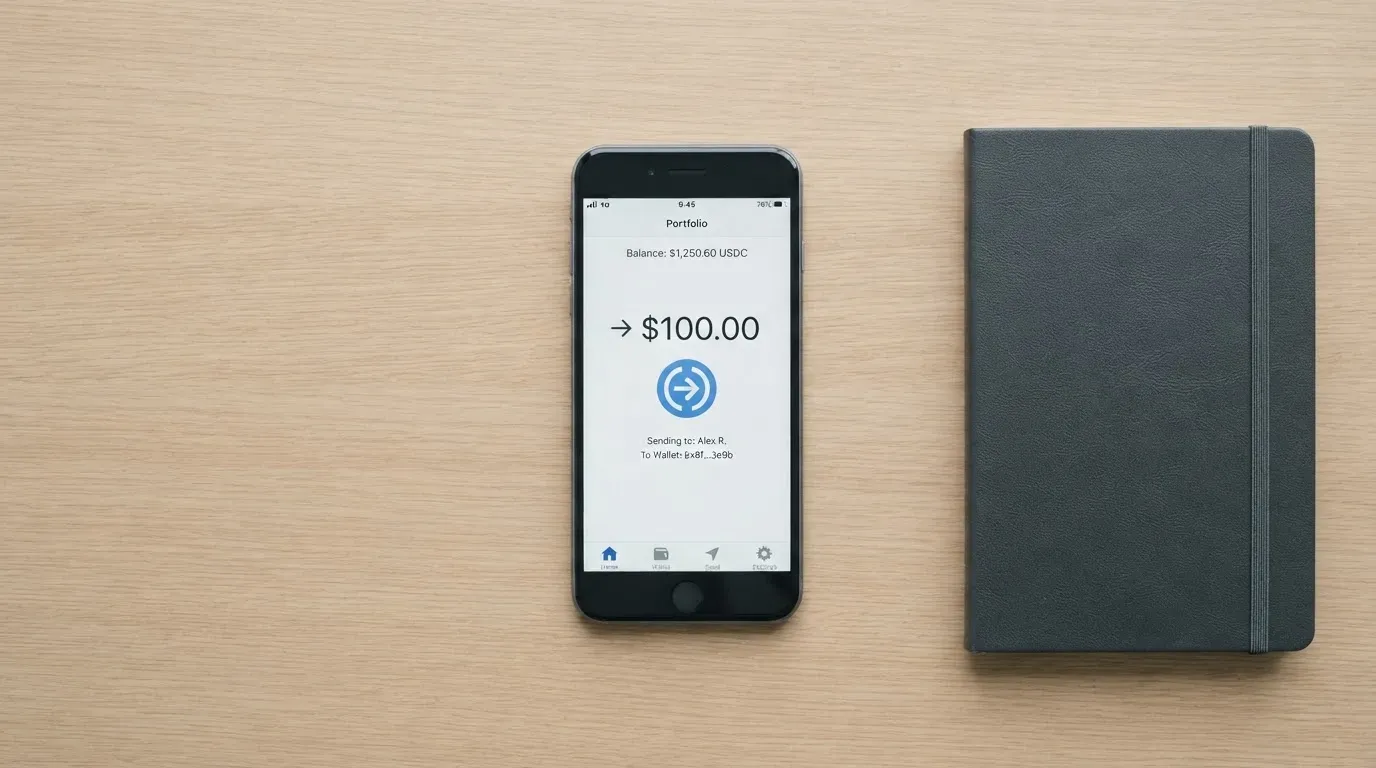
The list of supported coins, and the list of supported networks, is not stated. For a category where sending USDT on the wrong network is the single most common way users lose money, the absence of a published list is a real risk. Stablecoin transfers typically involve either ERC-20 (Ethereum) tokens where gas is paid in ETH, or TRC-20 (Tron) tokens where network resources are priced in TRX, but the choice between them is the wallet provider’s, and Javex has not told users which to use. If you already hold crypto, the safest step before sending anything is to ask Javex support, in writing, which coins and which networks they accept, and to keep that answer in case a future deposit needs to be reconciled.
A bank-account deposit is the other route in, and it is restricted: it must come from a bank account in your own name, matching the identity on the Javex account. That is a standard anti-money-laundering control, and it means a friend cannot simply transfer money into your Javex wallet. The crypto top-up fee is not stated; the bank top-up fee is not stated; the FX rate at which a local-currency deposit is converted into dollars is built into the rate and not separately disclosed.
Paying with it every day
Once the card is in the app, the daily-use story is shaped by the limits of a virtual dollar card. Online payments, app-store subscriptions, foreign-website purchases and contactless tap-to-pay through Apple Pay or Google Pay are the headline use cases. Javex mentions both mobile wallets, which matters: a virtual card that cannot be tokenised into a phone wallet is a card you have to type in by hand at every checkout, and that is a poor experience for everyday spending.
Cash from an ATM is the question mark. The public record does not say whether Javex’s virtual card can be used at an ATM, which would be unusual for a virtual-only card and is therefore probably a no, but it is also possible that the issuer has enabled it. The Terms describe withdrawals only as bank-account transfers, not as ATM cash-outs, which is a strong signal that ATM use is not part of the product. Anyone who needs cash should plan around bank transfers, not plastic.
The app is the main surface for everything: balance, card details, top-up, security, support. It is where 2FA, transaction PIN and biometric login are configured, and all three are mentioned in Javex’s security description. 2FA, in practice, usually means a one-time code from an authenticator app or an SMS code sent to your phone; biometric login is the fingerprint or face check on the phone itself, and a PIN is the extra four- or six-digit number required before a payment is sent. The combination of all three is a reasonable default for a wallet product.
On the rewards side, Javex’s app gives reward points on eligible transactions and referral bonuses when someone you invite signs up and uses the card. There is no cashback programme. The points programme is not described in terms of value per naira, so the practical worth of a point is not knowable from the public pages.
When something goes wrong with a payment, the Terms set the dispute venue: arbitration in Lagos under Nigeria’s Arbitration and Mediation Act 2023. There is no refund or chargeback policy on the public pages, which is worth knowing: chargebacks are the safety net a cardholder normally has when a merchant fails to deliver or charges the wrong amount, and the absence of a written policy is a gap, not a feature.
What can go wrong
A review that only listed the product’s good intentions would not be useful, so here is what is worth worrying about before you commit real money to the wallet.
The licensing picture is the biggest open question. Javex Technologies Ltd is registered with Nigeria’s Corporate Affairs Commission under RC8795706, and the site calls itself a “Licensed and regulated digital exchange platform”, but it does not name the licence, the regulator that issued it, or the licence number. For a product that holds customer balances and issues a card, that is a thin disclosure. The card issuer is also not named, which matters because in this category the issuer is the licensed bank or e-money institution that actually carries the card programme; the brand you see in the app is often a programme manager on top of that. If Javex has not named an issuer, the question of who would stand behind the card in a dispute or a programme shutdown has no public answer.
The operational record is also short. The iOS app has 2 ratings, which is too few to draw conclusions from. There is no Trustpilot page that I could find, and no recurring themes on Reddit, which means there is also no track record of complaints to weigh against the lack of a complaint history. “No complaints found” can mean “no users”, and that is a possibility as much as it is a comfort.
The custody model is not stated. With a custodial wallet, the platform holds the keys and you trust the platform; with a self-custody-linked card, the keys stay with you until the moment of payment. Javex has not said which model the wallet follows, and that is a real difference. In the wider category, custodial platforms have failed before, and customer balances have been lost in ways that no support line could reverse.
Sanctions and country risk sit in the Terms as a broad exclusion: nationals and residents of any “Sanctioned Country or Restricted Jurisdiction” are barred, but the list is not published. The same clause is doing two jobs, anti-money-laundering and sanctions compliance, and it is the kind of clause that can be applied broadly in a shutdown.
Security on the user’s side is sound by default. 2FA, transaction PIN and biometric login are all available. 24/7 support is claimed, with a contact page and a presence on Facebook, TikTok, Instagram and X, though a social-media presence is not a substitute for a regulator or a published service-level commitment. The Terms are governed by Nigerian law, with arbitration in Lagos, which is the right venue for a Nigerian company but a long way for a Kenyan or Ghanaian user if a serious dispute arose.
Finally, a reminder that the fees and limits most users will care about are not stated. The card is real, the wallet is real, and the company is registered in Nigeria, but the public record does not contain the numbers you would want to see before loading any meaningful amount. Treat that gap as a risk, not as a placeholder that will be filled in later.
What to take instead
Javex is not the only virtual or crypto-linked card aimed at users who do not have easy access to ordinary bank cards, and three alternatives are worth a look.
Young Card. Young Card scores 5.7 out of 10 in our rating. The most distinctive feature is its cashback, which is paid in the platform’s own YNG token. The rate is set by club tier: Essential holders earn 0.1%, Gold holders earn 1.8% and Platinum holders earn 3.6%; Bronze and Silver rates are not stated on the public page. Where Young Card is thin is the same kind of thin spot as Javex: country availability, the card form factor, the cost to issue, the fees, and the funding options are not stated on the official page I could read. The cashback structure is its strongest point and its weakest point at the same time, because a token-denominated reward is only as valuable as the token’s price on the day you receive it.
MSX. MSX scores 6.4 out of 10. The rating is a more confident figure than Young Card’s, and the public record I could read did not give me country coverage, card form, cost, fees, funding or rewards details. That makes MSX harder to recommend on specifics and easier to recommend on the absence of obvious red flags. If you are already an MSX user, the card is a logical add-on; if you are not, the lack of public detail is a reason to start small.
Bybit Card. Bybit Card scores 6.0 out of 10 and is the most thoroughly documented of the three. Country coverage is wide: Argentina, AIFC (Kazakhstan), Georgia, Kazakhstan, Australia, Mexico, Brazil, Peru and a broader Asia Pacific region. The application asks for your country of residence, and if it is not in the supported list Bybit says it will register your interest. The product is not meant for European Economic Area customers, and EEA participation is prohibited. Bybit’s fiat-service restricted list, which covers deposits, withdrawals and One-Click Buy, includes Belarus, the Russian Federation, Serbia, China and the United States, and says Russian users can only transact in rubles through fiat. The card exists in virtual and physical form, with the virtual card always issued first, the physical card not available in Peru, and rollouts happening in phases. Networks are split: Mastercard prepaid in Argentina; Mastercard credit in AIFC, Georgia, Kazakhstan, Australia and Mexico; Visa prepaid in Brazil and Peru; Visa credit in Asia Pacific. The card’s currency depends on the country your advanced identity verification was done in.
Bybit’s cost table is unusually detailed. Virtual card issuance is free in every region “until further notice”, with no annual or cancellation fee listed. Physical card issuance and replacement costs are stated by region: Australia 29.99 USD, Argentina 5 USD or USDT, Georgia 29.99 USDT, Kazakhstan (AIFC) 29.99 USDT, Asia Pacific 5 USDT, and free in Brazil and Mexico. VIPs who hold a physical card in Australia, Kazakhstan (AIFC), Georgia or Asia Pacific pay nothing for issuance or replacement. The cards page summarises the model as “auto interest, no annual fees”.
Bybit’s fees are also stated. Crypto conversion is 0.9% over the One-Click Sell rate in Australia, Asia Pacific, Georgia, Kazakhstan, Brazil and Mexico, and 0.5% in Argentina; Peru is not supported. FX fees are 2% on top of the network rate in Australia, Asia Pacific, Georgia and Mexico, 2% “International Fee” on purchases outside Kazakhstan even in USD in Kazakhstan (AIFC), 7% in Argentina, 1.5% in Brazil and 1% in Peru. FX padding, the buffer Bybit adds to the rate, is 0% in the Australia group and Mexico, 5% in Argentina and 1% in Brazil, with the excess refunded after the transaction. Argentina also layers in VAT at 21% on foreign digital services, a 30% tax on foreign transactions and a provincial gross-income tax of 1% to 13.2%.
Bybit’s funding model is different from Javex’s. There is no card balance as such: the card draws on a Funding Account and a Flexible Easy Earn balance, in fiat first, and crypto is sold automatically if the fiat balance is short, at the One-Click Sell rate plus the card’s crypto conversion fee. Supported coins are BTC, ETH, XRP, USDT, USDC and GRAM, with a default priority of USDT, then USDC, then GRAM, then BTC, then ETH, then XRP; the order can be changed in the Card Dashboard. The Funding Account itself is topped up with Buy Crypto or by depositing crypto from another wallet.
Bybit’s rewards are also richer. From 2026-10-05 at 10:00 UTC, only crypto-funded transactions earn points or cashback, and fiat-funded spending does not. The tier table runs from Base at 2.00% with a 5 USD monthly cap, through Beta, Alpha, Apex and Omega, up to Infinite at 10% with a 600 USD monthly cap and a 25,000 USD monthly spend threshold. Points are pending for 4 calendar days and then convert to cashback in USDT at points × 0.002, with Auto Cashback required to be on. There is a 1% bonus on Pay Later instalments, a welcome offer of 10% cashback up to 110 USDT in the first 30 days, a “100% cashback on must-have subscriptions” perk for VIPs and Alpha-tier and above, and a referral bonus of 20 USDT for the referrer and 10 USDT for the referee.
The honest summary: Javex is the simplest of the four, which is a benefit in the sense that there are fewer moving parts, and a drawback in the sense that there are fewer disclosed numbers. Bybit Card is the most thoroughly disclosed and the most complicated, with the most rewards and the most country-specific fees. Young Card and MSX sit between, with cashback as their strongest pitch in Young Card’s case and simplicity as MSX’s. The right card for any individual user depends on the country they live in, the coins they already hold, and whether they value a transparent fee table more than a token-denominated reward.
Who I would recommend it to
If you live in Nigeria, Kenya, Ghana or South Africa, you have a Nigerian bank account or its local equivalent, and you need a US-dollar card to pay for a small number of online subscriptions or a foreign website, Javex is a usable product for that narrow job. The card is virtual, the wallet is custodial, and the company is a Nigerian-registered business, so the legal venue is Nigeria and the support team is in your time zone. If that matches your situation, the card can do what it says on the tin: hold a dollar balance, pay a foreign merchant, withdraw to your own bank account.
If you want to know what the card costs, the card does not suit you, because the cost is not published. If you live outside the four named countries, the card does not suit you, because the Terms bar residents of any “Sanctioned Country or Restricted Jurisdiction” and the App Store listing is Nigerian. If you want a physical card or ATM cash-outs, the card does not suit you, because the only product is virtual and the Terms describe withdrawals as bank transfers, not cash. If you are a heavy spender who needs to know the monthly cap, the card does not suit you yet, because the cap is not stated. If you want cashback in a known currency, the card does not suit you, because the rewards are points, not cash.
For everyone else, the alternatives above are worth considering before signing up. Bybit Card is the most transparent on fees and rewards but the most complicated to use and not available in the EEA. Young Card offers token-denominated cashback at rates that depend on the tier. MSX is a quiet option for users who are already on the platform. None of the four is a default; each is a fit for a specific kind of user, and Javex is the narrowest fit of the four.
Frequently asked questions
What is Javex card?
Javex is a virtual US-dollar payment card from Javex Technologies Ltd, a Nigerian-registered company. The card is backed by an in-app wallet that can also hold local currency, and the wallet is funded by crypto deposits that are automatically converted into the card’s balance.
How does Javex card work?
You create an account, complete identity verification, fund the wallet by sending crypto or transferring from a bank account in your own name, and the app issues a virtual card in your name. The card pays in US dollars from the wallet’s dollar balance, and you can use it online or, where supported, through Apple Pay or Google Pay.
Is Javex a bank?
No. Javex calls itself a licensed and regulated digital exchange platform and is registered with Nigeria’s Corporate Affairs Commission as RC8795706, but the licence is not named on the public pages and the card issuer is not identified, so it should be treated as a fintech rather than a bank.
Who owns Javex?
Javex Technologies Ltd is the company behind the product. The site does not name individual owners, directors or shareholders, and the only corporate identifier I could find is the CAC registration number RC8795706.
Is Javex card available in my country?
The site names Nigeria, Kenya, Ghana and South Africa as the four markets the product is built for. The Terms also bar nationals and residents of any “Sanctioned Country or Restricted Jurisdiction”; the App Store listing is on the Nigerian storefront, so users in other countries should not assume the product is open to them.
How do I get Javex card?
The card-specific sign-up steps are not stated on the public pages, so the practical path is to download the iOS or Android app, create an account and complete the in-app verification. Identity documents and a bank account in your own name are required by the Terms.
Does Javex card require KYC?
Yes. The Terms require identity verification that includes BVN validation and AML checks, with deposits limited to a bank account in the user’s own name and a minimum age of 18. The full set of documents the app will ask for is not described on the public pages.
How do I top up Javex card?
You fund the wallet, not the card directly. Crypto sent to the wallet is automatically converted into the wallet’s balance, and the card spends from that balance. The list of supported coins and supported networks is not published, so it is worth confirming with support before sending a deposit.
How do I add Javex card to Apple Wallet or Google Pay?
The app mentions Apple Pay and Google Pay support, so the practical step is to open the card details in the app and follow the in-app “add to wallet” flow for the platform you use. The exact steps are not documented on the public pages.
Is Javex card safe?
The app supports 2FA, a transaction PIN and biometric login, and the company is registered in Nigeria. The licence behind the platform is not named, the card issuer is not named, the custody model is not described, and there is no public chargeback or refund policy, so the safety picture is partial and the user bears more of the trust burden than is normal in this category.
Exchange card fees – cryptocardfacts
Content created by the «cryptocardfacts» team