
A Telegram-first Visa that spends your crypto, if you read the fee table first
 Available in US
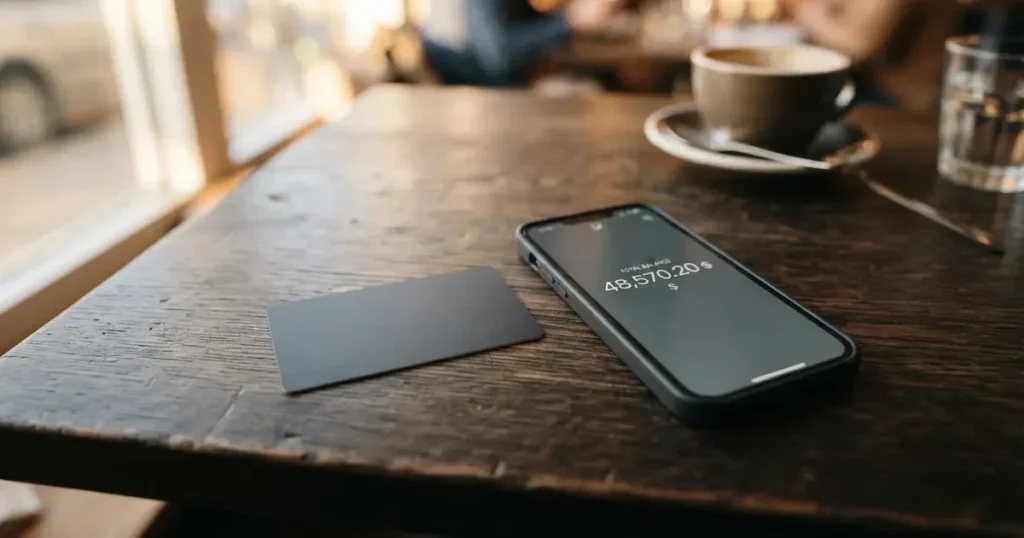
Karta is a Visa Signature card, virtual and physical, that you top up from stablecoins and then spend like an ordinary payment card — through Apple Pay, Google Pay, or at an ATM. It runs inside Telegram, verification is quick, and the card works wherever Visa is accepted across more than 200 countries and territories. That is the pitch, and for someone who cannot get an ordinary bank card, or who lives where a usable Visa is hard to get, it is a genuinely useful thing.
But it is not a bank, the issuer behind it is not named, and the fee schedule has a few edges worth reading twice. I scored Karta 7.9 out of 10. The conditions described here are current as of October 28, 2026.
Verdict: 7.9 out of 10
Karta scores well on reach and on how much choice it gives you for topping up, and reasonably on day-to-day spending. It scores poorly on the one thing that can quietly cost you money: the reliability and transparency of the operation. The company is a programme manager, not a bank; the entity that actually issues the card is not named on the public pages; and a third-party aggregator calls the “0% commission” and “25% cashback” claims misleading. That does not make the card bad. It makes it a card you use with your eyes open.
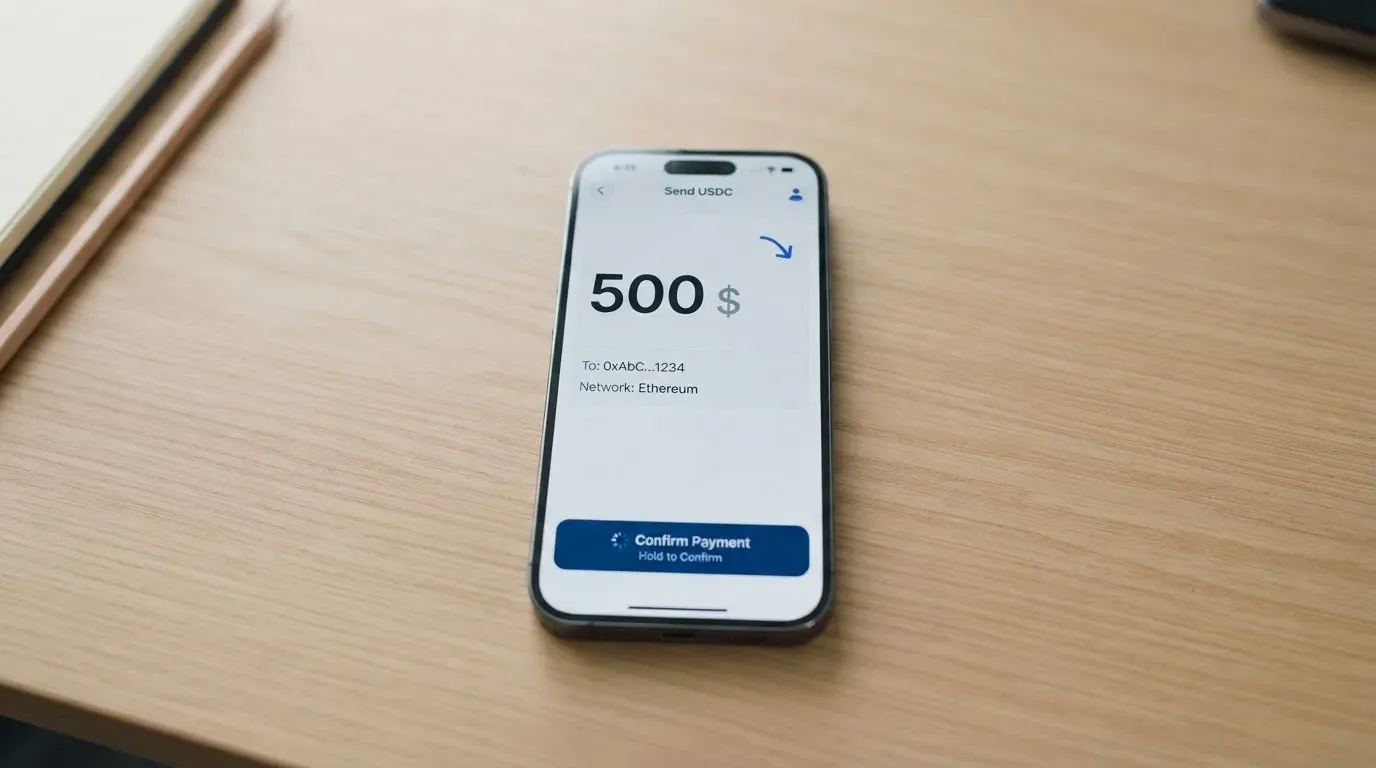
Who it suits: someone already inside Telegram, holding USDT or USDC, who wants a Visa number quickly for online subscriptions, travel spending, or everyday purchases in places where opening a local account is slow or impossible. The multi-network top-up is the standout feature — eight networks, two stablecoins, plus several fiat rails.
Who it does not suit: if you want a bank account with deposit insurance, a card with a named issuer you can hold responsible, or a rewards rate you can count on. Nor if you want to withdraw your balance back to a bank account today — the page says bank withdrawals are “coming soon”.
| Criterion | Mark | Why |
|---|---|---|
| Who can get it | 9 / 10 | Works in 200+ countries and territories where Visa is accepted; availability depends on local rules and partner coverage |
| Cost | 7 / 10 | Virtual Visa activation 5.00 USDT, physical from 100.00 USDT; crypto top-up free; card payments 1.5%; ATM 1.5% + 1 USDT |
| Top-up options | 10 / 10 | USDT or USDC on Tron (TRC-20), Ethereum, BNB Smart Chain, Polygon, Arbitrum, Optimism, Base, Solana; plus fiat via ACH, SWIFT, SEPA, PIX, SPEI |
| Reliability and complaints | 5 / 10 | Karta Finance Inc., not a bank, issuer not named; Trustpilot 3.9 from 25 reviews, complaints about high fees; unofficial sources call “0% commission” and “25% cashback” misleading |
| Everyday use | 9 / 10 | Visa Signature virtual and physical, Apple Pay and Google Pay, ATMs worldwide |
| Total | 7.9 / 10 | Strong reach and funding choice; weak on transparency and named backing |
This is, in short, the card for a Telegram user topping up with multi-network USDT who wants to spend crypto without thinking about crypto at the till — and who reads the fee table before the first purchase.
Will they give you the card?
Yes, broadly. Karta says it works “in 200+ countries and territories where Visa is accepted”. That is a wider map than most crypto cards offer, and it is the reason the reach score is a 9. The catch is the qualifier the card itself attaches: availability “depends on local regulations and partner coverage”. So “200+ countries” describes the network’s reach, not a guarantee that a specific person in a specific place will be approved.
One detail the public pages do not sort out: citizenship versus residence. Whether eligibility keys off the country you are a citizen of or the country you live in is not stated. If you are a citizen of one country and resident in another, that distinction matters, and you would need to ask the card directly.
What this means for you: if you live somewhere with a functioning banking system and simply want a second card, the 1.5% payment fee and the non-bank structure may not earn their place. If you live somewhere without, or you are a traveller or someone whose income arrives in crypto, the reach is the whole value proposition.
How to get it
The signup runs inside Telegram, not through an app store or a website form. The sequence is short: start the Karta Telegram bot, complete verification, top up to activate the virtual card. The card advertises a “quick verification (it takes up to 5 minutes)”. Documents and age requirements are not stated on the card’s public pages.
There is one level of verification — that single “quick verification” — and per-level unlocks and rejection reasons are not stated.
One thing you may read elsewhere: a third-party site (Crypto Cards, no date shown) describes an “ID Verification” step asking for an email, a phone number and an identity document, and says proof of address and a selfie are not required. That is an unofficial description, not confirmed by the card, so treat it as a hint rather than a promise about what you will be asked for.
You get a Visa Signature, either virtual or physical. Card currency is not stated. Physical card activation starts at 100.00 USDT; which countries it ships to, how long delivery takes, what delivery costs, and what a replacement costs are all not stated — so if the physical card matters to you, ask before you pay.
Fees: what it really costs
This is where the 7/10 cost score comes from, and where you should spend most of your attention. The headline fees are clear; the edges are where money leaks. Note that whether the FX fee is separate from the conversion figure is not stated, and several limits are not stated either.
| Fee or limit | Value |
|---|---|
| Visa Virtual activation | 5.00 USDT (FAQ shows “30 USDT 5 USDT”, apparently an old struck-through price) |
| Visa Physical | from 100.00 USDT |
| Virtual accounts | free |
| Monthly fee | none listed |
| Crypto top-up | free |
| Card payments | 1.5% |
| SEPA | 1.5% + EUR 2 |
| SWIFT (USD) | 1.4% + $2 |
| Send to crypto wallets | network fee only |
| ATM | 1.5% + 1 USDT |
| Daily and monthly spend limits | not stated |
| Card currency / FX fee | not stated |
Now, three everyday payments, and which fees actually apply.
A subscription you pay online every month. If you pay in dollars or in another currency, you hit the 1.5% card payment fee — and if the card converts currency for you, an exchange fee may apply on top, though the card does not state whether that is separate. On a $20 monthly subscription, 1.5% is 30 cents a month; it adds up, it is just not dramatic.
Paying a local shop or restaurant abroad, say a EUR 60 dinner, contactless via Apple Pay. You are spending from a balance that started as USDT, so a conversion is involved. The 1.5% payment fee is 90 cents, and any FX fee the card applies — amount not stated — sits on top. This is the payment where the missing FX line matters most.
Taking $100 out of an ATM. The ATM fee is 1.5% plus 1 USDT, so on $100 that is $1.50 plus $1 — a flat $2.50. Free allowance and ATM limits are not stated. A third-party site (Crypto Cards, no date shown) claims ATM withdrawals are free and “unlimited”, which directly contradicts the official 1.5% + 1 USDT figure — believe the official number, and use the ATM sparingly regardless.
The honest summary: 1.5% on every card payment is the cost you will pay most often, and it is not nothing. Top-ups are free, which is generous, but you pay on the way out.
How to top it up
This is the card’s best feature, and it is why top-up options score a full 10. You can send USDT or USDC over eight networks: Tron (TRC-20), Ethereum, BNB Smart Chain, Polygon, Arbitrum, Optimism, Base, and Solana. That means you pick the chain you already use and the one with the cheapest fee at that moment, instead of being stuck with one.
You can also top up in fiat: ACH, SWIFT, domestic wire (USD), SEPA (EUR), PIX (BRL), bank transfer (COP), and SPEI (MXN) — which rail is available to you depends on your country.
Crypto top-up itself is free. The minimum top-up is not stated. On the way back out, you can withdraw to external crypto wallets at “network fee only”; bank withdrawals are “coming soon”, so today your exit is back onto a blockchain, not into your current account. What happens to a leftover balance if you close the account is not stated — worth asking before you close anything.
One practical warning from the wider world of stablecoins, because it bites here: a deposit sent on a network the provider does not support, or to an address of another network, can be lost or need manual support recovery with no guarantee. Blockchain transfers are irreversible. Double-check the network before you send. Also note, USDC is no longer natively supported on Tron, so “USDC over TRC20” is not an option — that is Circle’s doing, not Karta’s.
Paying with it every day
Once loaded, it behaves like a normal card. You can add it to Apple Pay and Google Pay, which is how most people will actually use a virtual card — the phone number never touches a merchant’s site. It works at ATMs worldwide. That earns the 9/10 everyday-use score.
A few honest details. Card currency is not stated, so I cannot tell you what a purchase in a shop that prices in your local currency will cost you exactly — the 1.5% payment fee is clear, the FX treatment is not. Restricted merchant categories are not stated either; in this category of card, issuers often block things like gambling by policy rather than law, and the blocked list varies — so if you spend on something unusual and it declines, that is a plausible reason.
On rewards: cashback on spending is claimed — “the more they spend, the more they earn” — but the rate and the currency it is paid in are not stated. Referral rewards are paid in KARAT points, where 1 KARAT = 0.01 USDT. Treat the cashback as a pleasant surprise, not a number you plan around. A third-party aggregator (no date shown) says the “25% cashback” claim seen elsewhere is widely viewed as misleading and that cashback is paid in an illiquid token — unofficial, not confirmed by the card, but reason enough not to budget around it.
Disputes and chargebacks: the public pages say nothing about how a disputed payment is handled. If something goes wrong with a purchase, you are relying on the unnamed issuer’s policy, which you cannot read. That is a real gap.
What can go wrong
Start with the structural risk, because it is the largest. Karta is operated by Karta Finance Inc., registered at 221 W 10th St, 4th Floor, Wilmington, DE 19801, USA. The card states plainly that it is “not a bank” and not FDIC insured. The actual card issuer is not named — the site refers only to “regulated financial and card-issuing partners” — and licences are not stated. The site claims the service is “used monthly by over 20,000 people”, which is a usage claim, not an audited figure.
Then the practical risks:
- Counterparty and hack risk. Self-custody is a genuine positive — the card lists a self-custody wallet, 3-D Secure, encrypted transactions and PIN protection, so your crypto keys are yours. But the wider category has a scar tissue: Mt. Gox (about $350 million reported stolen, 2011–2014), Coincheck (about $400 million, 2018), and Ronin Network ($625 million, 2022). Holding funds with any custodian carries this risk.
- Card programmes do close. WaveCrest, a Visa issuer that supplied crypto card brands, was suspended by Visa in Europe in 2018, closing all its Visa programmes. In November 2022 Visa said it had “terminated our global agreements with FTX”, and the FTX US debit card was wound down. Programmes typically give notice, then stop spending and loading, then ask you to withdraw — so keep your balance small and be ready to move it.
- No named issuer means no clear recourse. If a payment goes wrong, you do not know which institution’s rules apply. The card pages are also silent on 2FA and a card freeze — standard safeguards (instant freeze, spending limits) that you cannot confirm are here.
- Irreversible transfers. Crypto deposits and withdrawals cannot be reversed by the network. Send on the wrong network and it may be gone.
- Declines and holds. Some merchants refuse prepaid or foreign-issued cards because the BIN lookup reveals the issuer country; a declined authorisation can leave a hold on your funds for up to seven days.
- Complaints. On Trustpilot, a user-reported score of 3.9/5 from 25 reviews (read 2026-10-20) — mixed, some praising how easy setup is, one calling fees high, another saying there was too little transparent information before registration. The aggregator cryptocards.so scores Karta Virtual Visa 4.0/10 and flags the “0% commission” marketing as deceptive (unverified). Small sample, but not nothing.
Support, when you need it: in-app chat, email at [email protected], a Help Center, and Telegram. Official news and press, not stated.
What to take instead
If Karta’s Telegram-first, multi-network approach is not quite what you want, here are the alternatives I looked at, with the same lens.
- Azul Card — score 5.3/10. Virtual only, Mastercard, worldwide except a named list of countries (Russia, Belarus, North Korea, Iran, Syria, Cuba, Sudan, Venezuela, Ukraine and several regions), and the card says the restrictions apply “regardless of the user’s nationality”. $20 to create, refunded after $2,000 in spending, $5 monthly. Crypto top-up 4% and $0.25 per transaction — pricier than Karta. USD balance. First top-up up to 10 minutes, later ones 1–5 minutes. Referral pays up to 40% of fees from your referrals’ spending.
- Telecard — score 6.1/10. Virtual Mastercard, USD, usable in 150+ countries where Mastercard is accepted, but identity check only “available in most major regions” and no supported-country list. Free to sign up on the basic plan; $5 one-time standard, or VIP at $49 setup then $19/month. $99 minimum deposit to activate, stated as “NOT a fee” because it stays in your wallet. 1.5% currency conversion, 0.5 USDT gas per card transaction, FX and cross-border “up to 3% each”. Top-ups in USDT (Tron or Ethereum) and USDC (Ethereum); no Polygon; bank transfers “coming soon”. Rewards in Fiorini points.
- OnCards — score 4.6/10. Virtual Mastercard/Visa in Telegram, funded with USDT BEP20, no bank transfers. Fees and country list are not stated — the site just promises “no hidden charges” without numbers. The thinnest information of the four.
My read: Karta edges ahead on funding choice (the eight-network, two-stablecoin list is unmatched here) and on everyday reach. Telecard is cheaper to start in some ways and has a named plan, but fewer networks. Azul is the one with an explicit country exclusion list, which at least tells you where it will not work. OnCards I would not choose on fees alone, because the fees are not stated.
Who I would recommend it to
I would recommend Karta to you if all of the following are true: you already live in Telegram; your money arrives as USDT or USDC and you would rather spend it directly than through an exchange; you want a Visa number today, virtual, that works for subscriptions and everyday spending; and you are comfortable that the operator is not a bank and the issuer is unnamed, so you keep only what you can afford to have tied up for a while.
I would point you elsewhere if any of these apply: you want deposit-insurance or a regulated bank behind the card; you plan to hold a large balance on it; you need to get money back to a bank account (bank withdrawals are “coming soon”); or you care about a guaranteed cashback rate (it is not stated, and third parties call the headline claim misleading).
Whichever way you go, read the fee table with a specific purchase in mind — a monthly subscription, a foreign-currency dinner, a $100 ATM withdrawal — and see what each one costs. That exercise tells you more than any score.
Frequently asked questions
What is the Karta card?
Karta is a Visa Signature card, virtual and physical, that you load from cryptocurrency and spend like an ordinary payment card. It works inside Telegram, supports Apple Pay and Google Pay, and gives you ATM access worldwide. Karta Finance Inc. runs it; the card says it is not a bank and not FDIC insured, and the underlying card issuer is not named on its public pages.
How does the Karta card work?
You top up with USDT or USDC over a network of your choice, the crypto is converted and held as a spendable balance, and the card pays out of that stored balance — the card behaves like a prepaid card rather than a debit card linked to a bank account. Because it draws on a loaded balance, it cannot overdraw. Card payments cost 1.5%, and crypto top-up is free.
Is Karta a bank, and who owns it?
No. Karta is operated by Karta Finance Inc., registered in Wilmington, Delaware, USA. The card states it is “not a bank” and not FDIC insured. The actual card-issuing institution is not named — the site speaks only of “regulated financial and card-issuing partners” — and any licences are not stated. If a bank relationship matters to you, ask before you deposit.
Who can get the Karta card?
The card says it works in more than 200 countries and territories wherever Visa is accepted, but adds that availability “depends on local regulations and partner coverage”. It does not state whether eligibility follows your citizenship or your country of residence. Standard prepaid rules also apply: cards are generally for adults 18 and over.
How do I apply and activate the Karta card?
You start the Karta Telegram bot, complete a “quick verification” the card says takes up to five minutes, then top up to activate the virtual card. The public pages do not state what documents or age are required. A third-party site describes an ID check needing email, phone and an identity document, but that is unofficial. The physical card activates from 100.00 USDT.
How do I top up the Karta card?
Send USDT or USDC over Tron (TRC-20), Ethereum, BNB Smart Chain, Polygon, Arbitrum, Optimism, Base, or Solana — eight networks, so you pick the cheapest at the time. Crypto top-up is free. You can also use fiat rails such as ACH, SWIFT, SEPA, PIX and SPEI depending on your country. Minimum top-up is not stated. Send on the network the card supports, since wrong-network transfers can be lost.
Is the Karta card free, and what does it cost to use?
Not quite. Activating the virtual Visa costs 5.00 USDT and the physical card from 100.00 USDT; virtual accounts are free and no monthly fee is listed. Top-ups in crypto are free, but card payments cost 1.5%, SEPA 1.5% plus EUR 2, SWIFT (USD) 1.4% plus $2, and ATM withdrawals 1.5% plus 1 USDT. Whether an FX fee is separate is not stated.
Where can I use the Karta card, and can I add it to Apple Wallet?
Anywhere Visa is accepted — online, in shops, and at ATMs worldwide — which is the card’s main strength. You can add it to Apple Pay and Google Pay, and that is the most natural way to use a virtual card, since the card number never touches a merchant’s site. Spending in a currency other than the card’s is possible, but the card’s currency and FX fee are not stated.
Is the Karta card safe, and what about complaints?
The card lists a self-custody wallet, 3-D Secure, encrypted transactions and PIN protection, which are real safeguards. But it is not a bank, is not FDIC insured, does not name its issuer, and does not mention 2FA or a card freeze. On Trustpilot a user-reported score is 3.9/5 from 25 reviews, with complaints about fees and limited pre-signup information; a third-party aggregator calls the “0% commission” and “25% cashback” claims misleading. Keep only what you can afford to have tied up.
How do I withdraw money from Karta, and is it worth it?
You can withdraw back to an external crypto wallet at network fee only, which is today’s exit route. Bank withdrawals are “coming soon” per the card, so plan around that. Whether Karta is worth it depends on your situation: it is strong if you need a Visa funded from stablecoins now, and weak if you want bank-grade backing, fixed rewards, or cash back into a bank account.
Virtual card fees – cryptocardfacts
Content created by the «cryptocardfacts» team