
Kryptonim card review: a free virtual Visa from a crypto wallet, with a lot left unstated
 Available in US
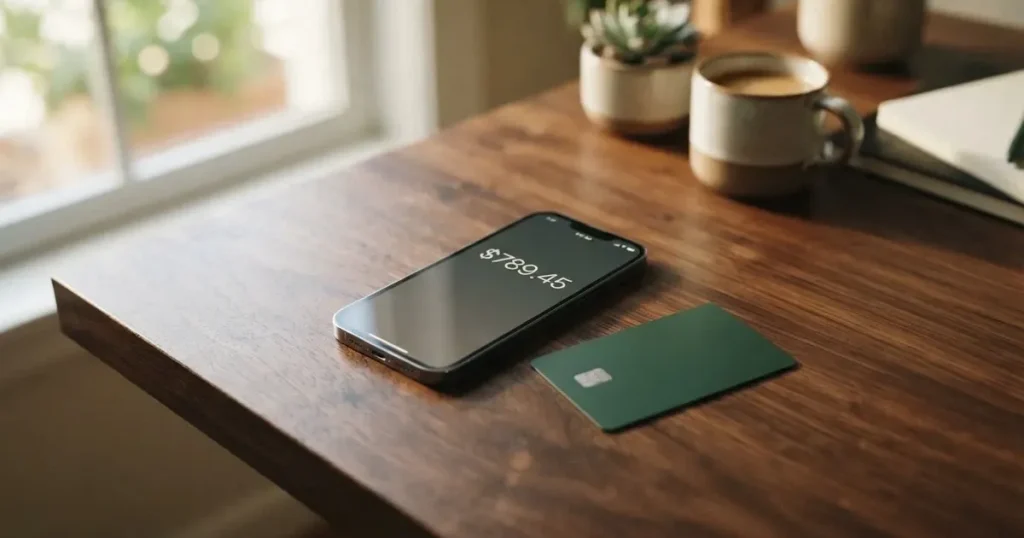
The Kryptonim card is a Visa you can load from a crypto balance, sold as either a free virtual card or a physical one. It plugs into the broader Kryptonim ecosystem — a wallet and on-ramp that runs through several registered entities. The pitch is simple: turn your crypto into a card payment without a bank account in the middle. The reality, after reading the card pages carefully, is that a striking amount of practical information is not stated on the public site: no country list, no published fee schedule, no named card issuer, no coin or network list for top-ups. This review walks through what is confirmed, what is genuinely missing, and what that means for you.
The conditions described here are current as of October 28, 2026.
Verdict
The Kryptonim card scores 6.1 out of 10. That is a middling score, and the pattern underneath it matters more than the number. The card earns strong marks where Kryptonim has actually shown numbers: the virtual card is free, there is no monthly fee, and a demo top-up screen shows zero fees and zero network fees on a one-euro deposit. It loses marks everywhere the public pages stay silent. There is no country list, so you cannot check eligibility before signing up. There is no fee schedule, so the real cost of a payment or an ATM withdrawal is unknown until you hit it. The card issuer is not named, and the coins and networks accepted for top-up are not published.

| Criterion | Mark | Why it lands there |
|---|---|---|
| Who can get it | 5 / 10 | No country list; the card works “where VISA cards are accepted” |
| Cost | 8 / 10 | Virtual card is free with no monthly fee; demo top-up shows 0.00 EUR fees; physical card and FX fees are unstated |
| Top-up options | 5 / 10 | Top up via QR code in the Kryptonim Wallet, with automatic conversion; coins and networks are not named |
| Reliability and complaints | 6 / 10 | The Kryptonim group includes FCA-registered and FINTRAC-registered entities; the card issuer is not named; no card-specific complaints found, the main service has an unofficial Trustpilot of 3.2 out of 166 |
| Everyday use | 6 / 10 | Virtual or physical Visa, Google Pay supported; Apple Pay and ATM access are not addressed on the card pages |
| Total | 6.1 / 10 |
The card suits people who already use the Kryptonim wallet and want a free virtual Visa to spend a crypto balance online. It does not suit someone shopping for a crypto card with a transparent fee table, a clear country list, and a named card issuer. If any of those matter to you, the card is a poor fit and one of the alternatives later in this review is a better starting point.
Who will they give you the card
Kryptonim’s card pages do not publish a list of supported countries, supported citizenships, or excluded territories. The only geography the company gives you is a general statement that the card is usable anywhere Visa is accepted. That covers acceptance at the till, not eligibility to apply. You can read every public FAQ on the card pages and still not know whether your country is on the list.
This is a real gap, because the question most people want answered first is “can I get this where I live?” With Kryptonim you cannot answer it from the website. You have to start the sign-up flow, hand over identifying information, and let the system decide. If it turns out your country is excluded, you have already given up data. If you are in a country with weak rule-of-law protections for refusals, the lack of a published policy is a small but real risk.
The card is positioned for users of the Kryptonim wallet. If you do not already have a Kryptonim account, the card is still listed as available, but the wallet is the only funding path described on the public pages, so a brand-new user is in practice signing up for the wallet and the card together.
There is no statement on the public card pages about the age of applicants, the documents required, or how KYC levels are handled. The card pages say only that the virtual card arrives “shortly after account verification”, which is the kind of language that suggests standard identity checks but tells you nothing about what those checks actually involve.
For the broader context on how country rules work for crypto cards, the background section later in this review covers how issuers screen nationality and residence separately, and how sanctions and PEP checks can block an application even after a country is technically supported.
How to get it
The sign-up flow described on the public pages is brief. You create a Kryptonim account, complete the verification step, and the virtual card is issued “shortly after account verification”. After that, you can add it to Google Pay. The physical card is mentioned as available alongside the virtual one, but the ordering flow, the delivery time, the shipping cost, and the supported shipping countries are not stated on the card pages.
The verification step itself is not described. The card pages do not list which documents you will be asked for, how long verification usually takes, or whether verification happens in one step or in tiers. In a working KYC system, a regulated card programme would ask for at least a government-issued photo ID, a proof of address, and a selfie or live check, and would run sanctions and politically exposed person screening against your name and country. The card pages do not say any of that, so the only way to know is to start the flow and see what the app asks for.
The card type is a Visa debit card (a “Kryptonim Card”), and it is sold as either virtual or physical. The page says it works “anywhere VISA are accepted”. The card’s settlement currency is not stated on the public pages. That matters: if the card settles in euros and you are spending in dollars, you will pay a foreign-exchange fee on top of whatever conversion fee the card adds, and the rate for either is not published.
Delivery time and shipping countries for the physical card are not stated. Whether you can order a physical card from a country where Kryptonim does not have a registered entity is not stated either. In practice this means that if you need a physical card urgently for travel, Kryptonim is not a card you can plan around on a timetable.
What it really costs
This is the section where the score and the reality diverge most. The card scores 8 out of 10 for cost because the numbers that are public look very friendly. The virtual card is free. There is no monthly fee for the virtual card. A demo top-up screen on the card pages shows a 1.00 EUR deposit with “Fees 0.00 EUR” and “Network fee 0.00 EUR”. The problem is that almost everything else is not stated.
| Fee or limit | Amount |
|---|---|
| Card issuance — virtual | Free |
| Card issuance — physical | Not stated |
| Monthly fee | None (virtual) |
| Conversion fee | Not stated |
| Foreign-exchange (FX) fee | Not stated |
| ATM withdrawal fee | Not stated |
| Daily spending limit | Not stated |
| Monthly spending limit | Not stated |
| Minimum top-up | Not stated |
| Maximum top-up | Not stated |
To walk through what this means in three everyday payments:
Buying a coffee with the physical card in a non-euro country. You hand over a card denominated in an unknown currency, the terminal asks Visa for authorisation, Visa converts the local currency to the card currency, Kryptonim converts the crypto balance to the card currency, and you pay at least one conversion fee and one FX margin. The card pages do not publish either. You will not know the real cost until the line item shows up in the app.
Paying a foreign online merchant in dollars. The same chain applies. Some US merchants run address verification through AVS, and AVS is generally unavailable for foreign-issued cards, so a foreign-issued Visa can be declined for reasons that have nothing to do with your balance. With Kryptonim, the card-issuing country is not even published, so you cannot tell in advance whether AVS is likely to be a problem.
Withdrawing cash from an ATM. Whether the card allows ATM withdrawals at all is not stated. Whether there is a per-transaction fee, a daily cash limit, or a third-party ATM-surcharge policy is not stated. The card pages do not address cash access. If you need cash, treat the card as untested for that.
A few related costs that the table does not capture: when you top up from a blockchain, you will pay the network’s own fee (gas on Ethereum, bandwidth/energy on Tron) on top of any Kryptonim fee. That fee is paid to the network, not to Kryptonim, and is the same regardless of card. If you top up with a stablecoin on a network the card programme does not support, your funds can be lost or stuck in manual recovery, and the demo screen does not show what happens in that case.
The honest summary is that the only cost you can rely on as published is zero for the virtual card and zero for the demo top-up. Everything else is unknown until you transact. If you are the kind of person who needs to see a fee schedule before signing up, Kryptonim fails that test today.
Top up
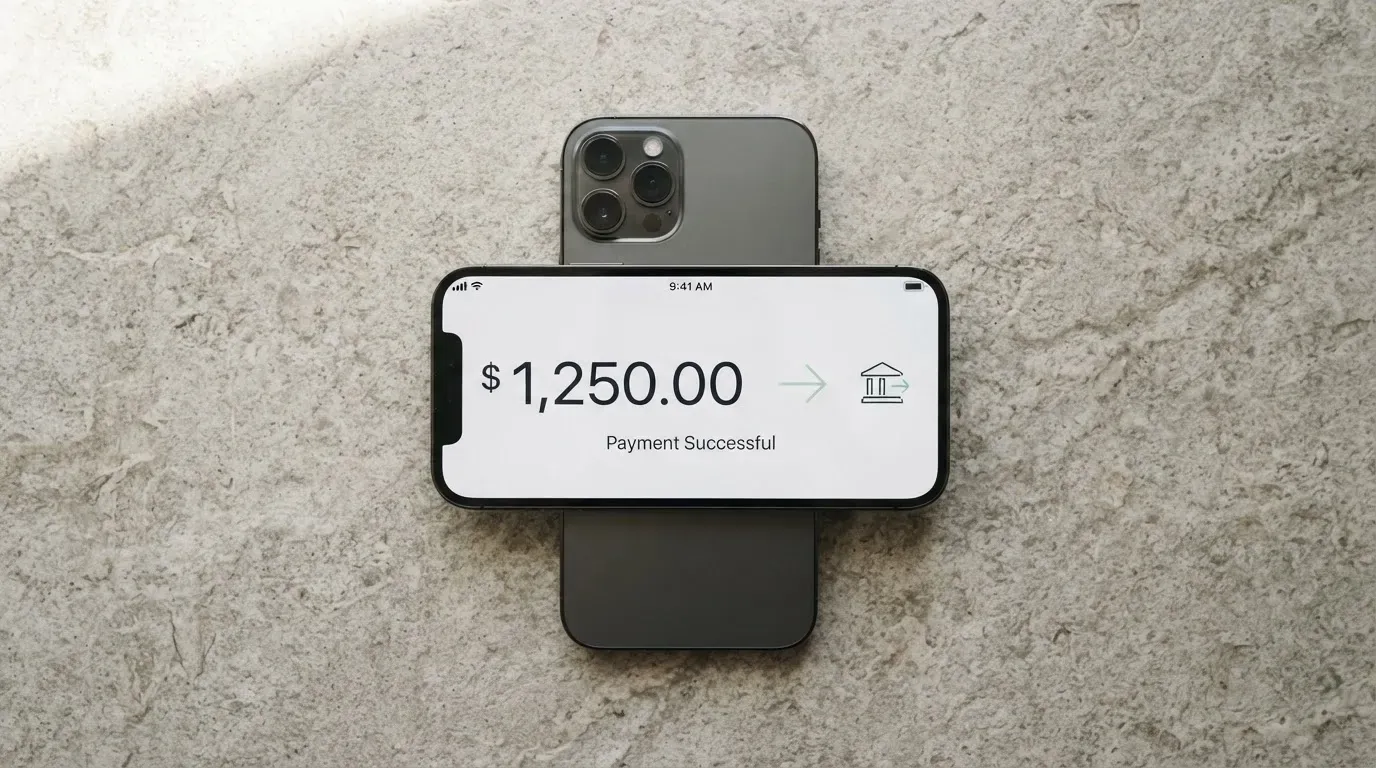
The published top-up flow is a QR code scanned inside the Kryptonim Wallet app. The wallet handles the conversion from a digital asset to the card balance, and the card then spends that balance. The page describes this as “automatic conversion of digital assets”. That is the entire public top-up story.
What is not published is, in practice, the part you most need to know:
- Which coins and tokens can be sent in. The card pages do not name them.
- Which networks are supported. The card pages do not name them.
- What happens if you send on the wrong network. Crypto transfers are irreversible, and a deposit on an unsupported network is one of the most common ways users lose money with this kind of card. The card pages do not address this.
- Whether there is a minimum top-up. The minimum is not stated.
- Whether there is a maximum top-up, per transaction or per day. Not stated.
- Whether you can top up from a bank transfer, a card, or only from crypto. Not stated on the card pages.
- Whether you can withdraw the card balance back to a bank or to a crypto wallet. The FAQ asks this question on the page and the answer is not provided.
For context, the broader stablecoin world is clear on the risks here. Tether’s USDT and Circle’s USDC together hold about 90% of the stablecoin market, and they exist on multiple networks. USDT is available on Ethereum, Tron, Solana, Polygon, Avalanche, and others. USDC is natively supported on 38 networks as of mid-September 2026, including Ethereum, Solana, Base, Polygon PoS, Avalanche, Arbitrum, and Stellar, but Circle stopped supporting USDC on Tron in February 2024, so “USDC over TRC20” is not a native option. None of this is on the Kryptonim card pages. If you choose the wrong network, the deposit can be lost or need manual support intervention with no guarantee of return.
There is also the network-fee reality. On Ethereum, the gas fee is paid in ETH; if you hold USDT but no ETH, you cannot send. On Tron, fees are paid via bandwidth and energy, often burning TRX. These are not Kryptonim’s fees, but they are the fees you will pay to top up, and they are not described on the card pages.
The only number visible at the top-up step is the demo screen showing 0.00 EUR in fees and 0.00 EUR in network fees on a 1.00 EUR deposit. That is reassuring for the specific case the demo shows, but it is not a published rate card, and it does not tell you what happens at 100 EUR or 1,000 EUR or when the network is busy.
Paying with it every day
In the everyday-use column the card lands in the middle. It is a Visa, which means it works wherever Visa is taken, online and in store. The virtual card is suited to online shopping and to adding to a mobile wallet. The card pages describe adding the card to Google Pay, with a link to Google Pay Terms. Apple Pay is not mentioned on the card pages. ATMs are not addressed, and there is no statement on which merchant categories are blocked.
For online payments, the practical experience will depend on the issuer country and the merchant. Some merchants decline prepaid or foreign-issued card numbers because the BIN lookup reveals the card type and issuer country, and that risk is higher when the issuer country is not even published. Other merchants run Address Verification Service, which is generally unavailable for foreign-issued cards and is a common cause of declines on online US checkouts. With Kryptonim, you cannot predict either case from the public pages, because the issuer country is not stated.
For in-store payments, contactless terminals and chip readers will treat the card as a standard Visa, and the BIN-based friction described above is less common. If you use the physical card, you can tap or insert and the terminal will authorise against the card balance. If you add the card to Google Pay on a supported Android phone, the tokenised Device Account Number replaces the card number at the terminal, which is a normal security layer and not specific to Kryptonim.
For mobile wallets, the public pages confirm Google Pay. Apple Pay is the obvious question for any iPhone user, and the answer on the card pages is silence. The Kryptonim Wallet app is available on iOS (the page links to it on the App Store), so an iPhone user can hold the wallet. Whether the card can be tokenised into Apple Wallet is not stated.
There is no published rewards or cashback programme for spending on the card. The FAQ on rewards is empty on the card pages. If you want a card that pays you back for spending, Kryptonim is not currently positioned as that card.
For disputes, the FAQ on the card pages asks where a merchant refund goes and the answer is not provided. In a working card programme the answer is “back to the card balance”, and the issuer runs the chargeback process. None of that is described for Kryptonim.
What can go wrong
The risks here split into three groups: the things the card programme does not tell you, the things that have happened in the wider crypto-card world, and the things specific to the Kryptonim group.
What the card pages do not say. A surprising amount of basic information is missing. The country list, the fee schedule, the supported coins and networks, the card-issuing institution, the card settlement currency, the daily and monthly limits, the ATM policy, the rewards policy, the dispute process, the minimum and maximum top-up amounts, and the Apple Pay support are all either unstated or addressed with an empty FAQ. The risk this creates is operational: you sign up for a card, you fund it, and you find out the limit only when a payment is declined.
The Kryptonim group. The kryptonim.com corporate pages list several entities: Swaps Ltd, registered in England and Wales (company number 11850124), described as registered with the UK Financial Conduct Authority as a cryptoasset business; QuantiPay AG; KTM Virtual Services Inc., a British Columbia company registered with FINTRAC as a money services business (MSB M23813101); Kryptonim Colombia; and Kryptonim sp. z o.o., the data controller. The card issuer or e-money institution behind the card is not named on the public pages, and the entities above are not linked to the card programme. The risk this creates is regulatory: when something goes wrong with the card, you need to know which licensed institution is on the other side, and the public pages do not tell you.
The wider category. Crypto cards have a track record of programme closures. In January 2018 Visa suspended WaveCrest in Europe, which shut down several crypto card programmes that had been relying on WaveCrest as issuer. In November 2022 Visa said it had “terminated our global agreements with FTX”, and the FTX US debit card programme was wound down by its issuer. Custodial platforms that hold user funds have failed: Mt. Gox (around US$350 million reported stolen 2011-2014), Coincheck (around US$400 million in 2018), Ronin Network (US$625 million in 2022). Stablecoins can depeg: TerraUSD in May 2022, and USDC briefly in March 2023. None of this is unique to Kryptonim, but each of these is a category risk you take on with any crypto-funded card.
The unofficial complaint picture. No card-specific complaints were found in this review. For the broader Kryptonim on-ramp service (not the card), an unofficial Trustpilot score of 3.2 out of 5 from 166 reviews includes user reports of unpaid withdrawals and a deposit not returned for weeks. That is a single data point and unofficial, but it is the only public signal on the wider service.
Security guidance from the page itself. The card pages carry the standard custodial warning: “Never share your private keys or sensitive information.” The page does not state whether the card balance is held in custody by Kryptonim or linked to a self-custody wallet you control. If the funds are custodial, the risk is counterparty and hack risk. If the funds are in your own wallet, the risk is yours: lost seed phrase, phishing, clipboard-hijacking malware that swaps a copied address. Either way, the card pages do not tell you which model applies, so you cannot price the risk accurately.
Support. The card pages have a “CHAT WITH US” button, and the wider kryptonim.com site has a Help section with FAQs and a contact form. The languages supported, the hours, and the response-time commitment are not stated.
News and incidents. No news or incident reports specific to the Kryptonim card were found.
What to take instead
If the gaps above put you off, the alternatives below are the closest comparable cards in this review’s research, with their own scores and their own gaps made plain. The point of this section is to show you what you can get for a similar profile and where the trade-offs shift.
| Card | Score | Who it is for | What is clear | What is still unclear |
|---|---|---|---|---|
| Cardex | 5.6 / 10 | Users who need a card in many countries | “One crypto card, 200+ countries”; debit on Verve, Visa, Mastercard and UnionPay; virtual and physical cards; real-time conversion at payment | The “AI-powered” rate is described but no fee percentage is published; network choices not stated |
| CardFlow | 4.9 / 10 | Nigerian users and “global users” focused on Nigeria | Free virtual USD Mastercard issued in about 3 minutes; funding from BTC, USDT, ETH or Naira bank transfer | Country list and exclusions not stated; monthly fees and per-payment fees not stated |
| HyperCard | 4.7 / 10 | Users who want a simple prepaid card in USD or EUR | Prepaid HyperCard with balance in USD or EUR; deposit crypto (USDT, BTC, ETH) and convert in-app | Card network not stated on the App Store page; networks for deposits not stated; eligibility list not published |
Cardex in more detail. Cardex describes itself as a single crypto card usable in 200+ countries, on the Verve, Visa, Mastercard and UnionPay networks, with virtual and physical cards available. The card currency in the App Store listing is the Nigerian Naira. Conversion is described as real-time, with an “AI-Powered Conversion Rate” that scans global exchanges and picks the best rate at the moment of payment. No fee percentage is published, so the practical saving versus a published-spread competitor is unverified. The card is Naira-focused, which is a strong fit for Nigerian users and a weak fit for users who want a euro- or dollar-denominated card.
CardFlow in more detail. CardFlow positions itself as “Nigeria’s smartest fintech card platform” and serves Nigerians and “global users”. The headline offer is a free virtual USD Mastercard created in about 3 minutes. Funding is from Bitcoin, USDT, ETH, or a Naira bank transfer, with the specific networks not stated. The country list and exclusions are not stated, the monthly fee is not stated, and per-payment fees are not stated. The card is well suited to a user with a Naira bank account and a need for a quick virtual USD card; less suited to a user who needs published, predictable fees.
HyperCard in more detail. HyperCard is a prepaid card with a balance in USD or EUR, and the app converts deposited crypto (USDT, BTC, ETH) into the card balance. The App Store page says the card works in “more than 176 countries”, which describes acceptance, not eligibility. The card network is not stated on the App Store page. Fees are not stated on the pages reviewed. The card is a clean fit for someone who wants a stablecoin-funded prepaid card in USD or EUR, but it is a weak fit for someone who needs to know in advance what the card will cost per transaction.
The honest comparison is that all three of these alternatives, like Kryptonim, are short on published fee schedules, and each has gaps in the country list or the supported networks. The reason to consider them is not that they are more transparent than Kryptonim in every respect, but that some of them are clearer on the points you care about most. If you are a Nigerian user, CardFlow’s USD Mastercard and Naira bank funding are concrete advantages. If you want a single card for many countries and are happy with real-time conversion, Cardex’s 200+ country reach is concrete. If you want a USD/EUR stablecoin-funded prepaid card, HyperCard is concrete. None of them is a clean replacement for the missing parts of Kryptonim’s public information.
Who I would recommend it to
I would recommend the Kryptonim card to a person who already uses the Kryptonim wallet, is comfortable funding a card from a QR-code top-up, and does not need to see a full fee schedule, a country list, or a named card issuer before they start. For that user, the card’s free virtual issuance, zero monthly fee, and clean Google Pay integration are real benefits, and the wallet they already use is the only funding path they would have to learn.
I would not recommend the Kryptonim card to a person who needs a published fee table to budget with, a country list to check eligibility, a named issuer to know who is on the other side of a dispute, or ATM and Apple Pay support confirmed in writing. The card does not give you any of those, and no amount of chat with support closes that gap for the public reader. I also would not recommend it to a user who needs a physical card on a known delivery date, because the shipping countries and the delivery window are not published.
If you fall in between, the practical test is this: are you willing to fund a small amount first and see what the app shows you for fees, limits, and supported coins, before committing a balance you cannot afford to lose? If yes, the Kryptonim card is a reasonable experiment. If no, pick an alternative with more published information on the points that matter to you, or wait for Kryptonim to publish more.
Frequently asked questions
What is the Kryptonim card?
The Kryptonim card is a Visa payment card sold by Kryptonim as either a free virtual card or a physical card, designed to be funded from a crypto balance held in the Kryptonim Wallet. The card works anywhere Visa is accepted. The card pages describe the virtual version as free, with no monthly fee, and the physical version as available alongside it.
How does the Kryptonim card work?
You hold a balance in the Kryptonim Wallet, the wallet converts digital assets into the card balance automatically, and the card spends that balance. You top up by scanning a QR code in the wallet, and the card then behaves like a regular Visa at terminals and online checkouts. The card can be added to Google Pay for contactless payments.
Is Kryptonim a bank?
No. Kryptonim is a crypto wallet and on-ramp service, and the card is a payment card tied to that service. The Kryptonim group includes Swaps Ltd, registered with the UK Financial Conduct Authority as a cryptoasset business, and KTM Virtual Services Inc., registered with FINTRAC as a money services business, but the card issuer and the e-money institution are not named on the public card pages.
Is the Kryptonim card available in my country?
The card pages do not publish a list of supported or excluded countries. The only geography stated is that the card works wherever Visa is accepted, which is about where you can spend, not where you can apply. To find out whether you can apply, you have to start the sign-up flow and let the system decide.
Does the Kryptonim card require KYC?
The card pages say the virtual card is issued “shortly after account verification”, which implies a verification step, but the documents required, the age threshold, and the proof of address are not stated on the public pages. In a regulated programme you would expect a government photo ID, a proof of address, and a sanctions and PEP check, but the card pages do not confirm this for Kryptonim.
How do I top up the Kryptonim card?
You top up by scanning a QR code inside the Kryptonim Wallet app, and the wallet handles the conversion from a digital asset to the card balance. The card pages do not list which coins or tokens can be sent, which networks are supported, or what happens if you send on the wrong network, so it is worth checking the wallet before sending a meaningful amount.
How do I add the Kryptonim card to Apple Wallet?
The card pages confirm support for Google Pay, with a link to Google Pay Terms, but do not address Apple Pay. The Kryptonim Wallet app is available on iOS, but whether the card can be tokenised into Apple Wallet is not stated on the public card pages, so the safe assumption is that it is not currently supported there.
Is the Kryptonim card free?
The virtual card is described as free, with no monthly fee. The physical card price is not stated, the conversion fee is not stated, the foreign-exchange fee is not stated, and ATM fees are not stated. A demo top-up screen shows 0.00 EUR in fees and 0.00 EUR in network fees on a 1.00 EUR deposit, but that is a demo, not a published fee schedule.
Is the Kryptonim card safe?
The card pages carry the standard custodial warning not to share private keys or sensitive information, but do not state whether the card balance is held in custody by Kryptonim or linked to a self-custody wallet you control. The card issuer is not named, and the page does not describe the dispute or chargeback process. No card-specific complaints were found, and the broader Kryptonim on-ramp has an unofficial Trustpilot of 3.2 out of 5.
Can I withdraw money from the Kryptonim card to a bank account or crypto wallet?
The card pages include a FAQ question on whether the balance can be withdrawn to a wallet or bank, and the answer is not provided on the page. The card pages also do not address ATM cash withdrawals. If you need a clear withdrawal path, you should confirm this with support before funding the card.
Virtual card fees – cryptocardfacts
Content created by the «cryptocardfacts» team