
The M2 card promises a Swiss IBAN and a Mastercard that spends straight from USDC. The pitch is clean, the prices are published, and the licence is not.
 Available in US

The M2 card is one of those products that arrives with a very tidy idea attached: a Mastercard that you top up with USDC, attached to a Swiss IBAN account, with a subscription instead of a pile of scattered fees. The idea is coherent. A crypto-native user without a usable bank card gets a card number, a bank account number in Switzerland, and mobile wallet support in the same afternoon.
I went through what M2 publishes, priced the thing, compared it against three other crypto cards, and lined the whole thing up against how cards like this work in general. My score is 6.9 out of 10. That is not a low score for a product that is clearly built by people who know what they are doing. It is a middle score, and the middle is mostly made of one specific gap: M2 tells you what it charges, but it does not tell you who issues the card.
The conditions described here are current as of October 28, 2026.
Who this suits: people who already hold stablecoins, want a Swiss IBAN alongside the card, and do not mind a subscription. Who it does not suit: anyone who needs a regulated, named card issuer with published chargeback rules; anyone who wants to know before they commit what a currency conversion will cost; anyone who spends in countries the card’s own restrictions exclude.
The score in detail
| Criterion | Mark | Why |
|---|---|---|
| Who can get it | 8 / 10 | “Over 150 jurisdictions”: most EU countries, UK and Switzerland, Asia-Pacific, Latin America, Africa and the Middle East. Not the United States, not sanctioned regions |
| Cost | 5 / 10 | 10 USDT a month, 25.5 USDT a quarter, 84 USDT a year; token payment halves those. “No hidden FX spreads” — but the conversion fee figure itself is not published |
| Top-up options | 6 / 10 | USDC deposit on BNB Smart Chain and Mantle, Ethereum “soon”. Converts into EUR, CHF, USD, CNH, JPY, SGD, HKD. One coin, two networks, one coming |
| Reliability and complaints | 7 / 10 | A Swiss debit IBAN account at regulated institutions with a 1:1 reserve. Issuer and licence not named. No complaints found |
| Everyday use | 9 / 10 | Virtual Mastercard instantly, physical optional, Apple Pay, Google Pay, Alipay, WeChat Pay. The best-scoring part of the product |
| Total | 6.9 / 10 | A well-built front end on top of a stack it does not fully disclose |
Two of those marks deserve a word. The 8 for eligibility is generous because the reach is genuinely wide — mainland China, Hong Kong, Taiwan, Japan, Singapore, Korea, Brazil, Argentina, Nigeria, Kenya, Qatar, Saudi Arabia are all in scope, which covers a lot of people who are underserved by ordinary banking. It is not 10 because the United States is out, and because mainland Chinese applicants need a passport, which is a higher bar than an ID.
The 5 for cost is the number I would look at hardest if I were you. Ten dollars a month is not a lot in absolute terms, but it is not nothing either, and it is charged on top of an exchange rate you are not shown. Over a year, 84 USDT is the number that matters, and half of it is payable in token. Whether that is cheap depends entirely on how much you spend and how often you would otherwise pay a foreign transaction fee on a normal card.
Will they give you the card
This is where M2 is more generous than most of its category, so it is worth being specific rather than vague.
M2 states coverage of “over 150 jurisdictions”. Concretely that means most EU member states plus the United Kingdom and Switzerland. In Asia-Pacific it includes mainland China, Hong Kong, Taiwan, Japan, Singapore, Korea and the UAE. In Latin America: Brazil, Argentina, Mexico, Chile. In Africa: Nigeria, Kenya, Rwanda, Ghana. In the Middle East: the UAE, Qatar, Saudi Arabia.
Not supported: the United States, and sanctioned regions. If you are an American living in Ohio, this is not your card. If you are an American living in Lisbon with a Portuguese address, the address is what the application is assessed on — but note that the country rules here are stated by the card as it publishes them, and it does not publish the reasoning behind the exclusions or the exact edges of the “sanctioned regions” wording.
One practical note inside that list: mainland Chinese users need a passport. That is a stricter document than the national ID most other applicants can use.
The reason this scores well is not generosity so much as breadth. For a reader in, say, Kenya or Argentina, the alternative set of cards that reliably issue a working Visa or Mastercard from a crypto balance is short, and the ones that do are often restricted to the US or the EU. Breadth is a real feature. Just do not confuse breadth with a light KYC regime — those are unrelated, and more on that below.
How to get it
The path is four steps and, by M2’s own account, short.
- Sign up.
- Complete identity verification through a provider called MatchID.
- Choose a subscription plan.
- Deposit.
The verification step is a passport or another valid ID plus a selfie, and M2 puts the average time at 2 minutes. There is one KYC level, not a tiered ladder: you verify once and you are through. There is also a paywall in the sequence — a subscription has to be paid before full access is unlocked, so step four is not optional and step three is a commitment, not a trial.
That sequencing is the part to sit with. You are asked to identify yourself fully before you have paid, and you are asked to pay before you can see how the product behaves. There is no free tier to test with.
What you get at the end is a Mastercard debit card attached to a Swiss IBAN account. The virtual card is instant. A physical card is optional and ships after activation. The card’s own pages do not state delivery times, so I cannot tell you how long the plastic takes to arrive, and I would not guess.
Fees: what it really costs
M2’s fee story is unusually clean in one direction and unusually silent in another. Here is everything the card publishes.

| Item | What it costs |
|---|---|
| Subscription, monthly, paid in USDT | 10 USDT |
| Subscription, quarterly, paid in USDT | 25.5 USDT |
| Subscription, yearly, paid in USDT | 84 USDT |
| Subscription, monthly, paid in token (50% discount) | 5 USDT |
| Subscription, quarterly, paid in token | 15 USDT |
| Subscription, yearly, paid in token | 60 USDT |
| Card issuance | Not stated |
| Monthly maintenance fee | Not stated |
| Currency conversion fee | Not stated |
| FX spread | “No hidden FX spreads” |
| Exchange between 7 fiat currencies | “Competitive rates”, figure not stated |
| ATM withdrawal | Not stated |
| Daily limit | Not stated |
| Monthly limit | Not stated |
M2 says all fees are transparent and shown before confirmation, and that there are no hidden FX spreads. It says exchange between the seven supported currencies happens at competitive rates. It does not publish the conversion fee number, and that is the single most important gap on this page.
There is one card, one subscription, billed monthly, quarterly or yearly — no tiers, no upgrade ladder. The subscription covers banking infrastructure, compliance, custody, card issuance and rewards, which is an unusually complete list for what it is buying.
Now three everyday payments, and which fees actually land.
Buying coffee in Paris on a Friday. You tap the card. Your balance is already in EUR, so no conversion happens and no conversion fee is triggered. What you have already paid is the subscription. This is the case M2 is built for, and it is the case where the product is genuinely good: no per-transaction charge, no percentage, no surprise.
A subscription service billed in USD while your balance sits in CHF. Here you cross currencies and the “competitive rate” does the work. The card says the spread is not hidden and the rate is competitive, but because the conversion fee figure is not published, you cannot compute your effective rate before you confirm. You will see a figure on screen — the card’s claim is that all fees are shown before confirmation — but you cannot check it against an independent reference in advance.
Withdrawing cash at an ATM. The card’s pages do not state the ATM fee, and they do not state daily or monthly limits. You are spending real money to find out. If cash is part of how you plan to use this card, treat that as unknown rather than as free.
The practical read: for spending in a currency your balance already holds, M2’s costs are known and low. For anything that crosses a currency boundary, the cost is disclosed at the point of confirmation but not in advance. That is a workable arrangement — many mainstream products work the same way — but it is not the same as a published price list, and it is why cost scored 5 rather than 7.
How to Top up
This is the narrowest part of the product and the part I would think about hardest.
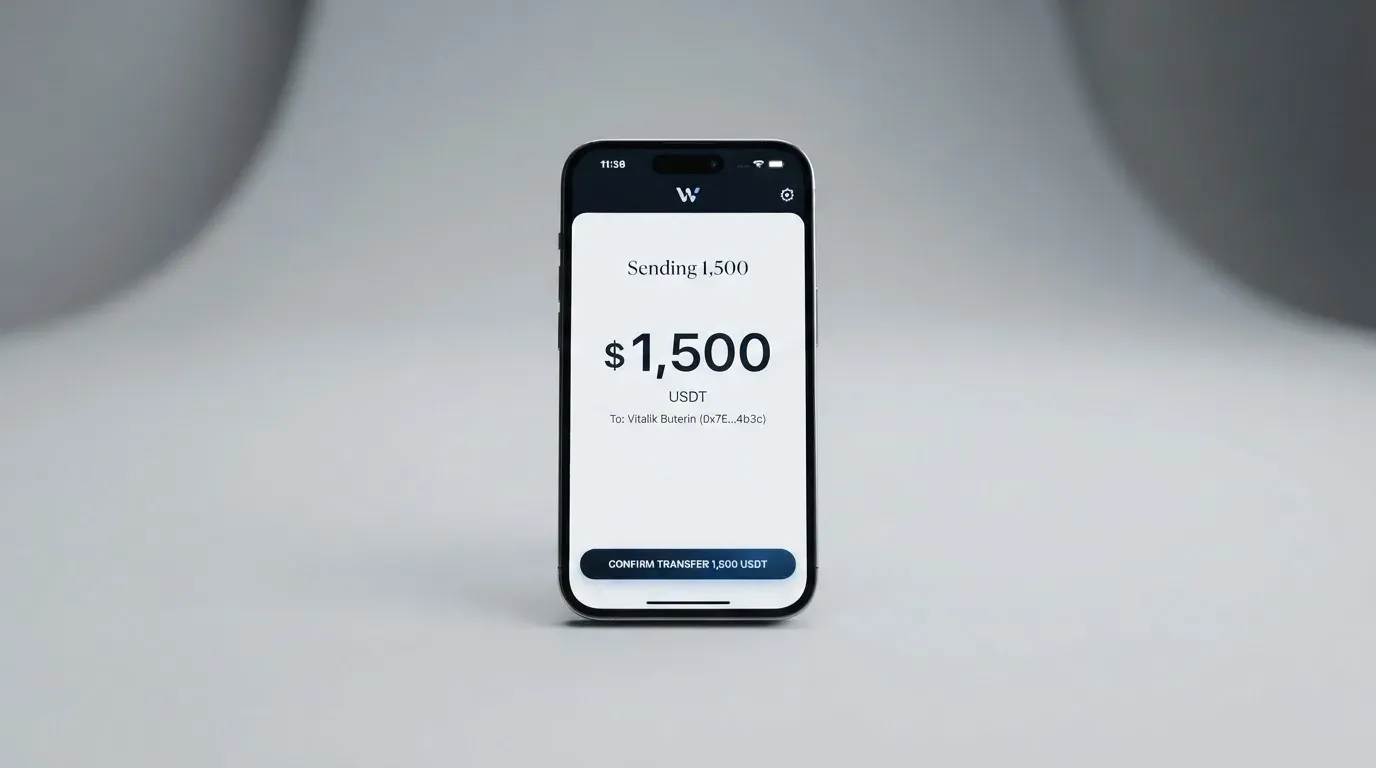
You deposit USDC. You can send it on BNB Smart Chain or on Mantle. Ethereum support is described as “soon”. When the deposit lands, it is converted into your balance currency — EUR, CHF, USD, CNH, JPY, SGD or HKD.
That is the whole list. One stablecoin, two live networks, one promised. Fees and minimum deposit amounts are not stated.
For a reader who holds a broad crypto portfolio, this is the constraint that shapes everything else. If your stablecoin sits on Ethereum or Tron, converting it into a supported state costs you something before M2 ever sees it. ERC-20 gas is paid in ETH, so a wallet holding USDT with no ETH cannot send it at all. Tether has issued USDT on Ethereum, Tron, Solana, Polygon, Avalanche and others — only some of those routes land where this card can use them.
And the failure mode here is the expensive one. Blockchain transfers are irreversible. If you send USDC on a network M2 does not support, or to an address belonging to a different network, the funds can be lost or need manual recovery with no guarantee of success. This is not a scare story about a bad company; it is how the technology works. Check the network twice.
One more thing about the network itself: stablecoins are not censorship-proof. Tether states that it disables tokens in wallets on the OFAC sanctions list and has frozen funds tied to illicit activity. That is a fact about the asset, not about M2.
Withdrawals run on a stated principle rather than a stated schedule. M2 says your balance is yours, held in your IBAN account, and can be withdrawn according to banking rules. It does not publish withdrawal fees or timing. “Banking rules” is doing real work in that sentence — it means your access to your own money is mediated by rules the card does not spell out.
Paying with it every day
This is where M2 scores 9 out of 10, and the number is deserved.
The virtual Mastercard is available immediately, so you can start spending on the same day you finish verification. A physical card is optional if you want one. Apple Pay, Google Pay, Alipay and WeChat Pay all work with the virtual card.
That combination is the practical heart of the product. Apple Pay replaces your card number with a device-specific token stored in the phone’s Secure Element, never on Apple’s servers, and each payment carries a one-time dynamic security code — so a phone wallet is meaningfully safer than a card number you type into websites. Alipay and WeChat Pay support matters enormously if you are in Asia-Pacific or China, because that is where a large part of everyday spending actually happens.
There is also a rewards scheme, and it is more structured than the usual cashback. Spending earns 0.1% “consumption rewards” from spending inside your own referral network, and the depth grows with how many people you have brought in: invite one and you get three generations, invite three and five, invite five and ten. There is referral cashback as well, and “Partner Cashback” for projects.
I would treat the reward rate the way you would treat any referral-scheme reward: the 0.1% is small, and the generations structure means the scheme is designed to grow by recruitment rather than by your own spending. It is not a reason to pick the card. Read the terms if the network effect matters to you, because I found no published cap.
What M2 does not publish: which merchant categories are blocked, what the app looks like beyond the wallet integrations, and what the dispute process is if a charge goes wrong.
That last one matters more than it seems. A card payment involves several parties — the network routes it, the issuer holds the programme, and the crypto brand is often just the front end. If you need to dispute a charge, you need to know which of those you are dealing with. M2 does not say.
What can go wrong
Start with the biggest one, because it is the reason this review is 6.9 and not 8.
The issuer is not named. M2 describes itself as a “Swiss-regulated debit card and IBAN account” and says it runs on a network called Matchain, described as live on mainnet. But it does not name the entity that issues the card, or the licence that entity holds. For a regulated-sounding product, that is an unusual thing to leave out. If something goes wrong with your card, the question “who is my issuer” should have an answer you can find without asking support.
Funds and insolvency. M2 says your funds are held in your own Swiss IBAN account at regulated institutions with a 1:1 reserve backing, and that “even if Matchain stops operating, your funds remain accessible through the regulated bank”. It also says insurance “depends on jurisdiction and account structure”. That is a meaningful reassurance — your money is not sitting in a crypto bridge — but it is a reassurance about the custody, not about the card programme. A card programme can be wound down while the money stays available.
Programmes do get wound down. This is not hypothetical. Visa terminated its global agreements with FTX on 13 November 2022 and the FTX US debit card was wound down by its issuer. WaveCrest, a Visa issuer that supplied several crypto card brands, was suspended by Visa in Europe in 2018, closing every WaveCrest-issued Visa programme. The usual pattern is a notice period, then spending and loading stop, then users are asked to withdraw. When you pick a crypto card, you are picking a programme, and programmes end.
Currency conversion risk. The conversion fee figure is not published. You are told there is no hidden spread. You are not told what the rate is.
Support. Contact is email at [email protected], a “Get Help” form, and X at @m2card_io. Hours and languages are not stated. For a card meant to work across more than 150 jurisdictions, that is thin.
Complaints. I found none. Read that carefully: no complaints found is not the same as a good track record. It is also consistent with a product that is live, new, and simply has not generated them yet. Absence of complaints in either direction is neutral.
KYC and what can go wrong with it. This is worth understanding even if it never touches you. Anti-money-laundering rules require regulated businesses to verify customers and monitor transactions. In the EU that means name, address, date of birth, nationality and identity documents, a sanctions check, understanding the purpose of the relationship, and a politically-exposed-person check. Nationality is screened separately from residence, because sanctions screening often applies to citizenship and country of birth as well as address. If due diligence cannot be completed, EU rules require the institution to refuse the transaction or end the relationship. That is why accounts get frozen pending documents. Anyone telling you a crypto card has no KYC is describing something that cannot operate inside the EU.
What to take instead
Three alternatives, all scored from the same criteria so the comparison is fair.
| M2 | International Visa Card | UNi Card | Whop Cards | |
|---|---|---|---|---|
| Score | 6.9 | 6.7 | 6.1 | 5.2 |
| Network and card | Mastercard debit, Swiss IBAN, virtual instant, physical optional | U.S.-issued Platinum Visa, virtual, physical “coming soon” | Mastercard network, multicurrency | Visa |
| Key costs | 10 / 25.5 / 84 USDT monthly, quarterly, yearly; token payment halves these | $5 virtual issuance, no maintenance fee; plans Classic free, Pro $9, Max $19 monthly | No annual fee, no foreign transaction fee | “No extra fees” stated |
| Conversion / FX | “No hidden FX spreads”; figure not stated | “Visa exchange rate + 2% FX fee” | Live OTC rates, “no hidden exchange fees” | Not stated |
| Funding | USDC on BNB Smart Chain, Mantle; Ethereum soon | USDC or USDT at 1:1, plus USD, EUR, SEPA, SWIFT, FedNow | Not stated | Whop balance backed by stablecoin collateral |
| Rewards | 0.1% in referral network, 3/5/10 generations | None stated | Spend-to-Earn up to 3% | 5% cashback at select merchants |
| Catch | Issuer and licence unnamed | Long country exclusion list | Eligibility not stated | US-only reach |
International Visa Card (6.7) is the near-tie, and the comparison is genuinely interesting. It publishes the thing M2 does not: a stated 2% FX fee on top of the Visa exchange rate. That is worth more to me than M2’s “no hidden spreads” claim, because I can do arithmetic with it. It also has no maintenance fee and a free plan, where M2 has no free tier at all. Its offsetting problem is reach: it is not available to residents or legal registrants of Belarus, mainland China, North Korea, Cuba, India, Iraq, Iran, Israel, Myanmar, Nepal, Nicaragua, Russia, Syria, Turkey, Ukraine, Venezuela or Vietnam, and purchases are blocked in several of those. And its physical card is still “coming soon”, which for a reader who wants plastic in their hand is not a small thing.
UNi Card (6.1) is the quiet alternative. A multicurrency card on the Mastercard network spending from a UNi.Global balance, with no annual fee and no foreign transaction fee, converting at live OTC rates, and spend-to-earn rewards of up to 3% — three times better than M2’s rate on ordinary spending. Its weakness is disclosure in the other direction: eligibility, funding routes and card form are not stated on the pages I checked. A better rate on an undisclosed product is still an undisclosed product.
Whop Cards (5.2) is the narrowest. A Visa that works anywhere Visa is accepted, spending from a Whop balance, with 5% cashback at select merchants (Uber currently, more planned) and no extra fees listed. But it is a US product: 31 states for consumers, 41 for businesses, with a long unsupported-country list that includes mainland China, Hong Kong, India, Israel, Turkey and Vietnam. If you are not in the United States it is not a candidate.
The pattern across all four is worth stating plainly. Every one of these cards is a front end on top of somebody else’s licence. The differences that matter to you are not brand names; they are which issuer is behind the card, what the conversion actually costs, and whether the product is legal for where you live. M2 wins on breadth of access and on the mobile wallet support. It loses on disclosure of issuer and conversion fee. That is the trade.
Who I would recommend it to
I would recommend M2 to someone who already holds USDC on BNB Smart Chain or Mantle, who wants a Swiss IBAN alongside a card, who spends mostly in one of the seven supported currencies, and who is comfortable paying a subscription annually to keep costs predictable. If that is you, this is a genuinely useful product with a well-built daily experience — instant virtual card, the full mobile wallet set, and money held at a regulated bank rather than in a crypto wrapper.
I would not recommend it, as a first card, to someone who needs certainty about who stands behind the card. Not because anything looks wrong — the reserves and custody claims are specific and reassuring — but because the issuer and licence are not published, and in a category where programmes have been terminated by the networks themselves, that name matters.
I would also think twice if you plan to hold large balances and move them often, if you need cash from ATMs, or if your spending spans several currencies. The first is a custody question, the second is a fee question, the third is the conversion question M2 leaves open.
And if you are in the United States, or in a sanctioned region, none of this applies — the card does not go there.
Two final framing notes. First, tax: if you fund spending from crypto, each payment can be a separate disposal, measured in your local currency at the value on the date of the transaction. I am not advising you on what you owe; I am telling you to check it yourself, because the card will not do it for you. Second, regulation: in the EU, a card is a payment service regulated separately from the crypto side, which is why a product like this can depend on two licences. Check the relevant public register — ESMA maintains an interim register of authorised crypto-asset service providers — before you commit money.
Frequently asked questions
What is the M2 card?
The M2 card is a Mastercard debit card tied to a Swiss IBAN account, funded with USDC rather than from a traditional bank balance. You verify your identity, pay a subscription, deposit USDC, and the card spends a converted fiat balance. It runs on a network M2 calls Matchain, and a physical card is optional if you prefer plastic to a virtual one.
How does the M2 card work day to day?
You deposit USDC on BNB Smart Chain or Mantle, and M2 converts it into your balance currency — one of EUR, CHF, USD, CNH, JPY, SGD or HKD. From then on the card behaves like an ordinary Mastercard: you tap, you insert, or you pay with your phone. Spending in your balance currency costs nothing beyond the subscription you already pay. Crossing currencies uses a rate M2 describes as competitive but does not publish a figure for.
Is M2 a bank?
Not exactly. M2 describes itself as a “Swiss-regulated debit card and IBAN account” with funds held at regulated institutions and a 1:1 reserve. But it does not name the entity that issues the card or the licence that entity holds. That is a real distinction: you get a Swiss IBAN and Swiss account access without a fully disclosed issuing bank, which is why my reliability score sits at 7 rather than higher.
Who can get the M2 card?
M2 states coverage of “over 150 jurisdictions” — most EU countries, the UK, Switzerland, Asia-Pacific including mainland China, Hong Kong, Taiwan, Japan, Singapore and Korea, Latin America including Brazil and Argentina, Africa including Nigeria and Kenya, and the Middle East. The United States and sanctioned regions are not supported. Mainland Chinese applicants need a passport rather than a national ID.
Does the M2 card require KYC?
Yes. Identity verification runs through a provider called MatchID and requires a passport or valid ID plus a selfie, with M2 putting the average at 2 minutes. There is a single verification level rather than a tiered one. Regulated businesses are required to verify customers and monitor transactions under anti-money-laundering law, so a card operating in the EU cannot skip this step.
How much does the M2 card cost?
The subscription is 10 USDT monthly, 25.5 USDT quarterly, or 84 USDT yearly when paid in USDT — and discounted token prices of 5 USDT monthly, 15 USDT quarterly, or 60 USDT yearly. M2 says there are no hidden FX spreads and shows all fees before confirmation. It does not publish the conversion fee figure, ATM fees, or daily and monthly spending limits.
How do I top up the M2 card?
You send USDC to M2 on BBN Smart Chain or Mantle; Ethereum support is described as “soon”. The deposit is converted into your balance currency. Fees and minimum amounts are not stated, and the on-chain network fee is charged by the blockchain itself, not by M2. Send only on a supported network — blockchain transfers are irreversible, and a deposit to the wrong network can be lost.
Is the M2 card safe to use?
The money side is the reassuring part: funds sit in your own Swiss IBAN account at regulated institutions with a 1:1 reserve, and M2 states they remain accessible even if its own network stops operating. Insurance depends on your jurisdiction and account structure. On the card side, M2 does not name the issuer or licence, so treat that as an open question rather than a reassurance. Enable every available security feature.
Is the M2 card worth it?
For someone already holding USDC on a supported network who wants a Swiss IBAN and a card that works with Apple Pay, Google Pay, Alipay and WeChat Pay, yes — that is a real and usable combination. If your priority is knowing exactly what a currency conversion costs, or knowing who issued your card, the alternatives that publish a 2% FX fee and a named issuer may suit you better.
What happens to my balance if M2 stops working?
M2 states your balance is yours and can be withdrawn according to banking rules, and that funds remain accessible through the regulated bank even if Matchain ceases operating. Withdrawals are not fully specified — fees and timing are not stated. Card programmes in this category have been wound down before, so treat the IBAN account access as the durable part and the card programme as the part that might end.
App and neobank card fees – cryptocardfacts
Content created by the «cryptocardfacts» team