
A digital Visa that pulls from a stablecoin balance, weighed against its costs and limits
 Available in US
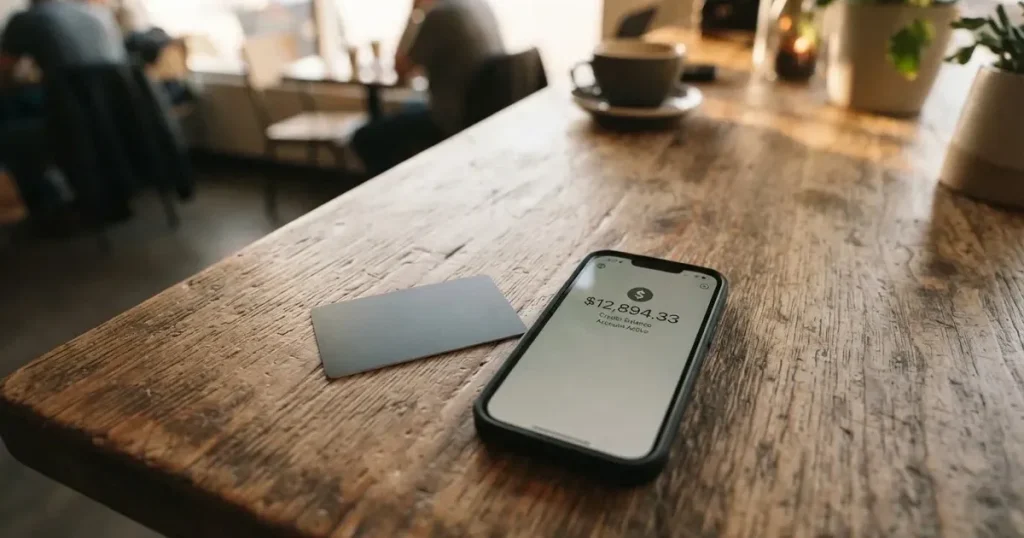
MaaarPay is a payment card that draws on a crypto balance instead of a bank account. You convert stablecoins such as USDT or USDC into spendable funds, the network routes the payment, and the merchant receives fiat. The idea is simple, but the details — who can get one, what it really costs, where the money sits — are where this kind of product lives or dies. I went through the public terms, the company’s own pages, and the broader category, and I have a clearer picture of what MaaarPay does well and where it leaves you exposed.
The short version: the digital side is solid, the fee structure is patchy, and a few facts the card issuer normally publishes — physical card, ATM access, monthly maintenance — are not yet there. If your main use case is paying online or in store from a USDT or USDC balance, and you are not in the United States, the digital card works. If you want a physical card, a full schedule of fees, or a programme with public trustpilot scores and a long track record, you will have to keep looking.
Conditions are current as of October 28, 2026.
Verdict
MaaarPay scores 6.7 out of 10. The breakdown is below.
| Criterion | Mark | Why it lands there |
|---|---|---|
| Who can get it | 8 / 10 | Available in 150+ countries, but the country list is not published, US citizens are excluded, and the terms lean on OFAC sanctions |
| Cost | 4 / 10 | Up to 2% FX and 3% cross-border, plus a $40 late-payment fee and a $29 returned-payment fee, while crypto-conversion costs and monthly fees are not stated |
| Top-up options | 8 / 10 | USDT, USDC and other supported crypto, with BTC also listed; card collateral sits in stablecoins on Ethereum, Polygon, Optimism and Arbitrum |
| Reliability and complaints | 8 / 10 | MAAAR PAY FZCO in DMCC Dubai (licence DMCC-981512), with Third National as the named Visa issuer; no public complaints I could find |
| Everyday use | 6 / 10 | Digital card instantly in app, Apple Pay and Google Pay, in-app freeze, but the physical card and ATM are still “Coming soon” |
The MaaarPay card is best suited to people who already hold USDT or USDC and want a digital Visa they can fund from those tokens, especially if they are outside the reach of mainstream bank cards. It is weaker for users who need a published fee schedule, a physical card today, or a programme with publicly visible customer reviews.
Who they will give the card to
MaaarPay states the card is “available in 150+ countries”, but it does not publish the list, so you have to look at the terms to understand the shape of that promise. The headline figure covers a wide geographic spread, yet two restrictions sit on top of it.
First, the terms require you to confirm you are “not a United States citizen”. US citizens are excluded regardless of where they live, and the card programme does not serve them. Permanent residents in the US are caught up in the same wording, because the test is citizenship, not residence. MaaarPay does not say whether non-citizens living in the US can apply, and the citizenship-versus-residence question is not addressed.
Second, the terms refer to OFAC sanctions. MaaarPay reserves the right to refuse or close accounts tied to sanctioned individuals, entities or jurisdictions. The card’s stated coverage of 150+ countries runs alongside the licence the company holds in DMCC Dubai and its British Columbia subsidiary, so a routine application from a Western European, Latin American, African or Asian address is more likely to succeed than one from a sanctioned region.
The KYC step itself is described as “secure identity verification”. The card’s public pages do not say which documents are requested, whether proof of address is required, or what the minimum age is. There is an AML & KYC Policy at /aml-kyc-policy, but I have not read it, and the level of due diligence (basic, enhanced, or tiered by funding volume) is not stated on the main product pages. If you are a higher-risk customer, including politically exposed persons, the wider crypto-card category tends to add extra checks at the funding stage rather than at the card application itself.
Practically, this means you are likely to be accepted if you are a non-US citizen in a non-sanctioned country, willing to provide ID and a selfie, and funding the card from a wallet you control. You should not assume you will be accepted just because your country appears in the “150+” figure, and you should not assume the card will remain available to you: the issuer may suspend or cancel an account “with or without cause”.
How to get it
MaaarPay is a digital-first product. Sign-up is done in the iOS or Android app, and the first card you receive is a virtual card that becomes available in your account as soon as identity verification passes. There is no waiting for mail, no plastic to activate, and the card details are tokenised for mobile wallets straight away.
The application flow follows the standard pattern for this category of card: you download the app, create an account, complete the “secure identity verification” step, and the virtual card appears. From there, you can add it to Apple Pay or Google Pay, which turns the digital card into a contactless instrument at any terminal that accepts the networks.
Two practical notes from the public pages. The card scheme is Visa, and cards are issued by third-party licensed institutions rather than by MAAAR PAY FZCO itself — the issuer is named as Third National, operating under a Visa licence. For Nigerian users, the terms also name BANEX MICROFINANCE BANK LIMITED. That division of roles matters: MAAAR PAY FZCO is a “technology service provider” and “does not provide banking or money transmission services”, so the contractual banking relationship sits with the issuer, not the brand on the front of the card. If something goes wrong with a payment, your route runs through the issuer’s chargeback process, not through MaaarPay directly.
The physical card and ATM access are flagged as “Coming soon” on the public pages. That means, today, the only spendable form of the card is the digital version. If your shopping is mostly online or in store via a phone wallet, this is fine. If you hand a card to a waiter, take cash out at an ATM, or want a card that survives a dead phone battery, you cannot rely on MaaarPay to deliver that yet.
Fees
This is the part of the review where I have to slow down. MaaarPay publishes a number of fees in its terms, but the schedule is incomplete in a way that matters when you actually use the card.

The fees that are stated:
- Foreign exchange fee (non-USD transactions): up to 2%
- Cross-border fee: up to 3%
- Late payment: up to $40
- Returned payment: up to $29 (one part of the terms says $00.00, the other says up to $29, and the conflict is unresolved)
- Interest on the balance: 0% APR for now
The fees that are not stated:
- Card issuance fee
- Monthly or annual maintenance fee
- Crypto-to-fiat conversion fee (the spread or percentage taken when USDT or USDC is converted into the spendable balance)
- ATM withdrawal fee (relevant once the physical card and ATM access are live)
- Inactivity fee
| Item | Amount or rate | Where it applies |
|---|---|---|
| Foreign exchange (non-USD) | Up to 2% | When the merchant settles in a non-USD currency and the card network converts to USD |
| Cross-border fee | Up to 3% | When the transaction crosses a border (the merchant’s country differs from the issuer’s country) |
| Late payment | Up to $40 | If a payment is late |
| Returned payment | Up to $29 | If a payment is returned (one section of the terms conflicts and shows $0) |
| Interest | 0% APR | On the card balance, for now |
| Card issuance | Not stated | — |
| Monthly fee | Not stated | — |
| Crypto conversion | Not stated | Spread on USDT/USDC to fiat, not published |
| ATM withdrawal | Not stated | Not yet applicable — physical card “Coming soon” |
Three everyday scenarios, walked through the stated fees:
- Buying coffee in euros in Berlin. The merchant is in Germany, the card is denominated in USD, the issuer is in a third country. The non-USD FX fee of up to 2% applies, and the cross-border fee of up to 3% may also apply. On a €4 coffee, you could lose roughly €0.20 to €0.30 in total to fees, before the conversion spread. The wide “up to” ranges mean the worst case is three times the best case.
- Paying for a $50 streaming subscription in USD. No FX, no cross-border fee in the usual sense. What you do pay is the spread on converting USDT to USD when the card balance is funded, and that spread is not published.
- Buying $200 of groceries in Lagos with a USD balance. If the merchant settles in USD directly, no FX fee. The cross-border fee is the relevant charge, and it can reach 3% — so on a $200 shop, the upper bound is $6 of pure fees. The crypto-conversion cost on top of that is the unknown.
Two things to check first, before you load the card. Look at the in-app quote when you convert USDT or USDC, because the spread between the quoted rate and the rate you actually get is the single biggest fee you will pay on this card, and it is the one that is not on the website. And read the late-payment and returned-payment terms in full, because the conflict between $0 and up to $29 in the same document is the kind of clause that matters the moment you dispute a charge.
Top up
MaaarPay is funded by sending supported crypto into the wallet inside the app. The home page lists USDT, USDC and other supported crypto, and also names BTC among the funding options. The card’s collateral — the balance that backs the spendable funds — is held in stablecoins on Ethereum, Polygon, Optimism and Arbitrum.
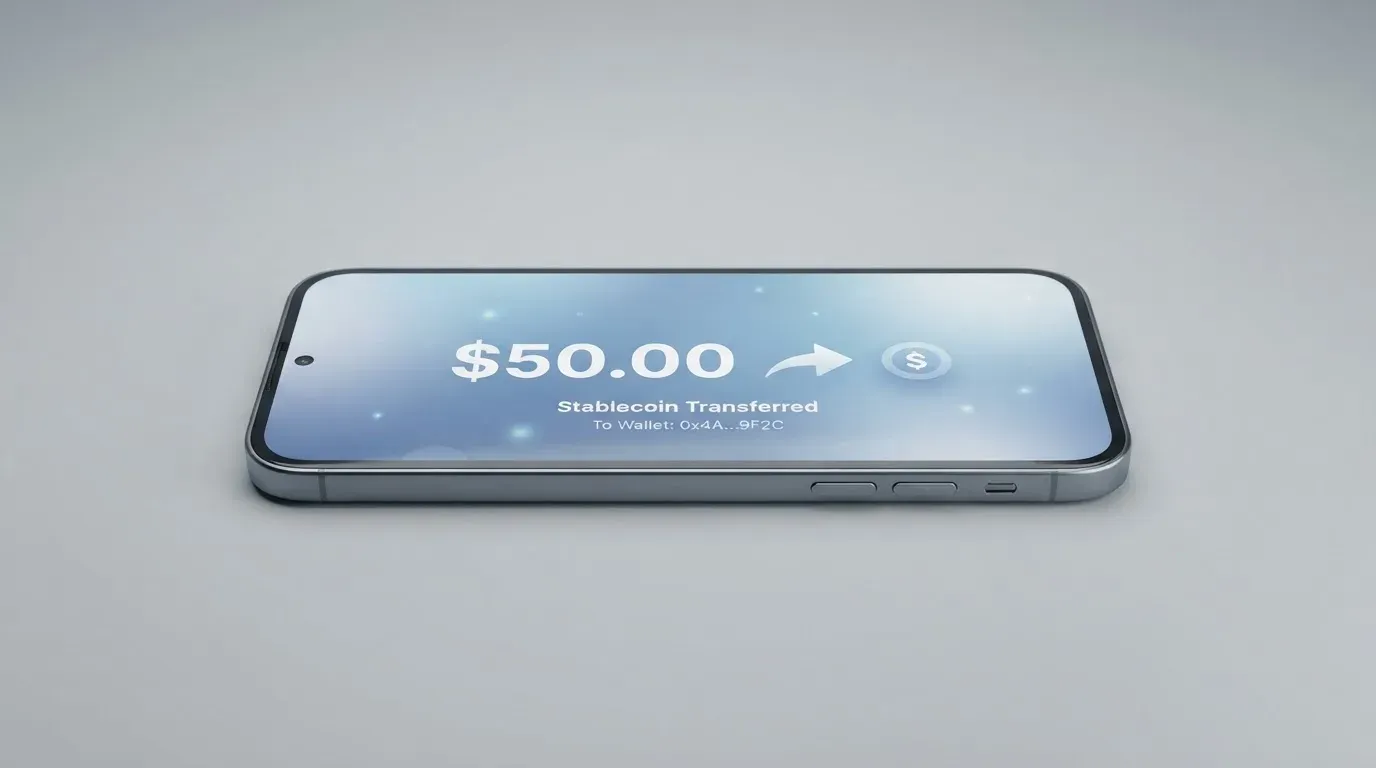
The details that are not stated, and that I want to flag because they decide whether your deposit arrives at all:
- The wallet networks MaaarPay accepts. The card’s collateral sits on Ethereum, Polygon, Optimism and Arbitrum, but the public pages do not say which networks you can deposit from. In practice, a stablecoin sent on a network the card does not support can be lost, or it can sit in limbo pending manual recovery, and there is no guarantee of either outcome.
- The minimum top-up amount.
- The maximum top-up amount.
- The deposit fee on MaaarPay’s side, separate from the on-chain network fee you pay to the blockchain.
The on-chain network fee (gas on Ethereum and similar networks, bandwidth on Tron-style networks) is charged by the blockchain itself, not by MaaarPay. That is a category feature, not a MaaarPay policy, and it is worth knowing before you send a small amount of USDT over Ethereum mainnet, where gas alone can run several dollars at busy times.
Withdrawals are also part of the funding picture. MaaarPay’s help centre covers withdrawing crypto back to an external wallet, but I have not read the fee schedule for withdrawals, and the company does not state how a balance is handled on account closure. The terms leave the issuer room to suspend or cancel the account “with or without cause”, and what happens to any unspent balance in that scenario is not addressed.
A practical tip: send a small test deposit first, on a network the help centre confirms is supported, before moving a meaningful amount. The category rule is that crypto transfers are irreversible, and MaaarPay’s own documentation does not list a recovery path for funds sent on the wrong network.
Paying with it every day
In day-to-day use, the digital MaaarPay card behaves like any other Visa debit card that you keep in a phone wallet. You tap to pay at the terminal, you check out online, and the funds are pulled from the balance in your account. Apple Pay and Google Pay are supported for the digital card, and the card details in the app are tokenised for mobile-wallet use.
Three things from the terms are worth knowing about, because they shape which transactions work:
- Cash-like transactions are restricted. The terms single out money orders, crypto purchases, and gambling as restricted categories. This is consistent with category norms — many issuers block MCC 7995 (gambling) on prepaid cards — but the specific MaaarPay block list is not published, so a test transaction is the only way to know whether a given merchant is allowed.
- Merchant country matters. The card is denominated in USD, and non-USD transactions are converted to USD by the card association. The conversion triggers the up-to-2% FX fee, and a foreign merchant can trigger the up-to-3% cross-border fee. Together, those two fees explain why the headline FX rate you see quoted online is not the rate you actually pay.
- Card freezes are user-controlled. The app lets you freeze and unfreeze the card at any time. That is a useful safety feature if you lose your phone or suspect a leak of card details, and it is one of the standard “look for this” features in the category.
Cashback and rewards are not mentioned on the public pages. If earning a return on your spend matters, this is not the card for that.
Disputes work in two steps. First, you try to resolve the issue with the merchant directly. If that fails, you start a chargeback in the account. The terms give you 60 days from the date the transaction posted to file the dispute, and the agreement contains an arbitration clause (AAA arbitration) and a class-action waiver. The arbitration clause is standard for US-facing card programmes but is unusual for a card whose target market explicitly excludes US citizens; it is worth understanding before you sign.
A small but useful detail: an authorisation that is declined can leave a hold on the funds for several days (typically up to seven), even though no money has moved. That is a network rule, not a MaaarPay rule, and it is the kind of thing that causes people to think the card is missing funds when it is not.
What can go wrong
This is the section I would want to read if I were about to load several thousand dollars onto the card. Most of the risks below are not specific to MaaarPay; they are the shape of the category. But MaaarPay’s published information is thinner than the most established programmes, and the gap is where the risk sits.
Unclear company-and-issuer split. MAAAR PAY FZCO is a DMCC-licensed technology service provider in Dubai, and the cards are issued by Third National under a Visa licence. MAAAR PAY FZCO is explicit that it “does not provide banking or money transmission services”. If the programme closes, the bankruptcy or wind-down of the brand does not give you direct access to the issuer’s books, and vice versa. Programme closures in this category have happened before, and the template — a notice period, then new loads stop, then spending stops, then a deadline to withdraw the remaining balance — leaves users with a narrow window to recover funds.
Unstated fee on the conversion. The single largest cost on a MaaarPay-funded card is the spread on the USDT-to-USD or USDC-to-USD conversion. That spread is not published. You can only see it in-app at the moment you fund the card. This is a material gap: a 1% spread on a $1,000 top-up is $10, and a 3% spread is $30, which is more than the stated FX fee for a year of weekly coffee.
Sanctions and exclusion language. The terms are wide on sanctions, and the issuer can suspend or cancel the account “with or without cause”. A sanctions hit, even an automated one, can take days to clear, and balances can be frozen in the meantime.
Lost deposits are a real possibility. Crypto transfers are irreversible, and MaaarPay does not publish a complete list of supported networks. A USDT deposit sent on a network the wallet does not support can be lost or stranded pending manual support, and there is no guarantee of recovery.
Concentration of stablecoin risk. The card’s collateral sits in stablecoins on four networks (Ethereum, Polygon, Optimism, Arbitrum). Stablecoins have depegged before — TerraUSD in May 2022, and USDC briefly in March 2023 — so the value of the balance you are spending is one peg event away from being different from what you expected. The risk is small over the life of a single coffee, but it grows with the size of the balance you keep on the card.
No public review trail. I did not find a Trustpilot page, a Subreddit with much traffic, or a clear pattern of complaints. That is not the same as a clean record, and the absence of a public complaint trail is its own risk: when something does go wrong, you have less visibility into how the company has responded in the past.
Counterparty and custody risk. The wider category has had major failures (Mt. Gox, Coincheck, Ronin). MAAAR PAY FZCO is a young company in a young sector, and the funds you load are not the same as bank deposits, so they do not benefit from deposit guarantee schemes.
The two things I would check first, in order: the conversion spread shown in the funding flow, and the list of supported deposit networks in the help-centre article titled “Deposit crypto”. If either of those is not in line with your assumptions, walk away before you load a meaningful amount.
What to take instead
MaaarPay is not the only card that turns a crypto balance into a Visa or Mastercard. If any of the gaps above are deal-breakers — physical card today, published fees, a programme with more public information — three alternatives cover similar ground.
| Card | Score | Country claim | Card type | Funding | Notable point |
|---|---|---|---|---|---|
| MaaarPay | 6.7 / 10 | 150+ countries (US excluded) | Virtual Visa (physical “Coming soon”) | USDT, USDC, BTC and other supported crypto | In-app freeze, Apple Pay and Google Pay, 0% APR |
| Cardex | 5.6 / 10 | 200+ countries (list not published) | Verve, Visa, Mastercard and UnionPay debit, virtual and physical | USDT, USDC, BTC | App Store listing is Naira-focused; “AI-powered” conversion rate at the moment of payment, fee percentage not stated |
| CardFlow | 4.9 / 10 | Nigeria and “global users” (list not stated) | Virtual USD Mastercard created in about 3 minutes | BTC, USDT, ETH or Naira bank transfer | Free to create the virtual card; monthly fee not stated |
| HyperCard | 4.7 / 10 | “176+ countries” acceptance, eligibility list not stated | Prepaid card, network not stated on App Store page | USDT, BTC, ETH, converted to USD or EUR | App Store page lists no fees; balance in USD or EUR |
Cardex is the closest analogue: it advertises a wider country list and a more ambitious multi-network card, but its fee schedule is also thin, and the App Store listing tilts heavily toward Nigerian users, which suggests the rest of the “200+ countries” claim is more about card acceptance than about the customer base. CardFlow is the cheapest to try, with a free virtual card, but it is also the lightest on published information about fees and country coverage. HyperCard sits in a similar place, with a slightly higher country-acceptance claim and no fees listed on the App Store page, but again the details of those fees are not on the public pages.
If the priority is to be in a card programme with a longer track record and more public information, none of the three above is the right place to look. For readers in that position, it is worth comparing MaaarPay against the better-known crypto debit cards whose fees, country lists and trustpilot scores are all on the public record.
Who I would recommend it to
MaaarPay is the right card for a narrow profile, and the wrong card for several others. Three reader profiles that match the product, and three that do not.
Good fit.
- You live in a non-US country, you already hold USDT or USDC in a self-custody wallet, and you want a digital Visa that draws on that balance. The funding, the mobile-wallet support, and the in-app freeze all serve that user well.
- You spend mostly online or in store with Apple Pay or Google Pay, and the absence of a physical card does not bother you.
- You can tolerate a fee schedule that is partly published and partly hidden in-app, and you have a way to compare the conversion rate against a public price feed (for example, an exchange rate on a major venue) at the moment you fund the card.
Poor fit.
- You are a US citizen or you live in the US and the terms are not clear about your eligibility. The card programme excludes US citizens, and the citizenship-versus-residence test is not addressed in the public pages.
- You need a physical card today, or you plan to take cash out at an ATM. Both are listed as “Coming soon”.
- You want a published fee schedule, a public trustpilot-style review trail, or a programme with several years of operating history. MaaarPay is a young programme, and the public record on it is short.
If you fall into the “good fit” group, treat the card as a spending tool, not as a savings account. Fund it with the amount you intend to spend in the next few weeks, not with a balance you cannot afford to lose. Check the conversion spread on every top-up, send a test deposit on a confirmed-supported network before sending a large one, and keep an eye on the help-centre updates, because the “Coming soon” items — physical card, ATM, fees — are the things most likely to change the picture over the next few months.
Frequently asked questions
What is the MaaarPay card?
The MaaarPay card is a digital Visa that draws on a balance funded by crypto. You top up with USDT, USDC or other supported crypto, the wallet converts it into a spendable balance, and the card pays merchants in fiat through the Visa network. Cards are issued by Third National, named in the terms, under a Visa licence.
How does the MaaarPay card work?
You complete KYC, get a virtual card in the app, add it to Apple Pay or Google Pay, and top it up from your crypto wallet. At payment time, the card network routes the transaction, the issuer settles in USD, and MaaarPay’s role is the technology layer on top of the issuer’s licence.
Is MaaarPay a bank?
No. MAAAR PAY FZCO describes itself as a technology service provider and says it “does not provide banking or money transmission services”. The card is issued by Third National under a Visa licence, so the banking side of the relationship sits with the issuer, not the brand on the card.
Who owns MaaarPay?
MaaarPay is operated by MAAAR PAY FZCO, registered in DMCC in Dubai under licence DMCC-981512 and registration DMCC202616. The group also includes a Canadian subsidiary, MAAAR CIRCLE PAYMENTS LTD., registered in British Columbia as BC1585437. The terms name Third National as the Visa-licensed card issuer and BANEX MICROFINANCE BANK LIMITED for Nigerian users.
Is the MaaarPay card available in my country?
The card is “available in 150+ countries”, but the country list is not published. US citizens are excluded, the terms refer to OFAC sanctions, and the citizenship-versus-residence question is not addressed. The cleanest way to test eligibility is to start the sign-up flow, because the system will tell you whether it can onboard you in your jurisdiction.
Does the MaaarPay card require KYC?
Yes. The sign-up includes “secure identity verification”. The card’s public pages do not state the exact documents requested, the minimum age, or whether due diligence is tiered by funding volume. The full AML & KYC Policy is published at /aml-kyc-policy, and that is the place to look for the specific requirements.
How do I add the MaaarPay card to Apple Wallet or Google Pay?
Open the app, complete identity verification, retrieve the digital card details, and add them to Apple Wallet or Google Pay the same way you would add any Visa. The card details are tokenised for mobile-wallet use, and the app lets you freeze the card at any time if you suspect the details have been compromised.
How do I top up the MaaarPay card?
You top up by sending supported crypto — USDT, USDC, or other supported tokens, with BTC also listed on the home page — from your own wallet to the address shown in the MaaarPay app. The card’s collateral sits in stablecoins on Ethereum, Polygon, Optimism and Arbitrum, but the full list of supported deposit networks lives in the help-centre article “Deposit crypto” and should be checked before each deposit.
Is the MaaarPay card free?
The public fees are the up-to-2% FX fee, the up-to-3% cross-border fee, up to $40 late payment and up to $29 returned payment. Card issuance, monthly maintenance, ATM withdrawal and crypto-conversion fees are not stated on the public pages, so the true cost of using the card is partly hidden in the in-app conversion spread and can only be confirmed at the moment of funding.
Is the MaaarPay card safe to use?
The card uses standard crypto-debit safeguards — in-app freeze, tokenised card details, and Visa’s 3-D Secure for online payments. The wider risks are the category risks: a young programme with a short public record, a partly published fee schedule, irreversible crypto deposits, and the possibility that a sanctions hit or a programme change can freeze a balance. Treat the card as a spending tool, fund it with the amount you intend to spend soon, and keep an eye on the help-centre updates for changes to the “Coming soon” items.
Virtual card fees – cryptocardfacts
Content created by the «cryptocardfacts» team